





 52 reasons
  Free PDF


 Message us on WhatsApp
  Book a Free Call

 Safari
 Chimpanzees live in the tropical forests of Central and East Africa and show a remarkable ability to adapt to their environment.
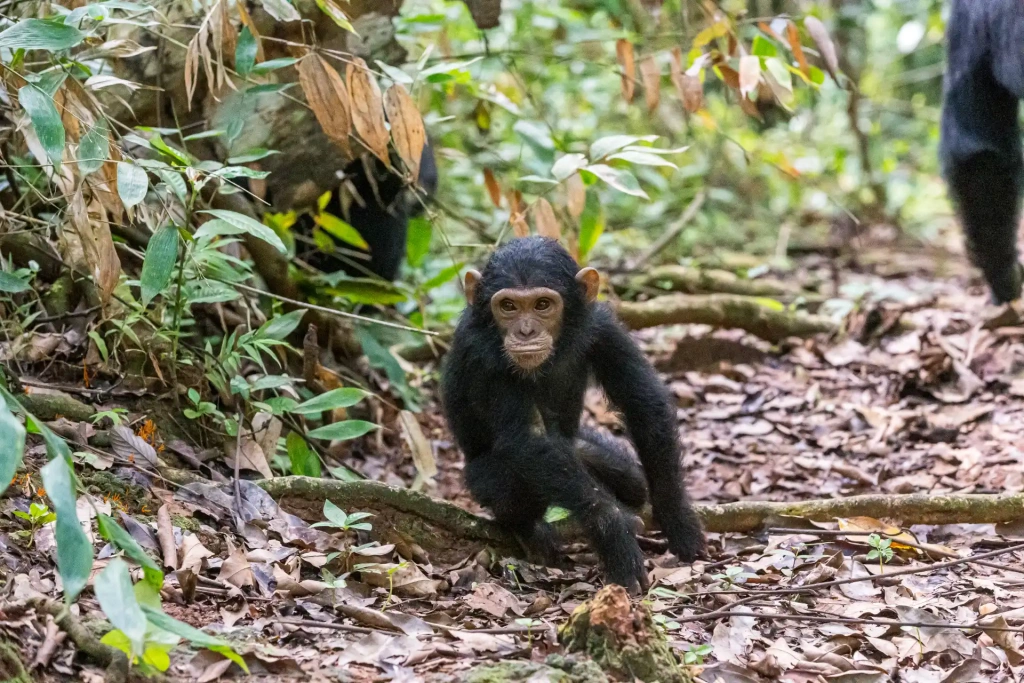
Chimpanzees are great apes. They inhabit forested areas of East and Central Africa and, together with bonobos, form the genus Pan – the sister lineage to humans. This means chimpanzees are the closest living relatives of humans, a fact supported by fossil discoveries and DNA research.
In the wild, chimpanzees can be found in several countries across equatorial Africa. However, Tanzania is one of the best destinations for observing these primates. Where do chimpanzees live, and which African national parks offer the best opportunities to see them? Find out in this new article by Altezza Travel.
Social life and habitat
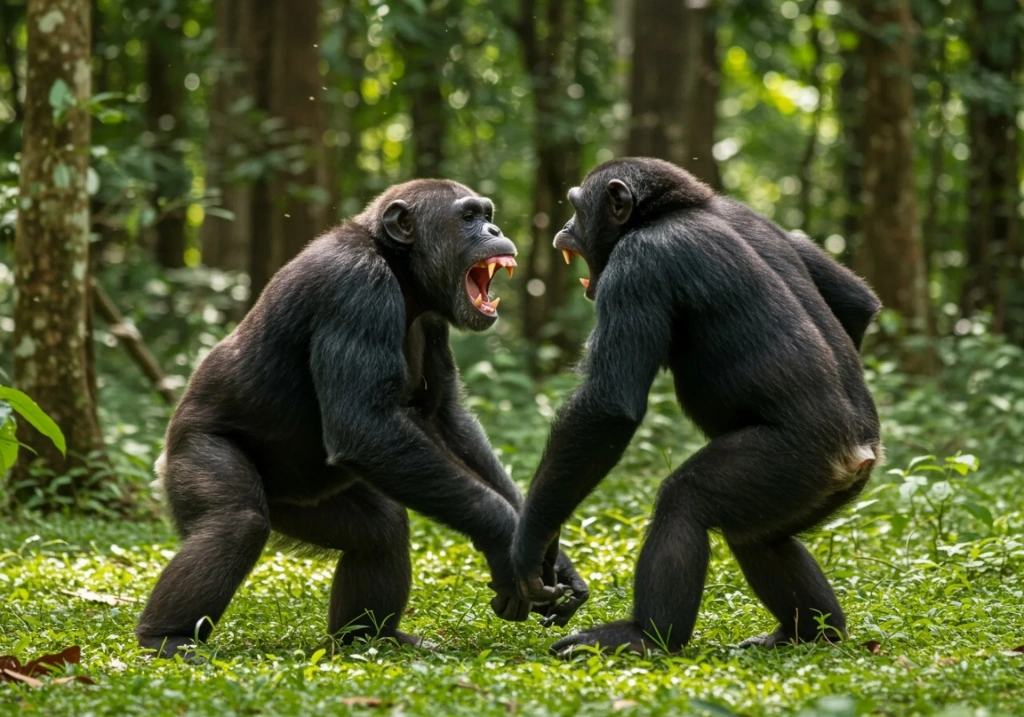
Chimpanzees live in large groups ranging from 15 to 100 individuals. The leader is usually an adult male, but not necessarily the biggest or strongest. To become the head of the group, the ability to form alliances is far more important. Nevertheless, younger males often stage dramatic displays to assert their dominance – they run, shout, stomp, and sometimes fight, demonstrating their strength and status to other group members.
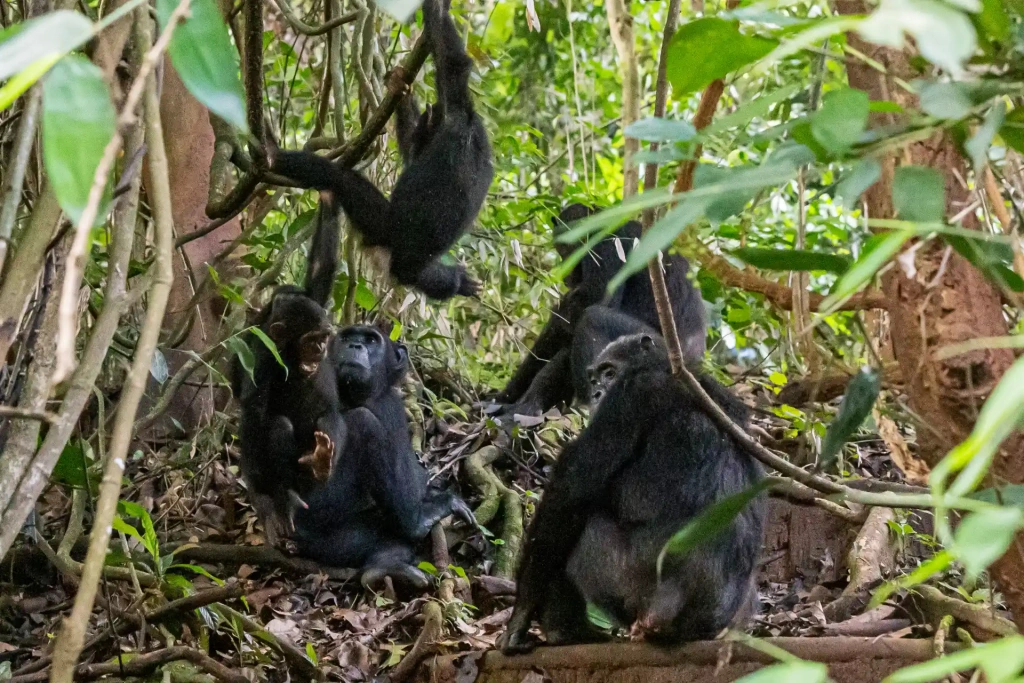
Scientists recognize four subspecies of chimpanzees: western chimpanzees live in West Africa; eastern chimpanzees live in the Democratic Republic of the Congo and East Africa; central chimpanzees inhabit western Central Africa; and the Nigeria–Cameroon chimpanzee, also known as Elliot’s chimpanzee, lives mainly along the border between Nigeria and Cameroon.
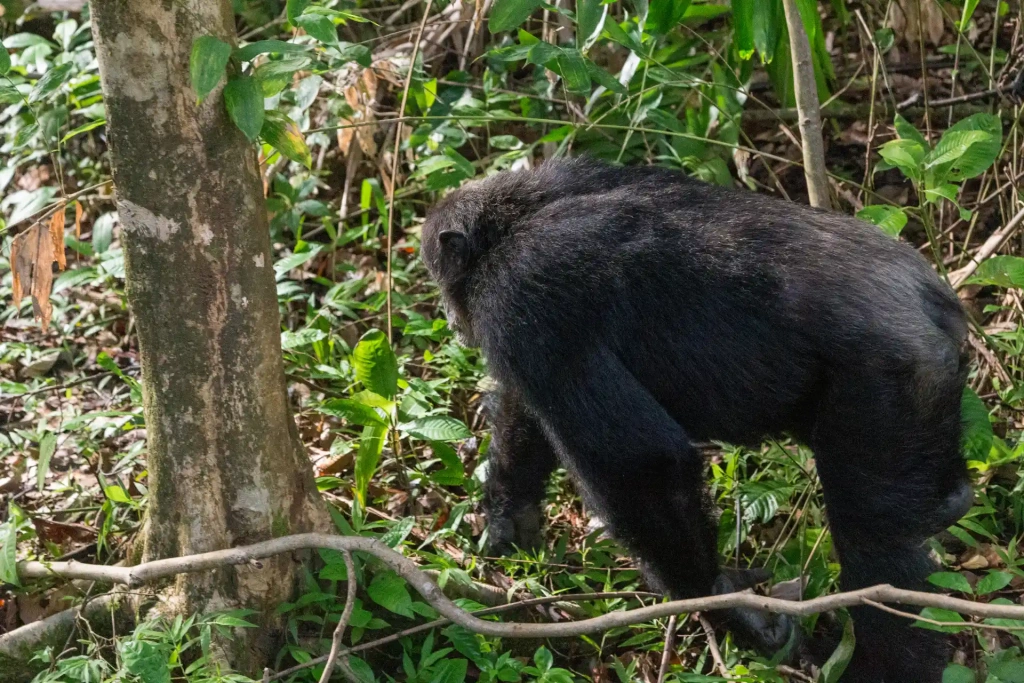
Chimpanzees are remarkably adaptable. They can live at sea level as well as at elevations of up to 3,000 meters (~10,000 feet) – in tropical forests or even mangrove swamps. The key requirements are trees for nighttime nesting and access to water.
Where do chimpanzees live in Tanzania?
To see chimpanzees in the wild, visit the national parks of East Africa. In Tanzania, where eastern chimpanzees are most common, there is also a population of western chimpanzees introduced to Rubondo Island. Below are several key locations where chimpanzees live and where they can be observed in their natural habitat.
Mahale Mountains National Park
Mahale Mountains is one of the main national parks for observing chimpanzees in Tanzania. It stretches along the shores of Lake Tanganyika and features several landscapes: dense tropical forests, mountains, and savannah. Research on the park’s primates has been conducted since the 1960s, mainly by scientists from Kyoto University.
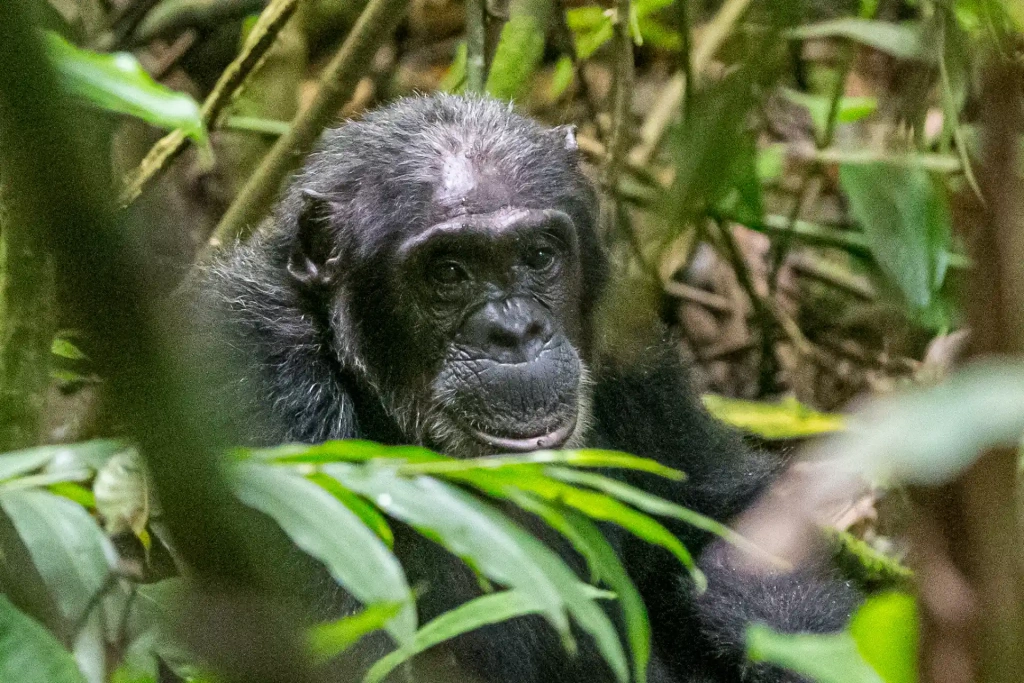
The chimpanzee population in Mahale is considered one of the largest and best studied in all of East Africa. The animals form groups of several dozen individuals, each defending its own territory. Conflicts between groups can be prolonged and intense.
The park has hiking trails that can be explored only with a professional guide. In addition to primates, Mahale Mountains is home to more than 350 species of exotic birds, and the surrounding landscapes offer stunning views of Lake Tanganyika.
Mahale Mountains can be reached by water. From the city of Kigoma, a speedboat trip takes about 5 hours. A passenger steamer also operates on the lake several times a month. There are also regular flights – small aircraft land on the Mahale airstrip, after which about a 1.5-hour boat ride remains.
Rubondo Island National Park
Rubondo Island lies on Lake Victoria in northwestern Tanzania, not far from the city of Mwanza. It forms part of Rubondo Island National Park, established in 1977. Today, the total area of the park, including nearby islets, reaches 457 km² (176 sq mi).
While Mahale Mountains NP is home to eastern chimpanzees, Rubondo Island became home to a subspecies of western chimpanzees introduced by Bernhard Grzimek, a German zoologist, traveler, and naturalist writer who served for many years as director of the Frankfurt Zoo.
In the 1960s, Tanzania was just beginning to build its wildlife protection system. Rubondo Island also came under state protection. Fishermen who once built huts and banana plantations there were relocated to the mainland, leaving the island undisturbed.

Grzimek learned about the island from a local ranger in Mwanza. After confirming it would suit rare species, he decided to create a true sanctuary for endangered primates. The first inhabitants – 10 young chimpanzees from European zoos and private collections – arrived on the island in the 1960s–1970s. They included 7 adult females, 2 young males, and one baby chimpanzee.
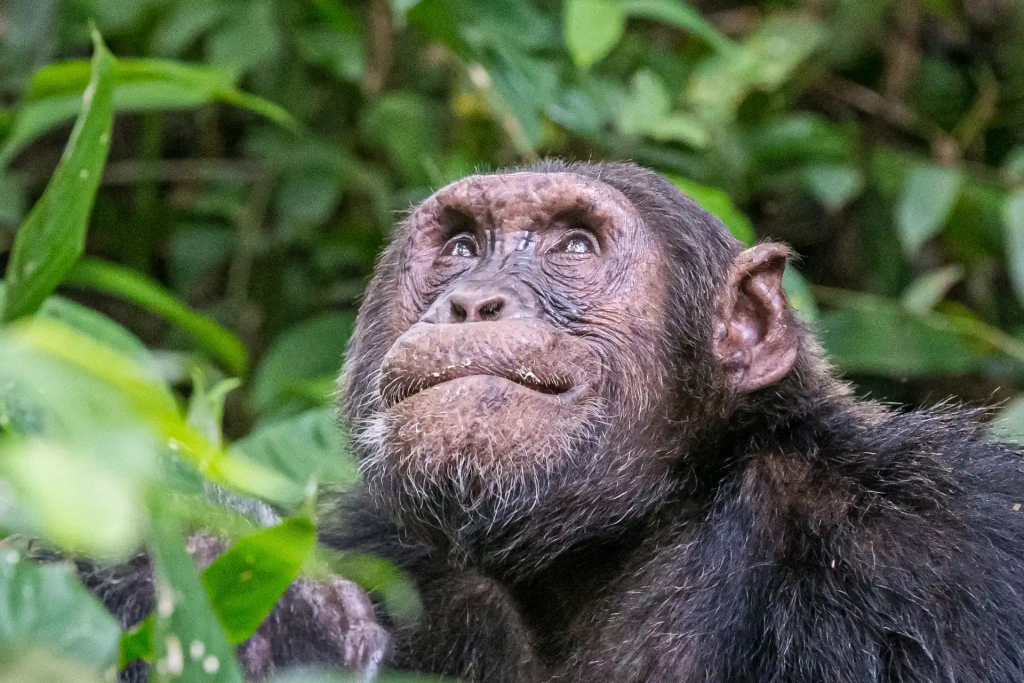
Although Grzimek’s project has been criticized, the chimpanzees quickly adapted. They spread across both the southern and northern parts of the island, formed social groups, learned to forage, build nests, and reproduce.
“The first Dar es Salaam paper I opened when I reached Mwanza contained a photograph of the chimpanzees accompanied by a ridiculous report alleging that the animals, which hailed from European zoos, were accustomed to nothing but the best Russian tea. It appeared that the chief problem would be how to convert them to drinking plain water in the wild. I don’t know which sailor sold this nonsense to the African reporter in Dar, but the same picture and report were reprinted in every German newspaper!”
Excerpt from the book Among the Animals of Africa by Bernhard Grzimek
Today, the population numbers more than 60 individuals, and some estimates suggest close to 100. However, unlike at Mahale Mountains, sightings on Rubondo Island are harder to predict. On the other hand, experienced guides know the best places and times to look for primates, turning the search into a real adventure.
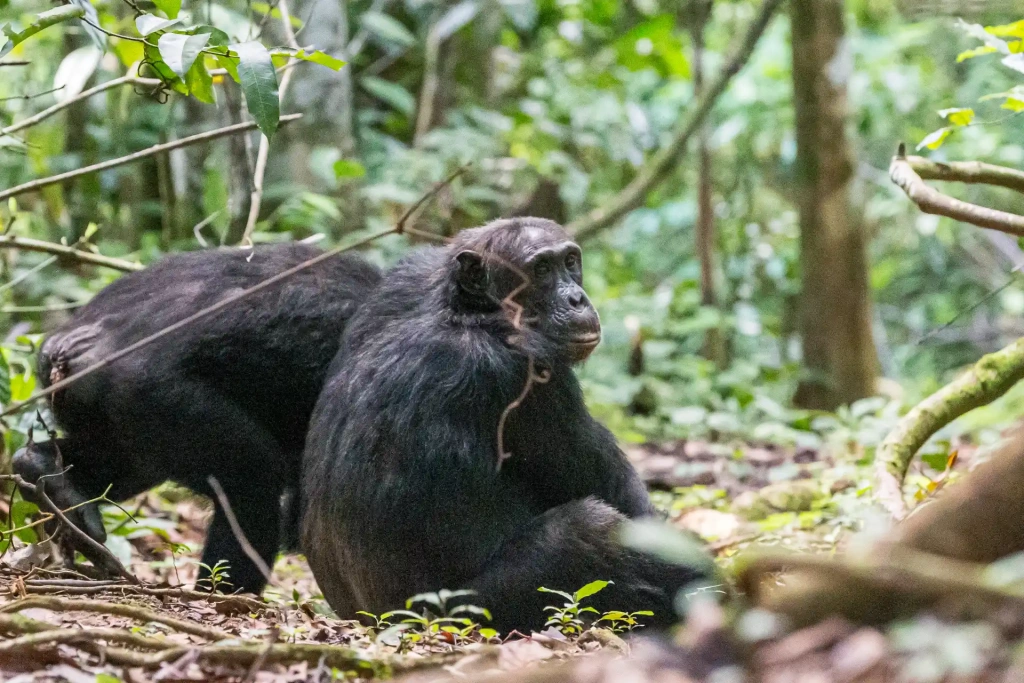
In addition to chimpanzees, visitors may encounter rare antelopes, mongooses, crocodiles, and a remarkable diversity of birds – more than 350 species. The park can be reached from Mwanza, which has the nearest major airport with domestic flights to the island’s airstrip. From there, a short boat ride completes the journey. Another option is to travel by ferry from Mwanza.
Gombe Stream National Park
Small in size but enormous in significance, this park is famous far beyond Africa. It lies in western Tanzania, about 16 km (10 miles) north of Kigoma, on the shores of Lake Tanganyika. Further south along the lake lies the already mentioned Mahale Mountains.
It was here in Gombe that the legendary Jane Goodall – whose work we will discuss further below – began her research, forever changing our understanding of chimpanzee behavior. Today, the park remains one of the most accessible places to observe these primates in the wild. The chances of encountering them on a safari are very high, and the hiking trails run through hills and valleys, offering beautiful views of the lake.
It was in Gombe Stream National Park that researchers first documented that chimpanzees use tools, hunt small mammals, and form complex social structures such as alliances, and even engage in territorial conflicts.
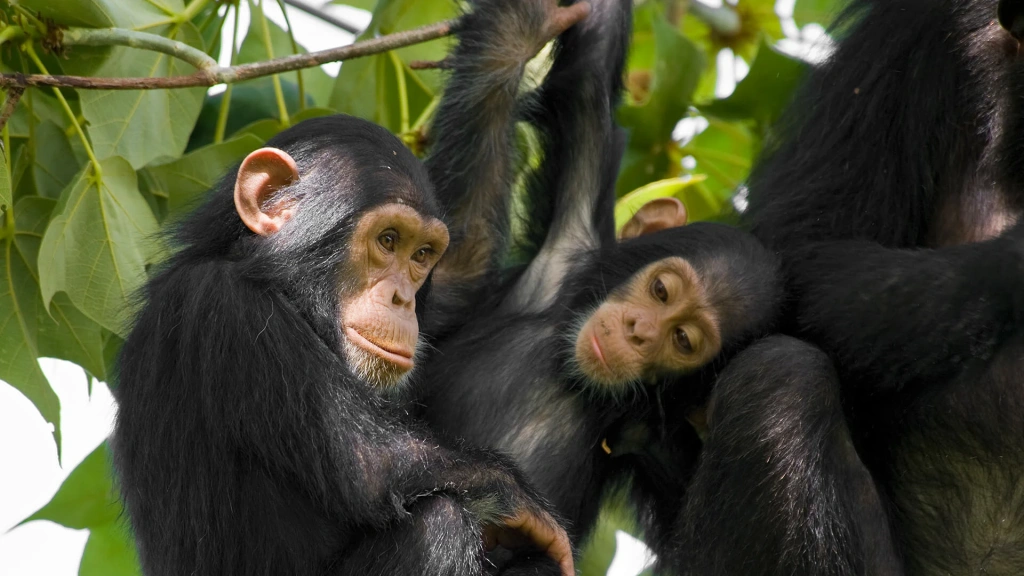
The park also has an information center where visitors can learn about specific chimpanzees and generations of primates studied there. Nearby lies the village of Mwamgongo – another popular stop for travelers. Visitors can learn about local culture through traditional dances, crafts, and clothing. Woven hats and baskets are some of the popular souvenirs from Tanzania that can be purchased here. But the main attraction is the house where Jane Goodall lived with her husband and son during her early expeditions.
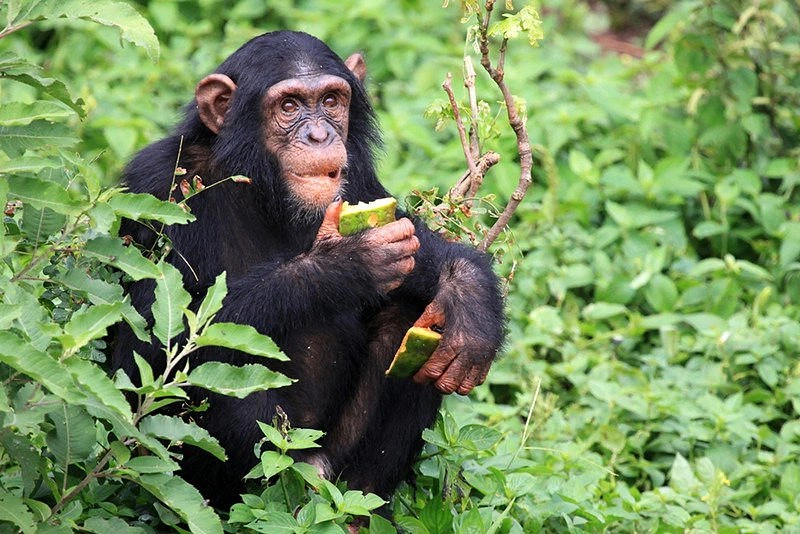
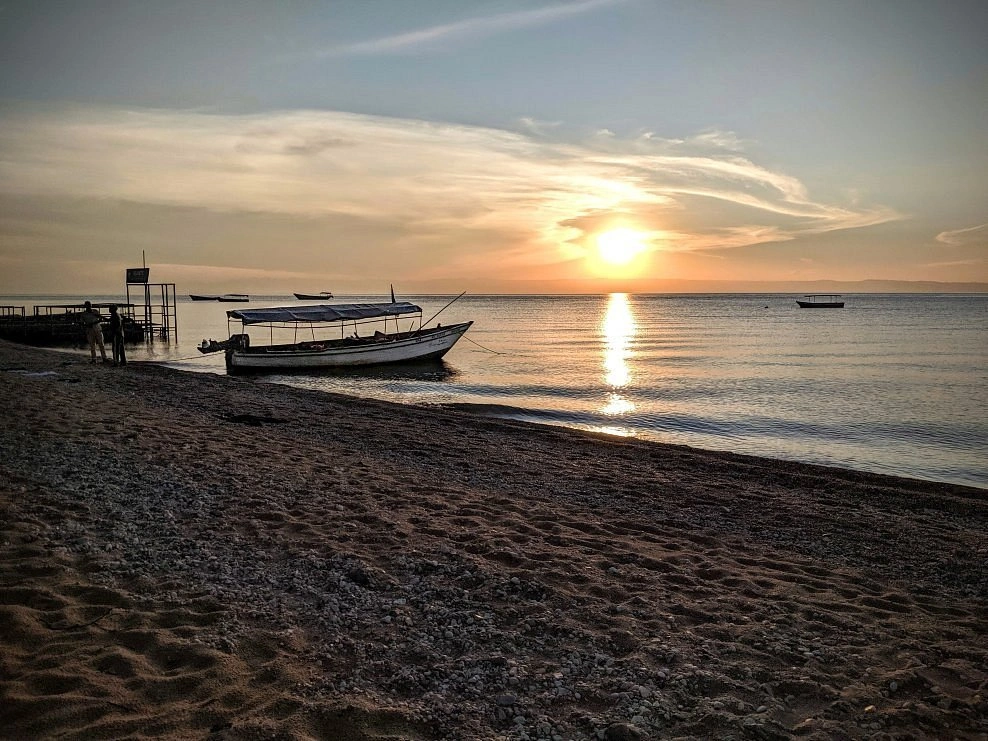
Gombe Stream can only be reached by water from Kigoma. So-called “lake taxis” and speedboats operate here, and the trip takes between 1 and 4 hours. The boat ride itself is part of the experience, offering spectacular views of Lake Tanganyika. Kigoma itself is easily reached by plane from Dar es Salaam or Arusha, with both scheduled and charter flights available.
Jane Goodall and her invaluable contribution to chimpanzee research
The British primatologist and ethologist who devoted more than 60 years to studying chimpanzees began her research in Gombe Stream National Park in 1960 under the guidance of anthropologist Louis Leakey. She lived among the primates, observed their behavior, and systematically recorded data – an approach that was new to science at the time.
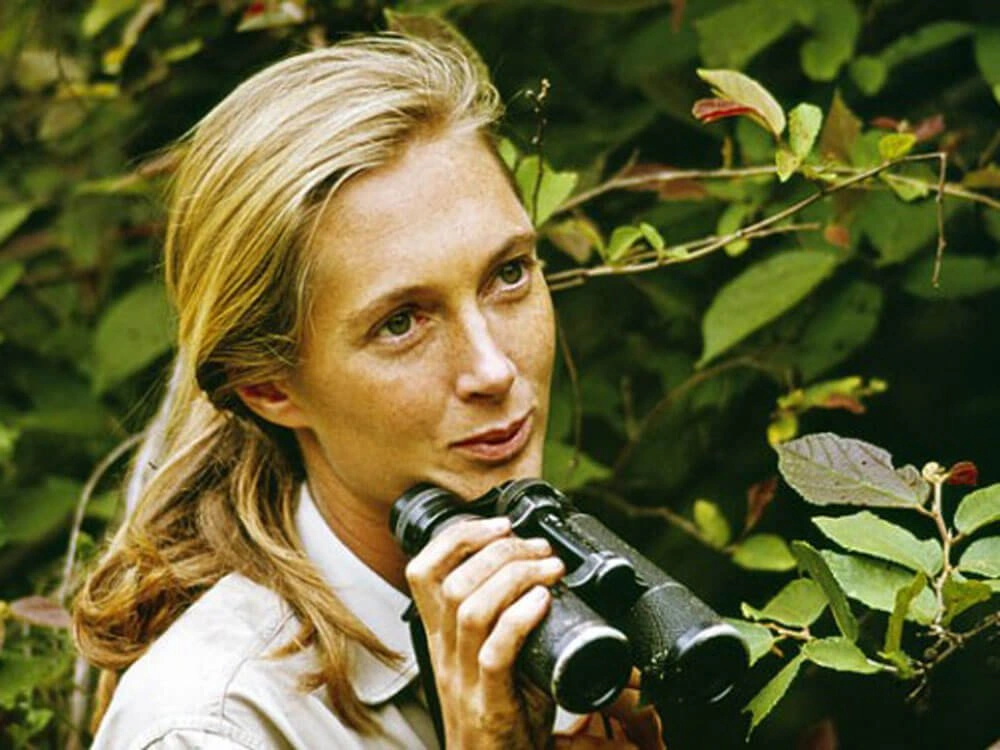
Goodall’s discoveries fundamentally changed our understanding of chimpanzees and their intellectual abilities. For example, she demonstrated that primates not only use tools but also create them: bending branches and stripping leaves to make sticks better suited for extracting termites.
Her research also revealed complex social structures in chimpanzee communities. She documented hunting of small animals, meat consumption, intergroup aggression, emotional responses, and individual personalities. She also demonstrated that primates show compassion: they comfort one another during distress and even care for orphaned infants within the group. These observations helped scientists understand that many human social traits have deep evolutionary roots.
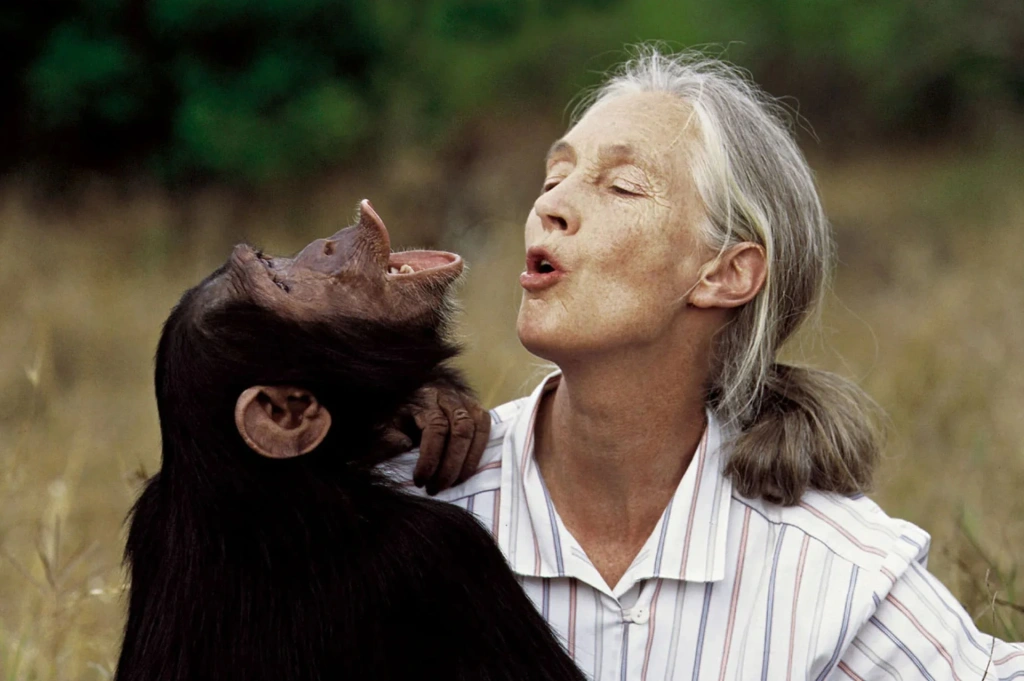
Jane Goodall passed away on October 1, 2025, in Los Angeles, at age 91, while on a lecture tour in the United States. The news resonated widely within the scientific and conservation communities. Her decades of observations of chimpanzees inspired generations of people to study and protect wildlife.
Frequently asked questions
Chimpanzees are omnivores, but the core of their diet consists of fruits and plants, including leaves, seeds, roots, and resin. Occasionally, they also eat insects, honey, bird eggs, and small animals – and sometimes even soil. Rarely have scientists recorded chimpanzees hunting other primates or cases of cannibalism.
The oldest known chimpanzee in captivity was a female named Little Mama. She lived at Lion Country Safari in Florida, USA. According to Guinness World Records, when she died in 2017, she was 77 years old – making her the oldest known chimpanzee.
Estimating life expectancy in the wild is more difficult. However, a 20-year study of 306 individuals in Kibale National Park, Uganda, found that the average lifespan of chimpanzees is about 33 years. This Ugandan group is somewhat unusual, though: unlike many other populations, it lives in a healthy forest with abundant food and fewer human-related threats.
Yes, that is correct. Tools used by chimpanzees include sticks for extracting termites from mounds, stones for cracking open nuts, and leaf “sponges” for absorbing water for drinking.
However, there are nuances. For example, a 2016 study found that wild chimpanzees tend to use tools more frequently if they regularly travel longer distances. Many individuals usually travel no more than about 2 km (1.2 miles) from their home range each day. Researchers found that chimpanzees that travel farther tend to use a greater number and variety of tools.
Research shows that chimpanzee muscles contain a much higher percentage of fast-twitch muscle fibers than humans. However, their maximum strength is only about 1.35–1.5 times greater than that of humans – not seven times stronger, as some unreliable sources claim.
As for speed, chimpanzees can reach up to 40 km/h (25 mph) while running. However, this is always a short sprint. They usually reach such speeds only in emergencies, such as quickly escaping a threat.
All content on Altezza Travel is created with expert insights and thorough research, in line with our Editorial Policy.

Want to know more about Tanzania adventures?
Get in touch with our team! We've explored all the top destinations across Tanzania. Our Kilimanjaro-based adventure consultants are ready to share tips and help you plan your unforgettable journey.