





 52 reasons
  Free PDF


 Message us on WhatsApp
  Book a Free Call

 Safari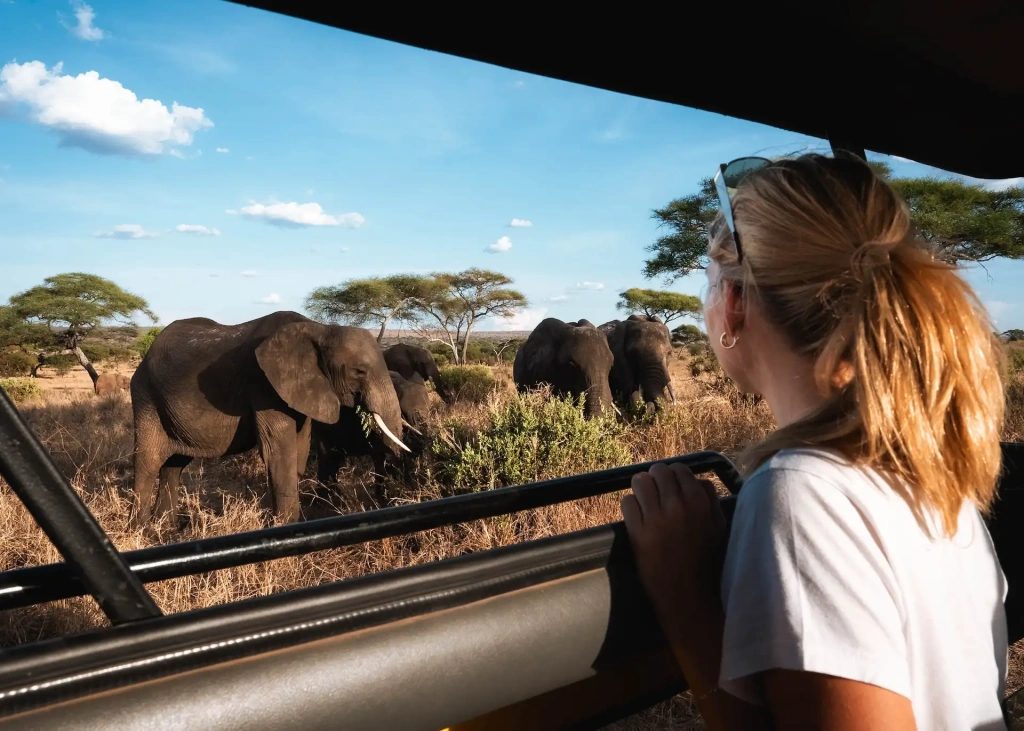
African national parks are among the best places in the world for wildlife viewing. Lions and leopards, elephants and giraffes, hippos and crocodiles, buffalo, rhinos, zebras, and dozens of other species all live here. Many of these animals are accustomed to people and safari vehicles, so they don’t hide, allowing travelers to observe them in their natural habitat.
In this new article, we highlight the most iconic animals you can see on an African safari, as well as the continent’s top national parks.
1. African elephant
- Size: African savanna elephant – weight 2–6 tonnes (4,500–13,500 lb); height 2.2–4 m (7–13 ft).
African forest elephant – weight 2–5 tonnes (4,500–11,000 lb); height 2.4–3 m (8–10 ft)
- Diet: grass, leaves, branches, bark, roots, fruit
- Conservation status: savanna elephant – endangered; forest elephant – critically endangered
- Population: about 410,000–415,000 individuals
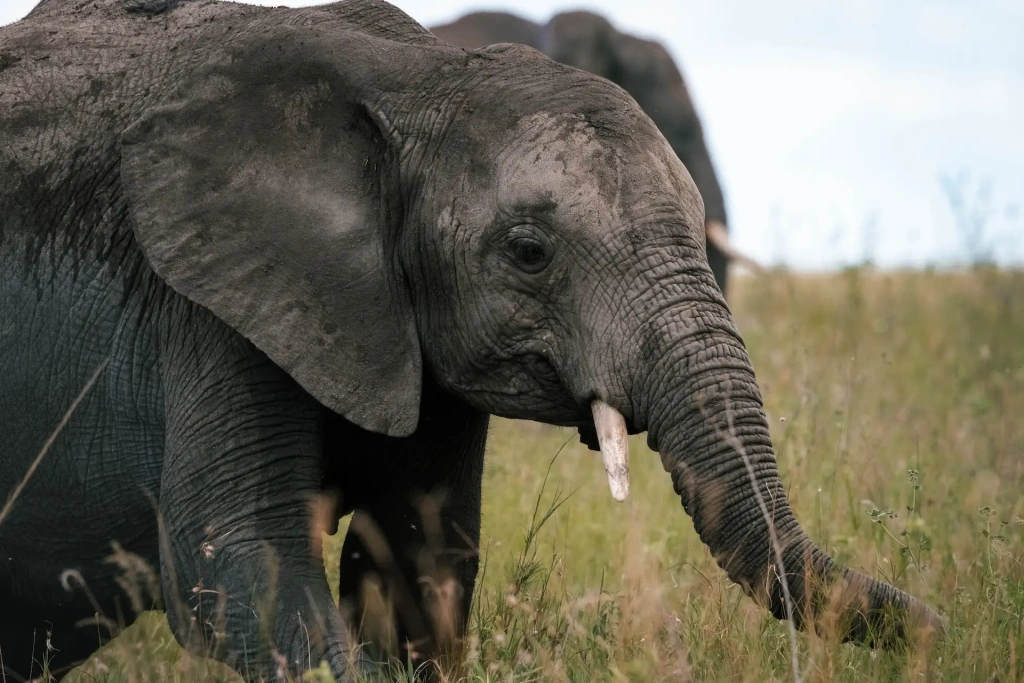
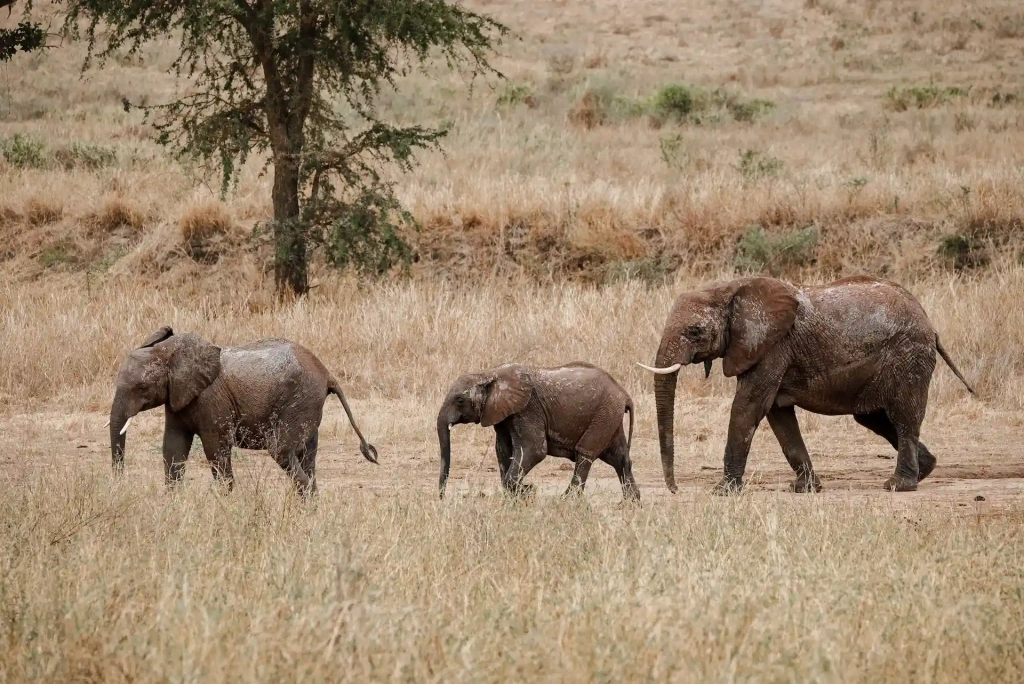
The African elephant is the largest land animal on Earth. They are highly social and mostly active during the day, so on safari it’s easy to encounter large family groups. Herds are led by an adult female – the matriarch, who determines the route and guides the group along familiar migration paths.
Elephants are among the most intelligent animals. Research shows they possess self-awareness, care for injured individuals, and even display grief for the dead. A recent study published in PeerJ also found that elephants communicate not only through audible sounds produced with the help of their trunks but also through infrasonic signals beyond human hearing. These can travel several kilometers (several miles) and help different groups stay in contact.
Elephant safaris in Africa
In Tanzania, elephants are especially associated with Tarangire National Park in the north. During the dry season, especially toward September–October, large herds of elephants and other animals gather along the Tarangire River in search of remaining water sources.
In the Serengeti National Park, one of Tanzania’s most famous parks, herds are less concentrated, but families can still be seen against the open plains. Nearby is the Ngorongoro Crater – a unique ecosystem where elephants live year-round and do not migrate.
In northeastern Tanzania, near the Kenyan border, lies Mkomazi National Park. Although best known for rhinos, it is also home to lions, leopards, buffalo, zebras, giraffes, and elephants. The best time to visit is the dry season – from June to November.
Southern Tanzania is less visited but also rich in elephants. In Nyerere National Park (formerly Selous), they can be observed not only on game drives but also from boats on the Rufiji River.
Another key location is Ruaha National Park, Tanzania’s second-largest park, which hosts one of the largest elephant populations in East Africa. During droughts, hundreds of elephants gather along the river.
Elsewhere in Africa, Botswana has the highest elephant concentrations in Chobe National Park and Mashatu Game Reserve. In Kenya, elephants can be seen in Amboseli, Maasai Mara, Tsavo East and West, and Samburu Reserve. In Namibia – Etosha National Park and Damaraland. In South Africa, the Kruger National Park and Addo Elephant National Park. Smaller populations also exist in Zambia, Zimbabwe, Mozambique, and Uganda.
2. Lion
- Size: weight 90–190 kg (200–420 lb); body length including tail up to 3.3 m (11 ft)
- Diet: zebras, antelopes, buffalo, impalas; sometimes giraffes and young elephants; may also scavenge or prey on livestock
- Conservation status: vulnerable
- Population: 20,000–25,000 individuals
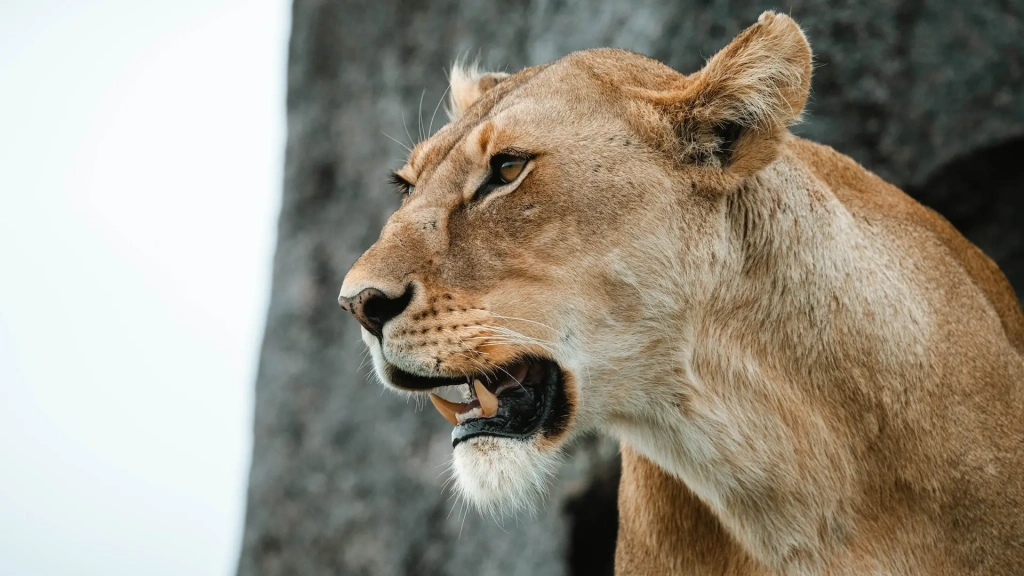
Lions are among the most iconic members of the cat family, second only in size to the tiger. Unlike most big cats, lions are highly social and live in prides consisting of several females, their cubs, and one or two adult males.
Lions are most active at dusk and night, but during the day they can often be seen resting in the shade of acacia trees. Their roar, a key form of communication, can be heard up to 8 km (5 miles) away.
African lion safari
The main stage for lion viewing in Tanzania is Serengeti National Park. The local population numbers in the thousands, so you’re likely to encounter lions almost everywhere on safari. Another popular destination is the Ngorongoro Crater, where prides are largely sedentary and rarely leave the caldera thanks to the high concentration of prey.
In Tarangire National Park, lions are less numerous, but they display unusual behavior. They are often seen resting not under acacia trees, but right up in the branches.
In the south of the country, Ruaha National Park is home to one of the largest lion populations in all of Africa. Prides here can number 20–30 individuals. During the dry season, they are often spotted along the Ruaha River, which becomes the only reliable water source for many miles.
Tanzania leads the continent in lion numbers. It is followed by South Africa, particularly Kruger National Park, and Botswana’s Okavango Delta, where lions have adapted to life in wetland environments. You can also go lion-watching in Kenya, in Amboseli National Park or the Masai Mara National Reserve.
3. Rhinoceros
- Size: white rhinoceros – height 2 m (7 ft) at the shoulder, length about 4 m (13 ft), weight up to 3.5 tonnes (7,700 lb)
black rhinoceros – height 1.4–1.8 m (5–6 ft), length 3–3.8 m (10–13 ft), weight 800–1,400 kg (1,800–3,100 lb)
- Diet: grass, leaves, branches from shrubs and trees
- Conservation status: black – critically endangered; white – near threatened
- Population: black – about 6,700; white – about 15,700
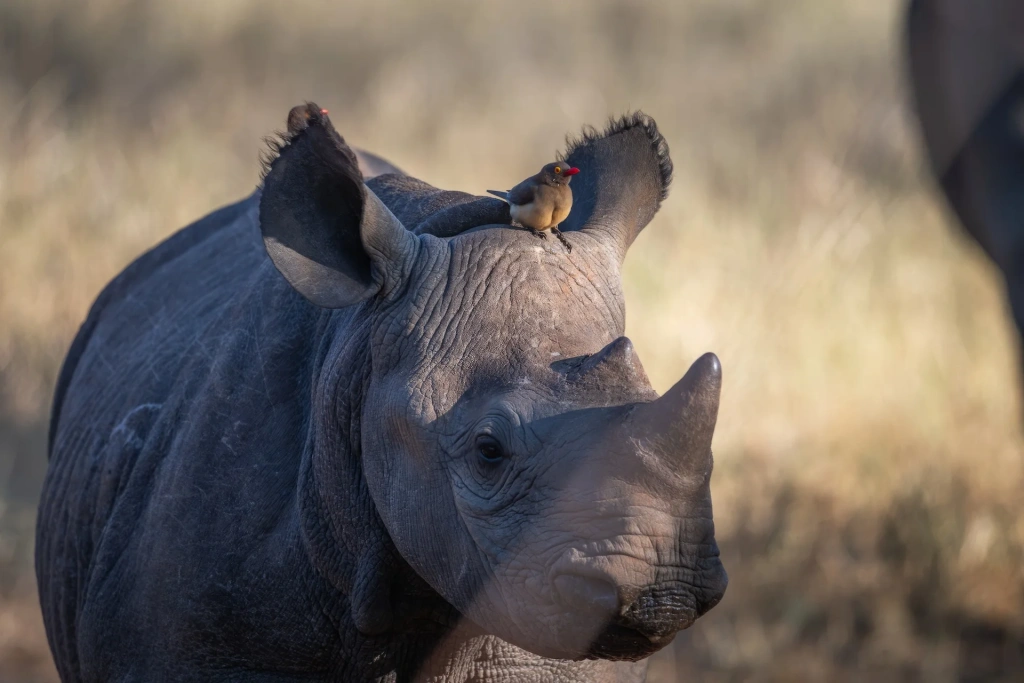
Rhinos are among the largest land herbivores and typically lead solitary lives. In Africa, there are two species – the black and white rhinoceros – while Asia is home to three others: the Indian, Sumatran, and Javan rhinos. Adult males are usually solitary, whereas females often stay with their calves.
Rhinos are most active at dusk and during the night. In the heat of the day, they are often seen wallowing in mud – a behavior that helps them cool down and protect their skin from insects.
Rhinos have poor eyesight but excellent hearing and sense of smell, which help them locate food – they consume up to 50 kg (110 lb) of vegetation per day. They are also remarkably long-lived: in the wild, they typically live 30–40 years, sometimes up to 50.
Where to see rhinos in Africa?
Mkomazi National Park in Tanzania is one of the main places to see rhinos. A small, strictly protected population of black rhinos can also be found in the Ngorongoro Crater. There, they tend to keep their distance from safari vehicles, staying on open grasslands or closer to the base of the crater slopes. In the Serengeti, rhinos are scattered across vast areas, but experienced rangers know where to go to improve your chances of spotting them.
Large rhino populations are found in South Africa, primarily in Kruger National Park and Hluhluwe–iMfolozi Park. In Namibia, they are mainly found in Etosha National Park. In Kenya, in Nairobi and Nakuru National Parks. In Zimbabwe, rhinos can be seen in Hwange National Park.
4. Leopard
- Size: body length 108–160 cm (3.5–5 ft), tail 60–110 cm (2–4 ft); weight 40–90 kg (90–200 lb)
- Diet: ungulates, primates, and small mammals; may prey on livestock
- Conservation status: vulnerable
- Population: about 130,000 individuals
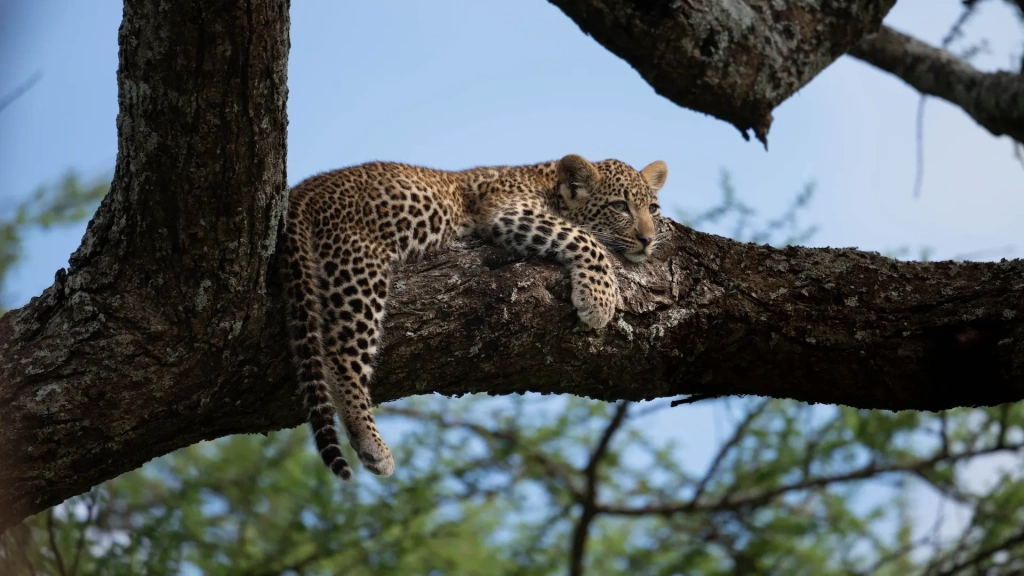
Leopards are solitary predators that prefer a nocturnal lifestyle. A defining trait is their habit of dragging prey into trees to protect it from competitors. Leopards can reach speeds of up to 58 km/h (36 mph), climb trees with ease, and are excellent swimmers. All of this makes them one of the most effective hunters of the African savanna. According to the International Fund for Animal Welfare, leopards are found mainly in Africa, as well as in Iran, India, China, and Southeast Asia.
Where to see leopards on safari in Africa?
In northern Tanzania, Serengeti National Park is considered the best place to observe leopards. Here, predators have plenty of space and prey. During the day, they usually rest on the branches of acacias or baobabs. The highest chances of spotting them are in the central part of the park, where open savanna meets woodland.
Many leopards also live in southern Tanzania, in Nyerere National Park. However, due to its vast size, spotting them can be challenging. In Ruaha, the chances are higher – especially during the dry season, when they come to the river where prey gathers.
Leopards can also be seen in Mahale Mountains National Park, located on the eastern shores of Lake Tanganyika, although the park is better known for its eastern chimpanzee population.
Beyond Tanzania, these predators can be observed in Etosha National Park, Namibia, and in private reserves. They can also be seen in South Africa’s Kruger National Park or in Zambia's South Luangwa National Park.
5. Antelope
- Size: varies greatly by species. Blue wildebeest (gnu) – shoulder height 105–150 cm (3.5–5 ft), weight 110–275 kg (240–610 lb). Duikers – height 30–80 cm (1–3 ft), weight 3.5–80 kg (8–180 lb), depending on species (the yellow-backed duiker is the largest)
- Diet: leaves, fruit, bark, flowers, and seeds
- Conservation status: wildebeest – least concern, as are most duiker species, although some are endangered
- Population: wildebeest – over 1.4 million individuals. Among the rarest: hirola – about 300–500 individuals; giant sable antelope – about 250–300; Upemba lechwe – fewer than 100
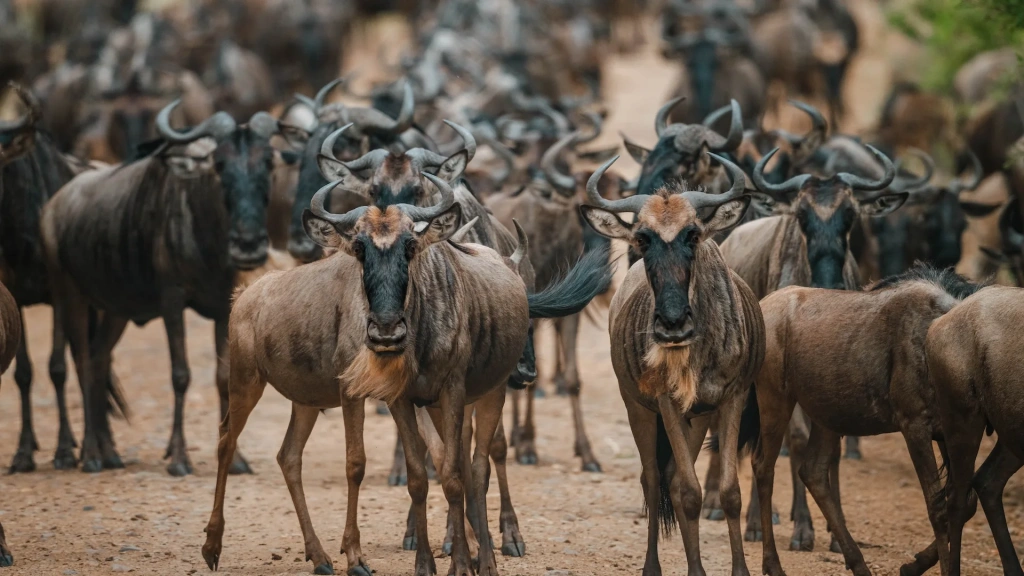
Antelopes are among the most iconic animals in Africa, often mentioned alongside the “Big Five.” One of the most famous is the wildebeest, which exists in two species – the blue and the black. They are primarily found in East Africa, with smaller populations in Southern Africa.
Wildebeest take center stage in the Great Migration – the largest terrestrial animal movement on Earth. Each year, millions of animals travel across the Serengeti–Mara ecosystem (Tanzania and Kenya) in search of fresh grazing and water. UNESCO describes this migration as one of the most spectacular natural phenomena on the planet, so vast it can even be observed from space.
Another interesting group is duikers. These are smaller antelopes that lead a solitary and secretive lifestyle. They primarily feed on vegetation, although some species, such as the common duiker, also consume insects, small mammals, and even carrion.
During the day, duikers hide in tall grass or dense shrubs, becoming most active in the evening and at night. Their sharp hearing and sense of smell help them detect predators early and retreat instantly. Their impressive agility also helps – for example, the red forest duiker can leap over obstacles up to 1.3 m (4.5 ft) high.
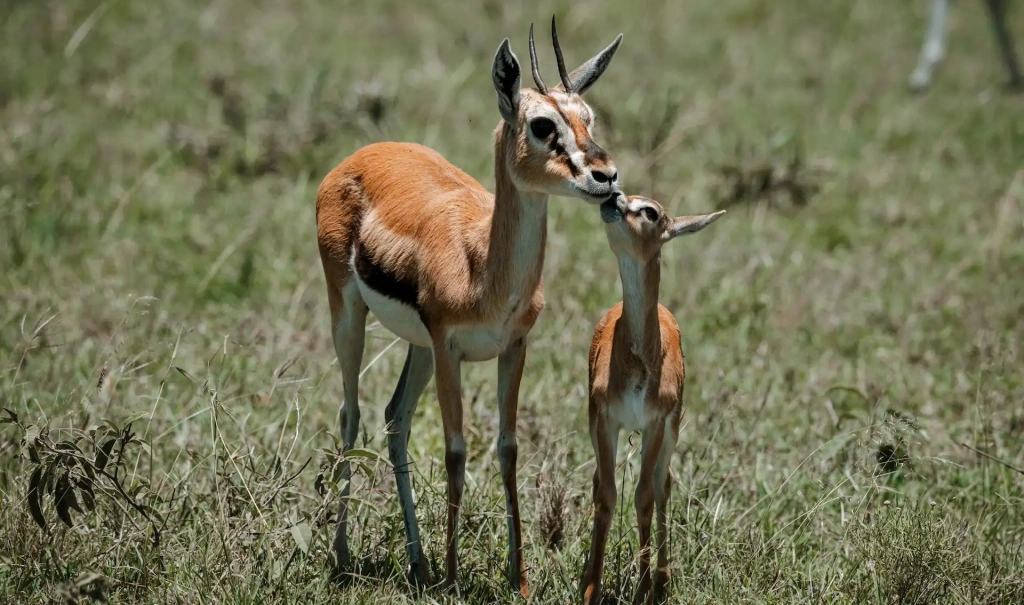
Where to see antelopes in Africa?
Wildebeest are primarily found in the Serengeti, where the Great Migration takes place. From January to March, they remain in the southern plains around Ndutu, where thousands of calves are born. From April to June, the herds move toward the Grumeti River, and by August–September, they reach the Mara River, where hundreds of crocodiles await them. During river crossings, some animals perish, but most continue into Kenya’s Maasai Mara Reserve.
In other parks, wildebeest are less numerous but still easy to encounter in Ngorongoro Crater, Tarangire, or Ruaha. Alternative destinations include the Maasai Mara in Kenya, Awash National Park in Ethiopia, and Kruger National Park in South Africa, although their populations are significantly smaller than those in East Africa.
If you want to witness dramatic river crossings, plan your trip between July and September. To see the birth of thousands of calves, January to March is the ideal time.
Duikers lead a more secluded lifestyle, inhabiting dense vegetation and only occasionally venturing into open areas. Tanzania hosts one of the largest populations. They are commonly found in Ngorongoro, as well as in the southern parks of Ruaha and Nyerere, where forested areas are more extensive. In the Serengeti, they are harder to spot due to the vast open landscapes and the presence of many predators.
Smaller populations are also found in Gabon, in Moukalaba-Doudou National Park. In Kenya, they are mostly concentrated in the Maasai Mara; in South Africa, in Kruger National Park; and in Zambia, in Kafue National Park.
6. Bushbaby (Galago)
- Size: weight – 90–150 g (0.2–0.3 lb) depending on species; body length – 14–25 cm (6–10 in)
- Diet: fruit, insects, tree gum, small vertebrates, including birds and their eggs
- Conservation status: many species are threatened; Senegal bushbaby, Garnett’s galago, Thomas’s galago, and Demidoff’s galago are classified as least concern
- Population: no reliable data – their small size, nocturnal behavior, and habitat make accurate counting nearly impossible
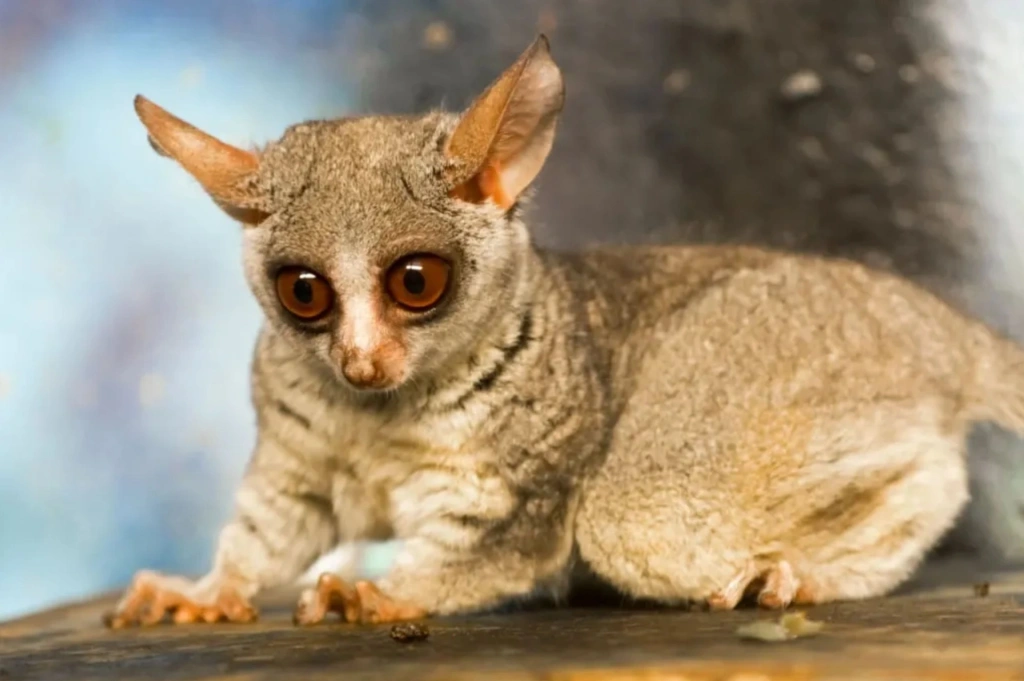
The name “bushbaby” refers to more than 20 species of galagos – small, nocturnal primates. They live in trees and are easily recognized by their large eyes and long tails, which help them balance while leaping. Galagos can cover distances of up to 9 m (30 ft) in just a few seconds.
“Although their form of locomotion might suggest that they rely on good eye–hand coordination for their agile leaping, they primarily use olfactory and auditory information. Galagos have large ears with great mobility that are continuously moving. As insectivores, they rely on sound to localize their prey,” notes a study published on Science Direct.
Like all primates, galagos are social animals. They live in small groups and communicate using distinct vocalizations, often resembling the cry of a baby, which is how they got their name.
Where to see bushbabies in Africa?
The easiest way to spot galagos is on a night safari. In Tanzania, they can be found in Arusha, Serengeti, Tarangire, and Lake Manyara National Parks, as well as in the southern reserves of Nyerere and Ruaha. They are also often seen in Mikumi National Park and in forests at the foothills of Mount Kilimanjaro.
You don’t necessarily need to visit a national park – bushbabies can even be found in small forest patches near tourist camps and lodges.
They are easier to spot during the dry season, when there is less foliage, and their movements and calls are more noticeable. During the rainy season, they remain active but are much harder to see due to dense vegetation.
In South Africa, thick-tailed bushbabies live in Kruger National Park and reserves in KwaZulu-Natal. In Uganda, key locations include Kibale and Bwindi National Parks, while in Kenya, they can be seen in Taita Hills Wildlife Sanctuary and Samburu Reserve.
7. Serval
- Size: body length – 67–100 cm (2–3 ft), tail – 24–35 cm (1–1.5 ft); weight – 6–18 kg (13–40 lb);
- Diet: small mammals, birds, reptiles, insects;
- Conservation status: least concern;
- Population: no reliable data, as populations are stable and not systematically counted.
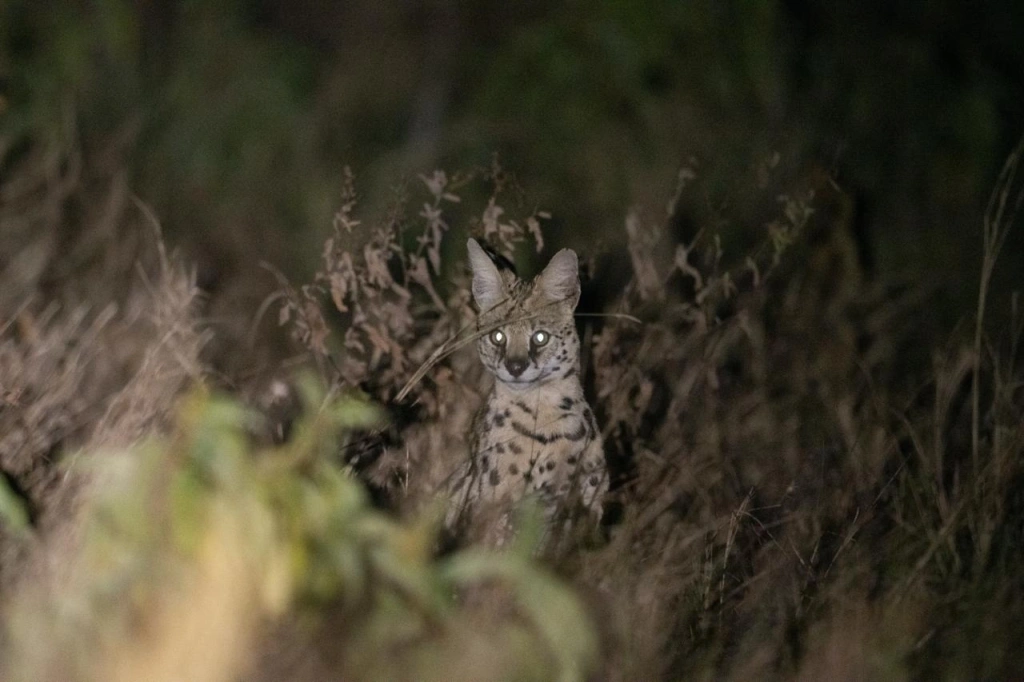
Servals are small wild cats with long legs, large ears, and a golden, spotted coat. They are mostly solitary and nocturnal. They are best seen in the evening or on night safaris. Thanks to their long legs, servals can run quickly – up to 60 km/h (37 mph) and jump high, allowing them to catch prey even in mid-air.
Where to see servals?
In Tanzania, servals are found in several parks, but they are most frequently spotted in the Serengeti, where open plains with scattered shrubs provide ideal viewing conditions. They are also present in Ngorongoro Crater, Tarangire, Mkomazi, and Lake Manyara, although sightings there are less common.
In southern Tanzania, Ruaha and Nyerere host large populations, but servals there are even more elusive.
Servals can also be seen on safari in Zambia’s Luambe and Kafue National Parks, in South Africa’s Kruger National Park, and in the Kamberg Nature Reserve in the south of the country.
8. Honey Badger
- Size: body length – 60–80 cm (2–3 ft), tail – 20–30 cm (8-12 in); weight – 9–14 kg (20–30 lb)
- Diet: insects, larvae, small mammals, birds and their eggs, reptiles (including venomous snakes), and carrion; less often berries, roots, and bulbs.
- Conservation status: least concern
- Population: no reliable data
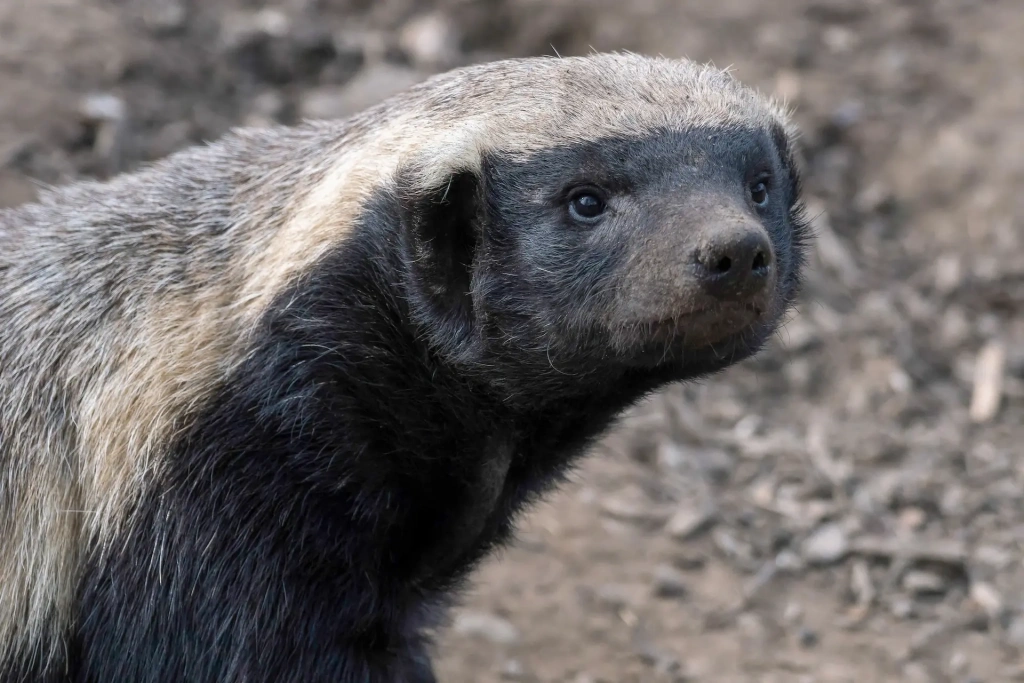
The honey badger is a predator from the mustelid family, making it related to skunks, otters, ferrets, and badgers. Its scientific name is Mellivora capensis, but it is widely known as the honey badger due to its fondness for bee larvae found in hives.
Honey badgers can be active at any time of day. They are solitary animals with a fearless temperament – when threatened, they may attack animals much larger and stronger than themselves, including predators.
They are also highly resistant to venom. Honey badgers can survive bites from deadly snakes, including cobras. After such an encounter, the animal may temporarily collapse into a state resembling paralysis or shock, but it usually recovers and returns to normal activity.
Where to see honey badgers in Africa?
In Tanzania, honey badgers are widespread, but sightings are rare. Your chances are higher in northern parks – Serengeti, Tarangire, Lake Manyara – as well as in the forests on the slopes of Kilimanjaro and in Mkomazi.
In South Africa, they can be found in Kruger National Park and Hluhluwe–iMfolozi Park; in Botswana, in Chobe National Park and Moremi Game Reserve; in Kenya, in Tsavo and Aberdare National Parks. They are also frequently spotted in Namibia, particularly in Khaudum National Park.
9. Black-and-white colobus
- Size: body length – 40–70 cm (1.5–2.5 ft), tail – up to 70 cm (2.5 ft); weight – males 9–15 kg (20–33 lb), females 7–12 kg (15–26 lb)
- Diet: leaves, young shoots, flowers, and fruit
- Conservation status: least concern overall, although the Kilimanjaro subspecies is classified as vulnerable;
- Population: generally unknown due to their habitat and lifestyle
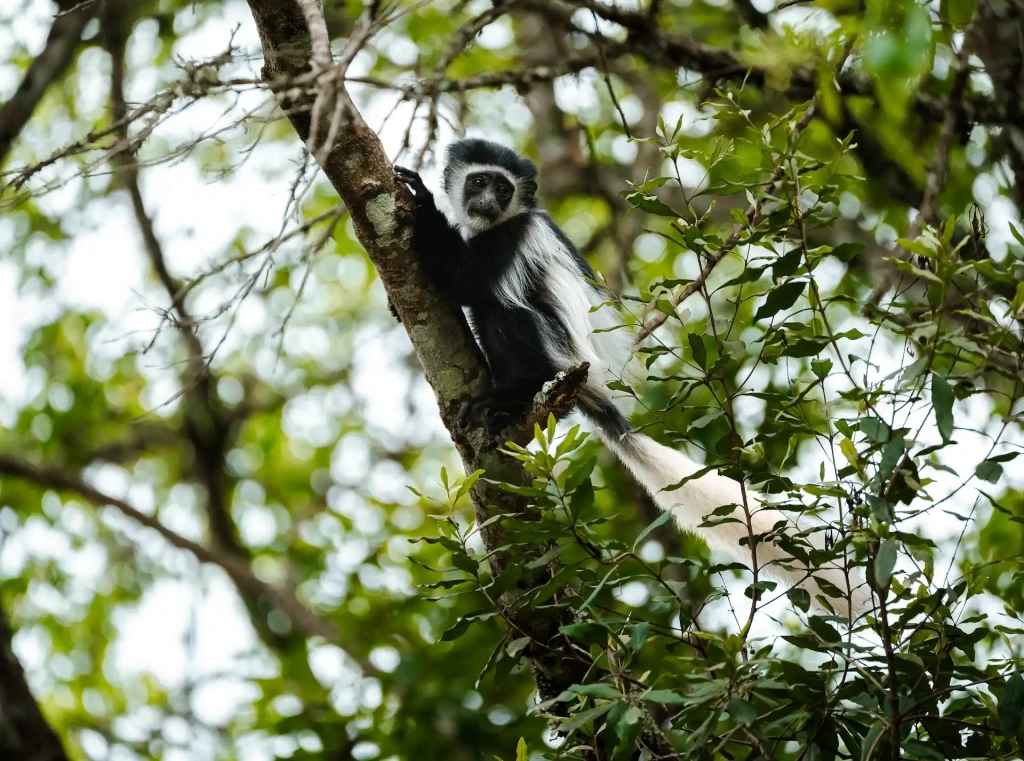
Black-and-white colobus monkeys are easily recognized by their long, thick fur with striking contrast – black with white patches along the sides, around the face, and on the tail. These are herbivorous primates with a specialized digestive system that allows them to process tough plant fibers that many other species cannot digest.
They are active during the day and spend most of their time in trees searching for food, rarely descending to the ground.
Where to see black-and-white colobus monkeys?
Large populations are found in the Amani Nature Reserve and Arusha National Park. They can also be seen in Jozani Forest on Zanzibar, where the rare Zanzibar red colobus (Kirk’s red colobus) lives – only about 6,000 individuals remain.
Colobus monkeys also inhabit the Mahale Mountains, Tarangire, Lake Manyara, and areas around the Ngorongoro Crater. They are less common in the Serengeti due to its open plains. A similar pattern is seen in southern parks like Ruaha and Nyerere, where they are concentrated near forested areas and river valleys.
In Kenya, they can be found in Kisumu National Park, as well as in the Kiunga Marine Reserve along the Indian Ocean coast and Shimba Hills National Reserve. In Rwanda, they inhabit forested regions of Nyungwe and Nyaza-Kabale.
10. Zebra
- Size: plains zebra – height 1.2–1.3 m (4–5 ft), weight 250–300 kg (550–660 lb); mountain zebra – height up to 1.2 m (4 ft), weight 240–370 kg (530–820 lb); Grevy’s zebra – height 1.4–1.6 m (5–6 ft), weight up to 450 kg (1,000 lb)
- Diet: grass, leaves, shrub shoots, bark
- Conservation status: plains zebra - near threatened; Grevy’s zebra – endangered; mountain zebra – vulnerable
- Population: exact numbers unknown; estimates are often based on density per 100 sq km (40 sq mi)
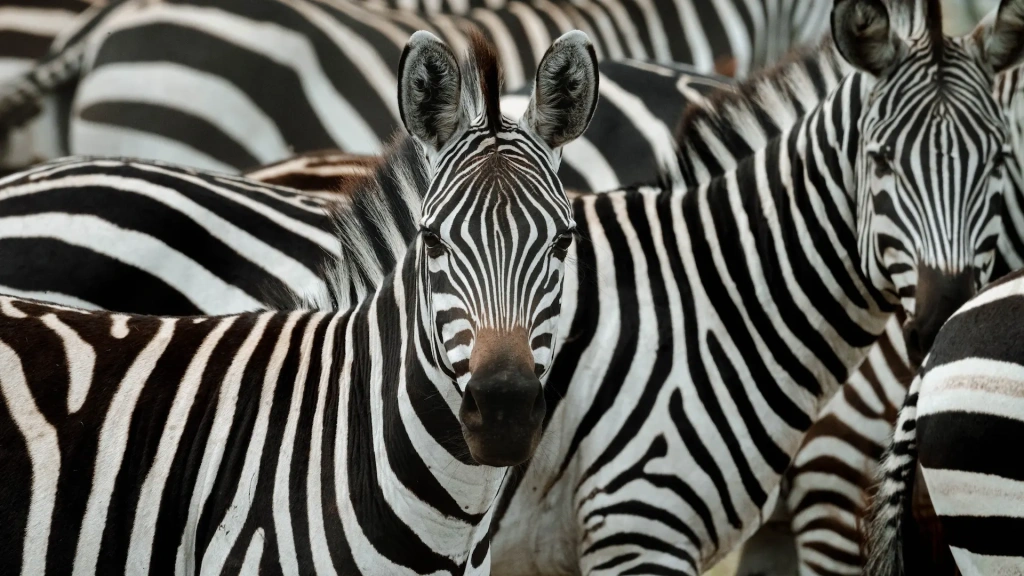
There are three species of zebra: plains, mountain, and Grevy’s. They differ slightly in appearance and social behavior, but all are diurnal herbivores with unique stripe patterns for each individual.
Previously, scientists believed zebra stripes served mainly for camouflage, predator avoidance, or social interaction. However, recent research suggests their primary function is protection against biting insects.
Where to see zebras on safari in Africa
In northern Tanzania, large populations can be seen in the Serengeti, where they accompany wildebeest during the Great Migration. In Ngorongoro Crater, zebras live year-round, making it one of the best places to see a wide variety of African wildlife regardless of season.
Zebras are also found in South Africa (Kruger National Park), Namibia (Etosha National Park), and Kenya (Maasai Mara Reserve).
11. Giraffe
- Size: shoulder height – 3.3 m (11 ft); neck length – about 2.4 m (8 ft); weight – up to 1.9 tonnes (4,200 lb)
- Diet: leaves, shoots, flowers, and fruits of trees and shrubs, especially acacias
- Conservation status: vulnerable
- Population: no reliable data
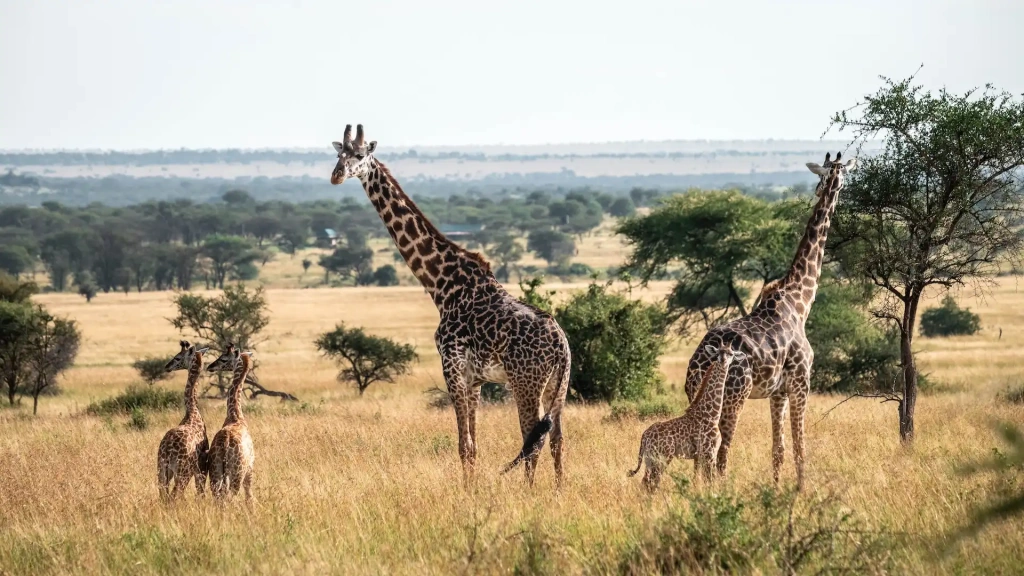
Giraffes typically form loose herds ranging from a few individuals to several dozen, making them easy to spot on safari, especially during the dry season. They sleep very little – just a couple of hours per day – and often remain standing. Occasionally, when they feel safe, they lie down, folding their legs beneath their bodies and resting their long necks along their backs or hips.
Their distinctive spotted coat serves as camouflage, helping them blend into the savanna. It also plays a role in thermoregulation. Beneath each dark patch lies a dense network of blood vessels. In hot conditions, these vessels dilate, allowing heat to dissipate and helping lower body temperature. Thermal imaging supports this.
Recent studies also suggest that giraffes living in cooler climates, such as in zoos, tend to have larger patches, which help retain heat by constricting blood vessels. Smaller patches, by contrast, are more common in hotter environments, where they help distribute heat more evenly and reduce the risk of overheating.
Where to go for giraffe safari in Africa?
In Tanzania, giraffes are found in many national parks and reserves. In the Serengeti, they are often seen on open plains and in bushy savanna, often near migrating herds of zebras and antelopes. In Tarangire, they tend to gather near rivers and water sources, especially during the dry season. In the Ngorongoro Conservation Area, they inhabit the open plains of the caldera.
Significant populations are also found in Uganda (Murchison Falls National Park) and Kenya (Maasai Mara and Tsavo). In South Africa, they are commonly seen in Kruger National Park, and in Namibia, in Etosha National Park. In Botswana, giraffes can be spotted in the Okavango Delta and Chobe National Park.
12. Cheetah
- Size: shoulder height – 70–90 cm (2–3 ft); weight – 35–65 kg (80–145 lb); total length including tail – over 2 m (7 ft)
- Diet: small to medium-sized ungulates, including gazelles, impalas, and antelopes, as well as hares and birds
- Conservation status: vulnerable
- Population: 7,000–7,500 adults; 10,000–12,000 including cubs
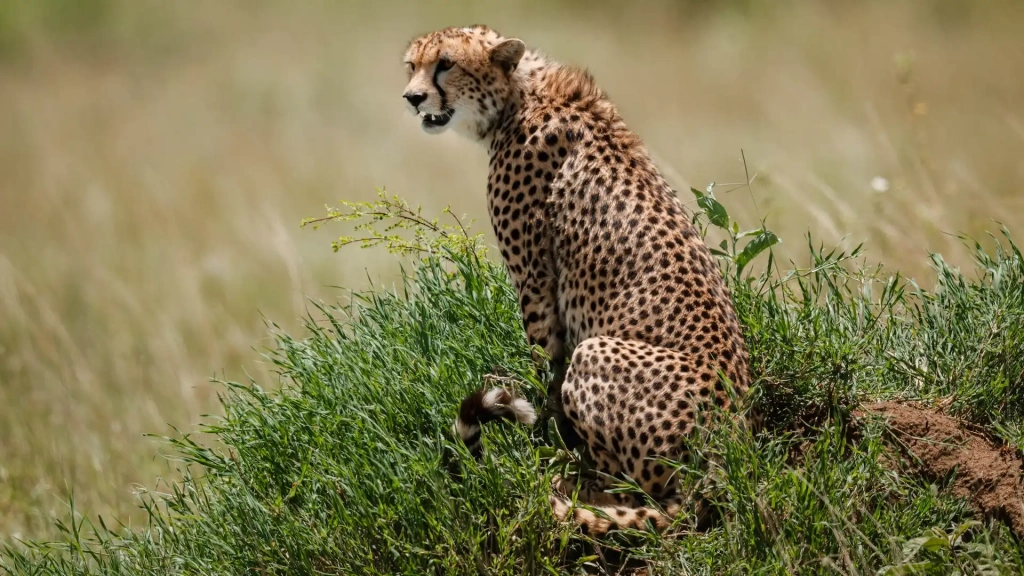
The cheetah can reach speeds of up to 112 km/h (70 mph), making it the fastest land predator on Earth. Unlike most big cats, it is primarily active during the day. On safari, it is often seen stalking and hunting prey in open areas.
Due to its extreme speed, a chase typically lasts no more than 20–60 seconds and rarely exceeds 200–300 m (650–1,000 ft).
Previously, scientists believed this short sprint duration was due to overheating. However, recent studies show that a cheetah’s body temperature rises only after the chase – likely due to stress rather than physical exertion.
Most likely, cheetahs hunt over short distances because their physiology is adapted for explosive speed rather than endurance.
Where to see cheetahs in Africa?
In the Serengeti, cheetahs are commonly seen on open plains, where they hunt antelopes and gazelles. In Ngorongoro, they inhabit the caldera’s open grasslands, while in Tarangire, they are sometimes spotted near the river during the dry season.
In Namibia, cheetahs can be found in Etosha and Namib–Naukluft National Parks. In Botswana, they occur in the Central Kalahari Game Reserve, Chobe National Park, and Nxai Pan National Park. Most cheetahs in South Africa live in Kruger National Park and in private reserves.
13. Spotted hyena
- Size: shoulder height – 75–85 cm (2.5–3 ft); body length – 95–150 cm (3–5 ft); weight – 45–70 kg (100–155 lb)
- Diet: gazelles, wildebeest, zebras, small vertebrates, and carrion
- Conservation status: least concern
- Population: no reliable data
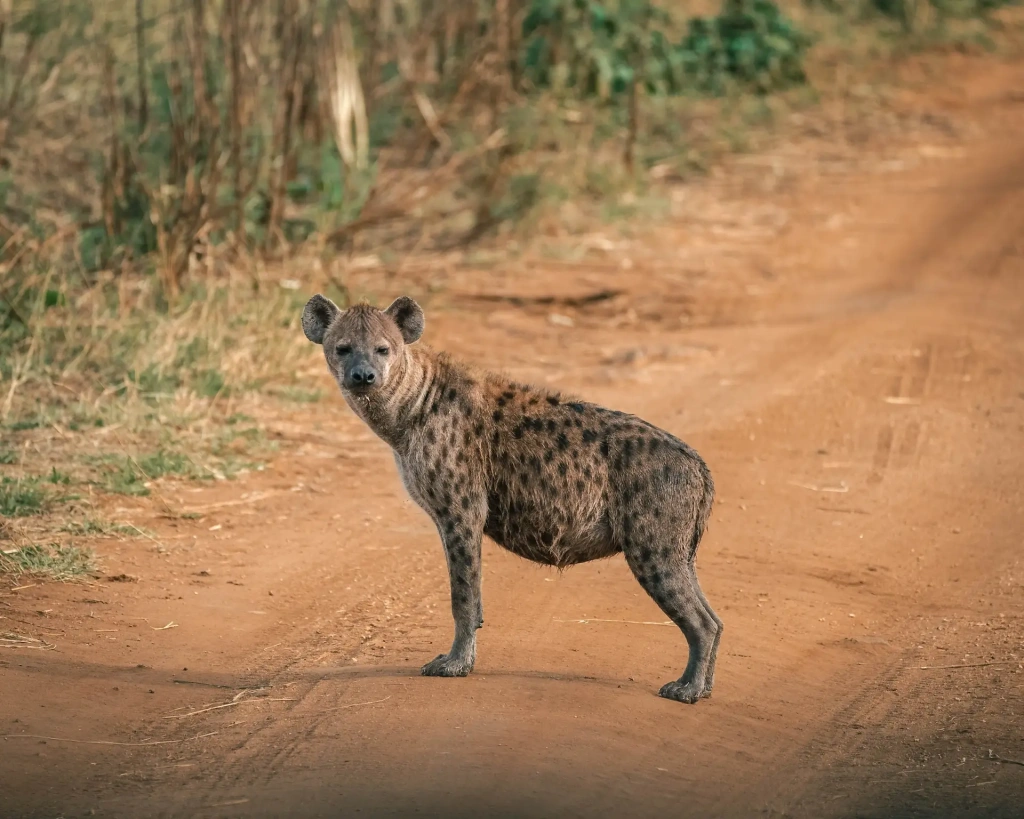
Spotted hyenas live in clans of up to several dozen individuals. Their social structure is matriarchal, with females being larger and stronger than males. In the savanna, they can be encountered at almost any time of day, although they hunt most actively in the evening and at night.
A distinctive feature is their unique vocalizations, often described as laughter or eerie calls. These sounds encode information about an individual’s identity, age, sex, and social relationships.
Where to see spotted hyenas?
In Tanzania, they are found in the Serengeti, Ngorongoro, and Tarangire. Serengeti is considered one of the best places to observe hyenas, especially during the Great Migration, when they gather around carcasses of large ungulates.
They are also present in Ruaha and Nyerere, although sightings are less frequent in the latter. In Mikumi, hyenas are often seen near herds of antelopes and zebras.
Outside Tanzania, they can be found in Kruger National Park (South Africa) and Etosha National Park (Namibia). Smaller populations exist in Maasai Mara (Kenya) and Queen Elizabeth National Park (Uganda).
14. Hippopotamus
- Size: length – 4–4.5 m (13–15 ft); shoulder height – 1.5 m (5 ft); weight – males 1.5–3.6 tonnes (3,300–8,000 lb)
- Diet: terrestrial and aquatic vegetation, shrub shoots
- Conservation status: vulnerable
- Population: no reliable data
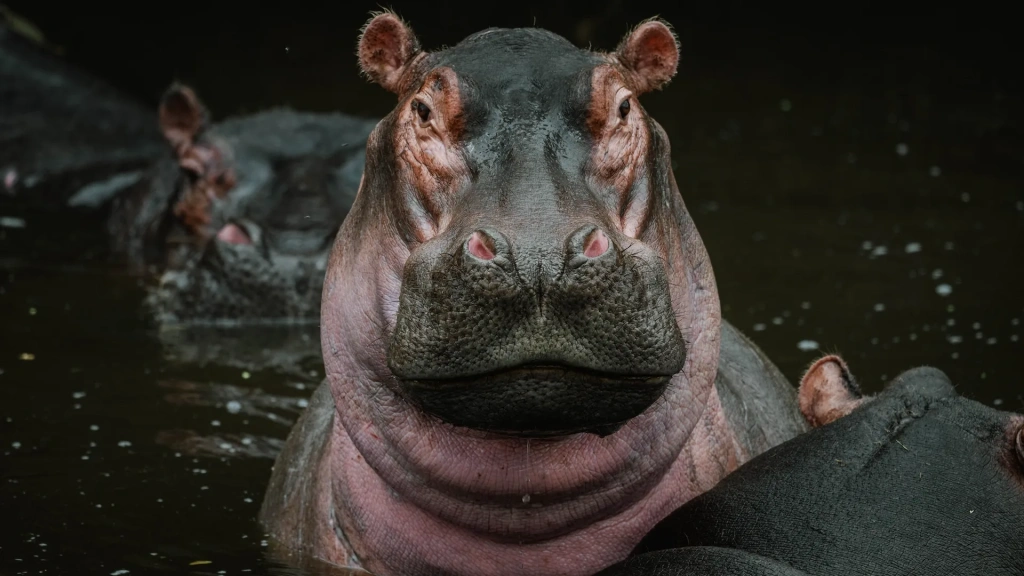
Hippos live in groups of 10–30 individuals, sometimes forming aggregations of up to 200 animals. Males establish territories in water rather than on land, where they spend most of the day to regulate body temperature. They typically come ashore to feed, mostly at night.
One of their unique traits is the ability to “communicate” both above and below water. Thanks to the structure of their larynx and vocal cords, hippos produce clicking sounds that help them navigate and communicate in murky water.
Where to see hippos?
In Tanzania, hippos are most easily seen near permanent water sources. In the Serengeti and Arusha, they gather in pools and small lakes, while in Ngorongoro, they stay near lakes and swampy areas of the caldera.
In southern Tanzania, they are commonly seen along the Ruaha River and the Rufiji River in Nyerere National Park.
One of the largest populations is found in Uganda’s Murchison Falls National Park. Good viewing locations also include Mana Pools National Park in Zimbabwe and Kruger National Park in South Africa.
15. Nile crocodile
- Size: body length – up to 5–6.5 m (16–21 ft); weight – up to 1 tonne (2,200 lb)
- Diet: fish, waterbirds, mammals (including ungulates), sometimes carrion
- Conservation status: least concern
- Population: no reliable data
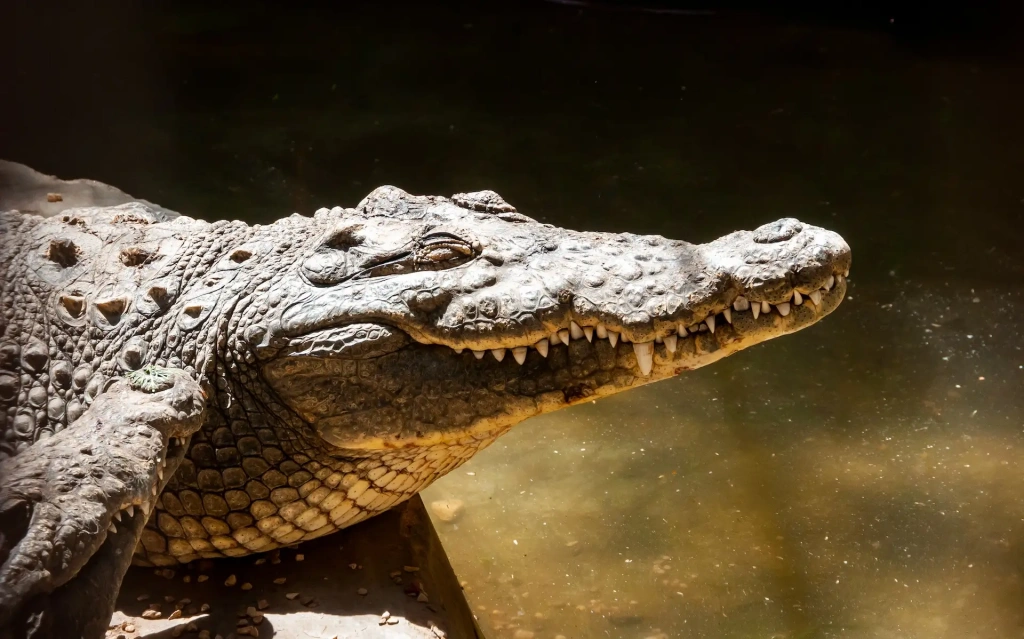
The Nile crocodile is a large predator that usually hunts alone, but remains a social animal – groups of dozens can often be seen along riverbanks and lakes. They are most active at dusk and night, while during the day they typically lie motionless on the shore to conserve energy.
When hunting, a crocodile may remain completely still for long periods before launching a sudden attack. Even without food, it can survive for several months thanks to its slow metabolism.
Another notable trait is their parental care. According to National Geographic, Nile crocodiles carefully guard their nests and may even gently roll eggs in their mouths to help hatchlings emerge – behavior not typical of many reptiles.
Where to see Nile crocodiles in Africa
In Tanzania, the best time to observe them is during the dry season – June to October – when rivers and lakes partially shrink and crocodiles gather along the banks. The largest populations are found in Nyerere National Park (along the Rufiji River) and in Katavi National Park.
A prime opportunity to see crocodiles hunting is during wildebeest river crossings in the Serengeti, particularly at the Grumeti and Mara Rivers during the Great Migration.
They can also be found in water bodies within Ngorongoro, although in smaller numbers.
Outside Tanzania, Nile crocodiles can be seen in Uganda (Murchison Falls and Queen Elizabeth National Parks), Zimbabwe (Mana Pools), and Botswana (Okavango, Kwando, and Chobe rivers). In South Africa, Ndumo Game Reserve has one of the highest concentrations.
16. African buffalo
- Size: shoulder height – up to 1.7 m (6 ft); weight – up to 1,000 kg (2,200 lb); body length – up to 3.4 m (11 ft)
- Diet: grass, leaves, and other vegetation
- Conservation status: near threatened
- Population: no reliable data
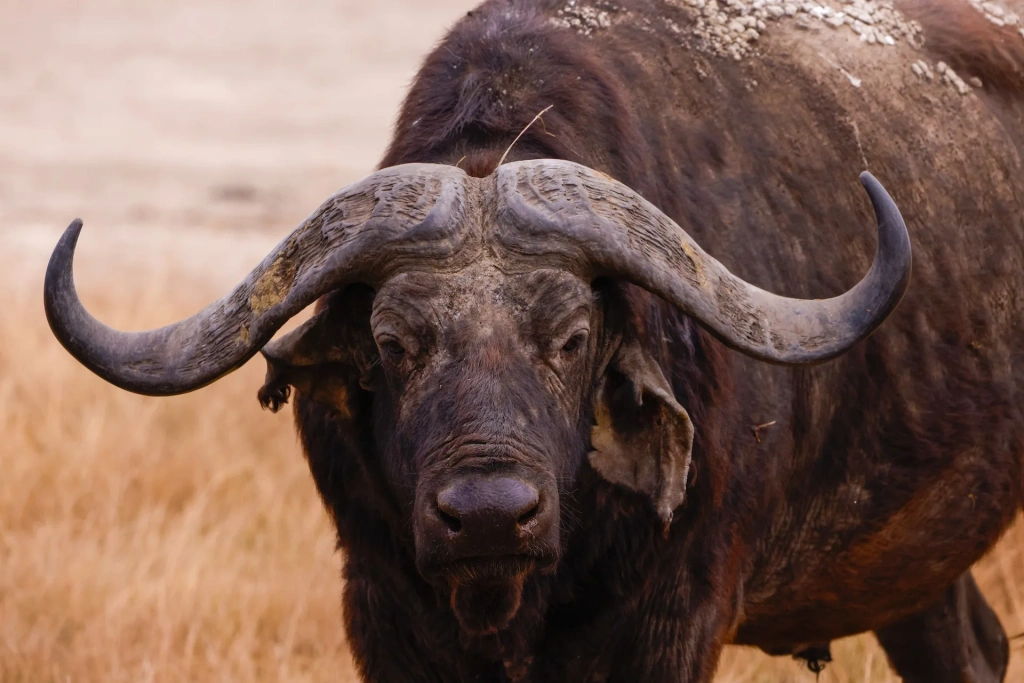
The African buffalo is a large herbivore resembling a domestic ox. Attempts to domesticate it have failed – the African buffalo has a highly unpredictable and aggressive temperament. Even older solitary males, expelled from the herd, may suddenly attack humans nearby. It is considered one of the most dangerous animals in the African savanna.
Large herds usually gather near water sources and produce sounds similar to the lowing of cattle. Scientists believe they choose migration directions through a form of “voting.” According to Africa Geographic, while resting, for example, at a watering hole, several adult females begin facing a particular direction. Gradually, others follow, and the herd ultimately moves in the direction chosen by the majority.
They have excellent memory and can easily recall routes where danger may be present or where food is abundant.
Where to see African buffalo?
In Tanzania, buffalo can be found in almost any park with open plains and water sources. In the Serengeti, they often form large herds and are easy to spot at any time of day. In Tarangire and Ngorongoro, they prefer wetlands and riverbanks. In Ruaha and Mikumi, they are often seen grazing in wooded areas near water.
In South Africa, one of the most stable populations is found in Kruger National Park. In Zimbabwe, in Hwange National Park. Another popular destination is Zambia, particularly South Luangwa, Lower Zambezi, and Kafue National Parks.
17. Chimpanzee
- Size: height – up to 1.7 m (5.5 ft); weight – 35–60 kg (80–130 lb)
- Diet: mainly fruit, but also leaves, flowers, seeds, nuts, insects, and occasionally small mammals
- Conservation status: endangered
- Population: no reliable overall data
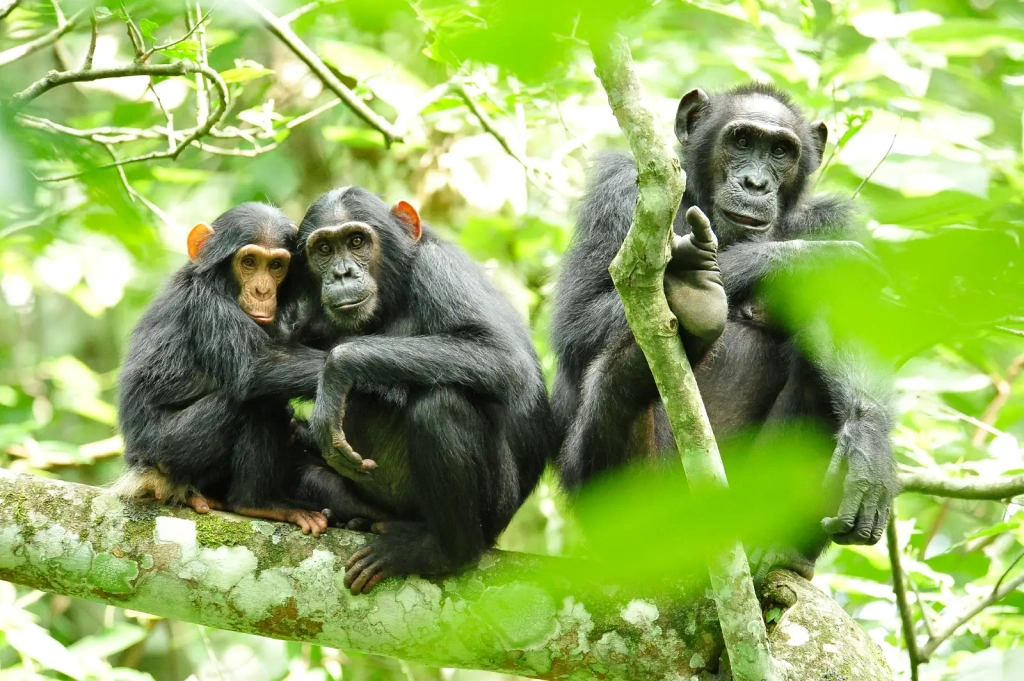
Chimpanzees wake at dawn and are most active during the day. They move both through trees and on the ground, traveling long distances in search of food. Around midday, they typically rest, becoming active again toward evening.
Chimpanzees have one of the most complex social structures among animals, with strict hierarchies. They are also among the most intelligent species: they make and use tools, extract termites, crack nuts, show empathy, care for sick group members, and even use plants for medicinal purposes, such as parasite control.
Where to see chimpanzees?
Gombe Stream National Park is one of the most famous chimpanzee destinations in East Africa. Open to visitors since 1978, it gained worldwide recognition thanks to primatologist Jane Goodall, who began her groundbreaking research here in the 1960s. Her work fundamentally changed our understanding of chimpanzee behavior.
Gombe is relatively small – just 71 km² (27 sq mi). The best time to visit is during the dry season (June–October), when movement through the forest is easier.
Another excellent location is Mahale Mountains National Park, located further south along the shores of Lake Tanganyika. It is less visited but much larger (1,650 km² (640 sq mi)) and home to one of the largest populations of eastern chimpanzees in Tanzania.
Rubondo Island on Lake Victoria is also worth noting. In 1966, German zoologist Bernhard Grzimek carried out a unique experiment, relocating chimpanzees from European zoos and circuses to the island. They successfully adapted to the wild, building nests and reproducing. Today, Rubondo is also home to giraffes, elephants, antelopes, and other species.
Chimpanzees can also be observed in Uganda (Kibale and Queen Elizabeth National Parks), Nigeria (Gashaka-Gumti National Park), Gabon (Lopé National Park), and Guinea (Mount Nimba Reserve on the border with Côte d’Ivoire).
Safari animals: quick overview
Habitats and largest populations (as of 2025)
- Botswana: Chobe National Park.
- Zimbabwe: Hwange National Park.
- Tanzania: Serengeti, Tarangire, Mkomazi.
- Tanzania: Serengeti, Ngorongoro.
- South Africa: Kruger National Park.
- Botswana: Okavango Delta, Chobe.
- South Africa: Kruger, Hluhluwe–iMfolozi.
- Namibia: Etosha.
- Kenya: Nairobi, Ol Pejeta, Tsavo West.
- Tanzania: Mkomazi, Ngorongoro, Serengeti.
- South Africa: Kruger, Pilanesberg.
- Namibia: Etosha .
- Tanzania: Serengeti, Ngorongoro, Nyerere, Ruaha.
- Tanzania: Serengeti, Arusha, Tarangire, Ngorongoro, Ruaha, Nyerere.
- Mozambique: Gorongosa (wildebeest).
- Gabon: Moukalaba-Doudou (duikers).
- Tanzania: Serengeti, Ngorongoro, Mikumi, Mahale, Gombe.
- Uganda: Kibale, Bwindi.
- Kenya: Taita Hills, Samburu.
- Tanzania: Serengeti, Ngorongoro, Mkomazi.
- Uganda: Bwindi.
- Zambia: Luambe.
- Tanzania: Serengeti, Tarangire, Manyara, Mkomazi.
- South Africa: Kruger, Hluhluwe–iMfolozi
- India: Sariska.
- Rwanda: Nyungwe.
- Tanzania: Amani, Jozani, Arusha.
- Kenya: Shimba Hills.
- Tanzania: Serengeti, Ngorongoro.
- South Africa: Kruger.
- Namibia: Etosha.
- Tanzania: Serengeti.
- South Africa: Kruger.
- Uganda: Murchison Falls.
- Namibia: Etosha.
- South Africa: Kruger.
- Tanzania: Serengeti.
- South Africa: Kruger.
- Tanzania: Serengeti.
- Kenya: Maasai Mara.
- Zambia: South Luangwa, Lower Zambezi.
- South Africa: Kruger.
- Tanzania: Katavi, Nyerere.
- Kenya: Maasai Mara.
- South Africa: Kruger.
- Tanzania: Nyerere.
- South Africa: Kruger.
- Zimbabwe: Hwange.
- Tanzania: Katavi.
- Uganda: Kibale.
- DRC: Salonga, Lomami, Maiko.
- Tanzania: Gombe, Mahale, Rubondo.
All content on Altezza Travel is created with expert insights and thorough research, in line with our Editorial Policy.

Want to know more about Tanzania adventures?
Get in touch with our team! We've explored all the top destinations across Tanzania. Our Kilimanjaro-based adventure consultants are ready to share tips and help you plan your unforgettable journey.