





 52 reasons
  Free PDF


 Message us on WhatsApp
  Book a Free Call

 Safari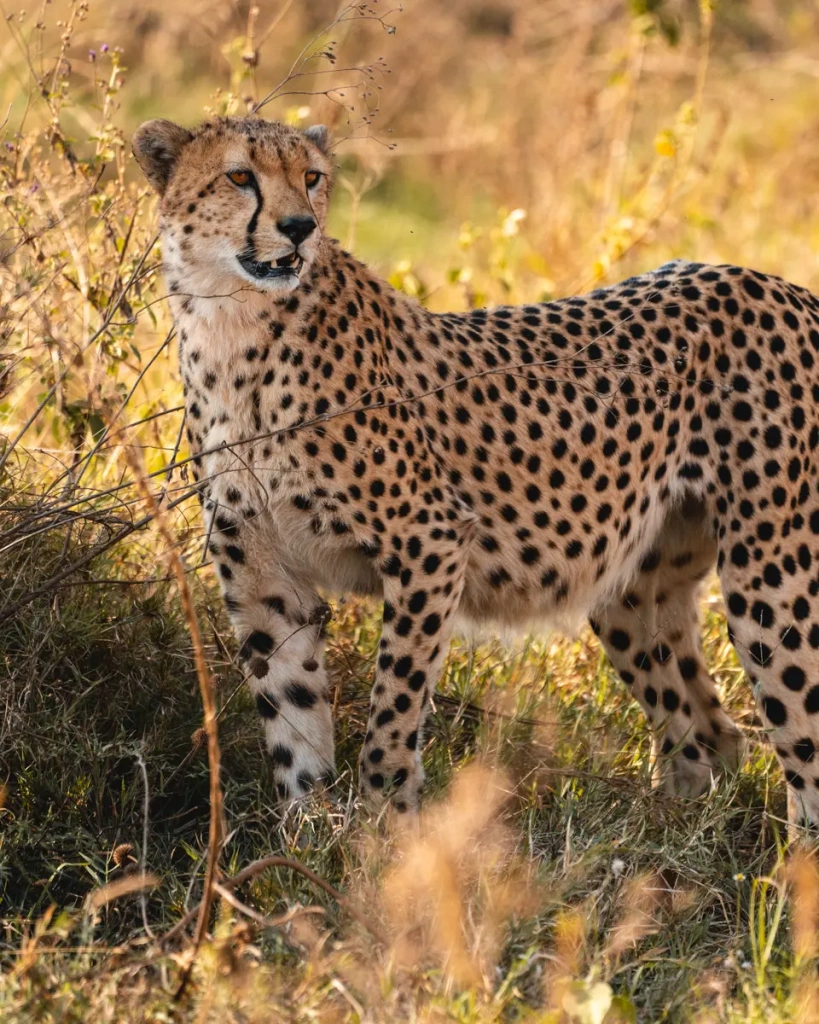
At first glance, leopards and cheetahs can look similar, but the resemblance mostly ends with the spotted coat. They belong to different cat genera and differ in temperament, size, habitat, and survival strategy: one relies on strength and power, the other on speed. Let’s take a closer look.
What is the difference between a cheetah and a leopard
Origin and habitat range
Both species come from the same cat lineage. Around 4–5 million years ago, a branch emerged that gave rise to cheetahs. Today, they are the only members of their genus (Acinonyx) – these large felines have no living close relatives.
Scientists found the earliest cheetah traces in East Africa. From there, the species spread to other regions, including northern Africa, the Middle East, and South Asia. But today, according to the Scientific Council of the Convention on the Conservation of Migratory Species of Wild Animals, cheetahs occur in only about 9% of their historical range: in South Africa, Tanzania, Namibia, Zimbabwe, Kenya, Botswana, Mozambique, and a number of other countries. In Asia, a small population survives in Iran.
Leopards are “younger” than cheetahs and emerged as a distinct species about 2–3 million years ago. They occupied a wider territory – remains have even been found in Italy and the Balkans. But due to hunting and deforestation, their range has shrunk. In 2016, scientists estimated that over the last 250 years, leopards lost about 75% of their historical territory, and some subspecies (Amur and Arabian) lost around 98%.
Even so, today leopards live across roughly 70 countries, including Tanzania, Kenya, Russia, Turkey, India, Israel, Sri Lanka, and others.
Leopard subspecies
The exact number of leopards is unknown: these animals are elusive, often live in hard-to-reach areas, and can travel long distances. The latest estimates put them at around 131,000 individuals. Some sources mention 700,000, but that figure is based on a 1988 study and is no longer considered current.
Among the most vulnerable subspecies are the Amur, Arabian, and Javan leopards. Rough estimates put each of them at anywhere from 70 to 570 individuals.
Cheetah subspecies
The most vulnerable is the Asiatic cheetah, which is on the brink of extinction: only a few dozen to around a hundred individuals remain. Overall, there are about 6,500–7,000 cheetahs worldwide.
Habitat
The biggest difference between these two cats is how well they adapt to different conditions. Leopards are generalists. You can find them almost everywhere, from the jungles of Sri Lanka to the arid regions of Namibia and the cold forests of Far Eastern Russia, where temperatures can drop to -25 to -30°C (-13 to -22°F).
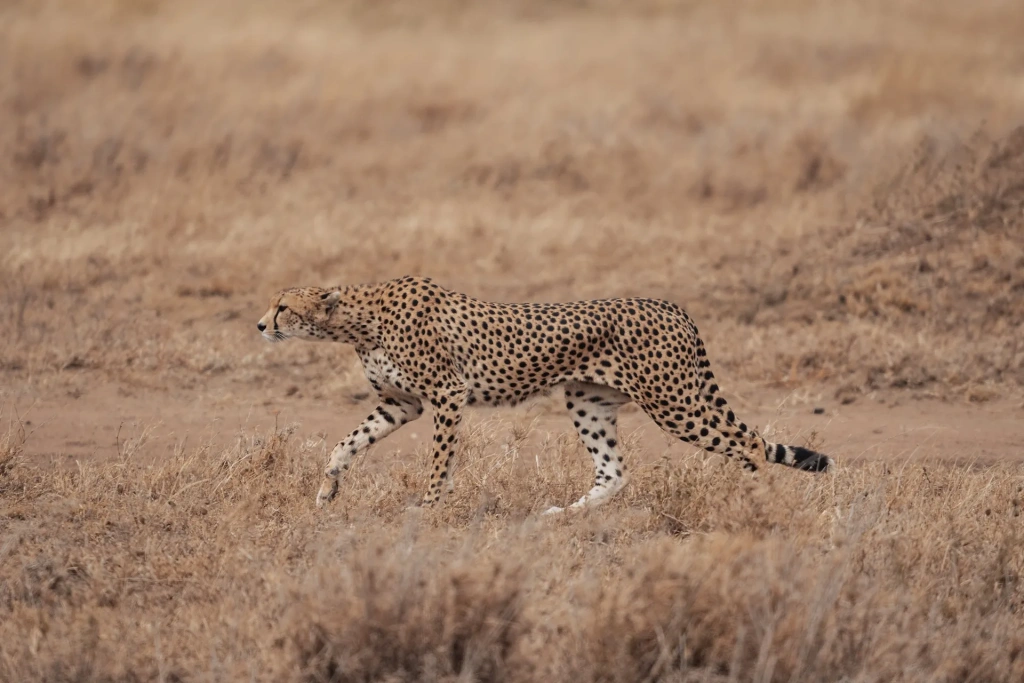
Cheetahs, by contrast, are closely tied to open landscapes. Their ideal habitat is dry grassy plains, open woodland, and savannas – places with enough room for high-speed hunting. These areas are often used for agriculture and road construction, making cheetahs especially vulnerable to habitat loss.
Appearance and anatomy
Leopards are significantly larger and stockier: a male’s body length (excluding the tail) can reach 180 cm (71 in), and the average weight is 60–70 kg (132–154 lb), though some individuals weigh up to 90 kg (198 lb). Like most cats, a leopard’s claws retract. This helps it move silently and stay hidden while hunting. Thanks to elastic vocal cords, these animals can roar, a trait typical of the genus Panthera.
Cheetahs are slimmer and lighter: body length is typically 80–150 cm (31–59 in), and weight is about 40–65 kg (88–143 lb). In both species, females are roughly one-third smaller than males. Their claws are always slightly extended. This improves grip when running at high speed. Another difference is vocalization. Cheetahs don’t roar; instead, they make chirp-like sounds (during courting), hiss and howl (when aggressive), and they also purr and meow.
Coat and spots
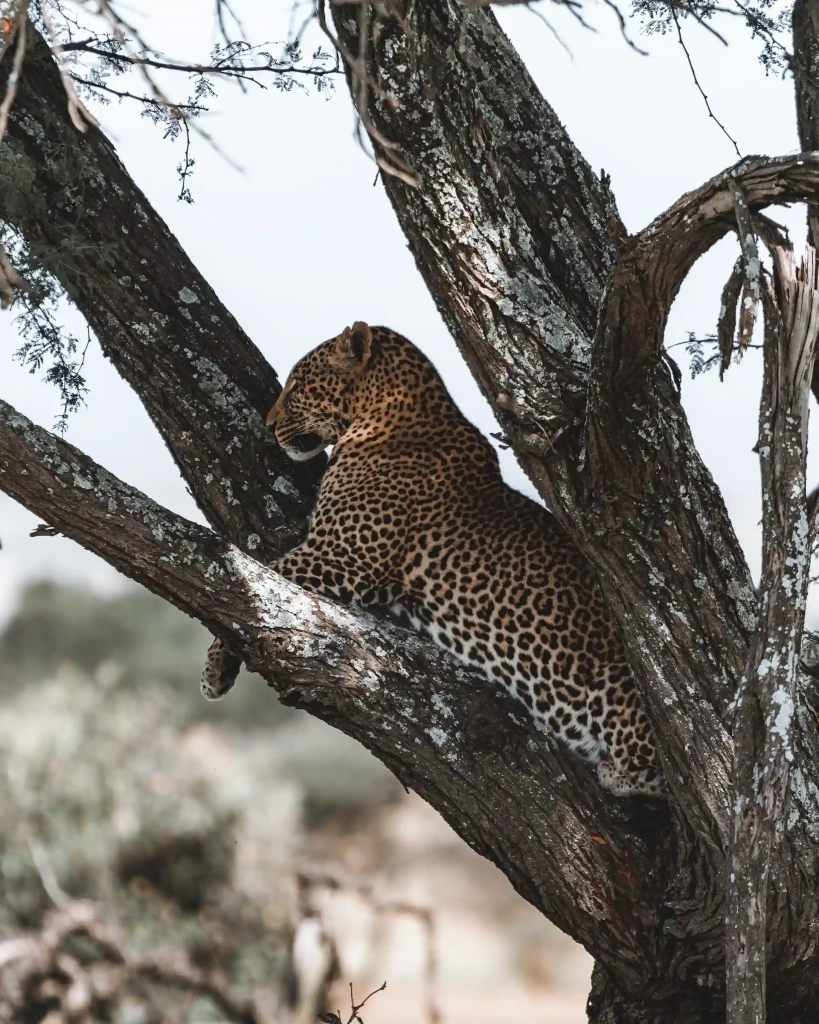
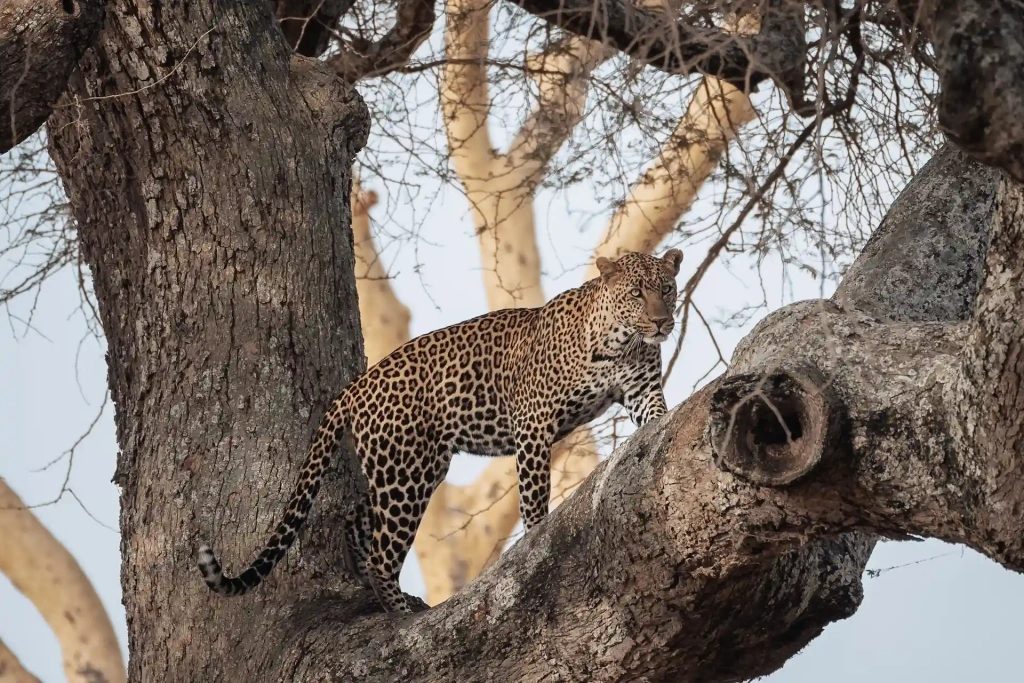
A leopard’s spots form rosettes – rings with a lighter center. They range from crisp to blurred depending on habitat, which helps the animal blend into jungle cover or rocky terrain. Rarely, mutations cause unusual coat colors. For example, in Southeast Asian forests, there are black leopards with a barely visible rosette pattern. In South Africa, researchers have documented rare copper-red leopards, a trait that has been increasing over the last 40 years. In 2022, scientists suggested the anomaly could be linked to high inbreeding within the population.
A cheetah’s pattern is simpler: black spots distributed evenly across the body. The face has distinctive “tear lines” – black stripes running from the corners of the eyes to the corners of the mouth. In rare cases, the so-called “king” coat appears: a dark stripe runs along the spine, and the body spots are larger and irregular. It was once considered a separate species, but it turned out to be a mutation.
Tactics, hunting skills, behavior of leopard vs cheetah
Leopards are masters of adaptation. They hunt confidently from ambush, stalk in twilight, and climb trees, often hauling prey into the canopy so it won’t be taken by competitors. Depending on the environment and on which predators share the area (lions, hyenas, or other leopards) they adjust their survival strategy. For example, they hunt more often at dusk or at night, but can also be active during the day. Observations in South African reserves showed that leopards stash carcasses in trees in 75% of cases; in the rest, they hide them in caves or among rocks.
Their diet includes more than 90 animal species – from mice to large domestic livestock. Most often, they prefer prey weighing up to 70 kg (154 lb) (antelopes, baboons, chamois). Leopards can sometimes fight animals even larger than themselves. They also prey on other wild cats, including servals and cheetahs.
Cheetahs rely on speed and agility. This is their main tactic for hunting nimble antelopes that can change direction sharply to escape pursuit. They can accelerate to 100 km/h (62 mph), but they hold that top speed only for about 200–300 meters (650–1000 ft) – enough for a decisive burst, not a long-distance chase. Despite these impressive stats, cheetahs are relatively inefficient hunters: only about 40% of their attacks are successful.
Historically, this low success rate was often attributed to overheating. It was believed that cheetahs “burn out” from elevated temperature after a sprint and could even die, so they stop the chase themselves. But a study from the University of the Witwatersrand Medical School challenged that idea. Scientists anesthetized six wild cheetahs to place sensors and found that their body temperature rises only slightly during the chase but spikes sharply after a successful hunt and can remain elevated for up to a day. They suggested this may be stress-related: the cheetahs showed anxious behavior such as scanning the surroundings even while eating, and abandoning the carcass at the slightest threat. That caution is easy to understand – during the experiment, a leopard killed two of the six cheetahs.
Cheetahs themselves prefer young wildebeest, gazelles, hares, jackals, ostrich chicks, and guineafowl. The maximum prey weight is 40–50 kg (88–110 lb). Cheetahs typically don’t eat carrion and prefer small to medium-sized prey..
Social life
Leopards live solitary, independent lives. Males patrol and mark their territory, occasionally crossing paths with females to mate. Direct encounters with same-sex individuals often involve aggression. This is driven by competition for territory and resources. As for offspring, this species usually has 2 to 4 cubs, more rarely up to 6. Just over half survive to adulthood due to predator attacks (including from other leopards), disease, or human-related factors (accidental conflicts, poaching, habitat loss).
Female cheetahs also live mostly solitary lives, but among males, coalitions are observed – a rare behavior for cats of this size. Groups usually consist of 2–3 related individuals. Cheetahs have about 3–4 cubs, sometimes up to 6 or even 8, but survival rates are lower than in leopards, around 20–30%.
Contact with humans
Leopard attacks on humans are rare. In Iran, between 2012 and 2020, 31 attacks by Persian leopards on people were recorded, leaving 29 injured and two dead. Most incidents happened in daylight, when shepherds and farmers crossed into the predator’s territory. The reasons are straightforward: shrinking habitat, a lack of wild prey, and close proximity to people, whom big cats perceive as a threat.
Cheetahs are evolutionarily built for a different behavioral strategy: sprinting, avoiding conflict, and staying cautious. There are no records of cheetahs in the wild attacking humans and very few in captivity. Among the large cats, they are the most peaceful toward people.
Risks and conservation
Despite the major differences between the two predators, leopards and cheetahs face similar risks. The biggest threat to both species is habitat loss and declining prey populations.
For cheetahs, the outlook is bleak. Australian researchers from the University of Queensland estimated that in the wild, outside protected reserves, the global cheetah population could decline by 53% over 15 years. They also predict that in Iran, home to a small group of Asiatic cheetahs, more than half of the areas suitable for gazelles could be lost. That would hit the entire food chain and further threaten this subspecies.
Leopard forecasts are less dramatic. That’s due to their wider range and their ability to live in diverse conditions. But the risk is still real: some leopard subspecies could lose up to a quarter of the territories they occupy because of climate change and human interference.
There are also examples where things improve. In Kafue National Park (Zambia), camera traps, patrols, and work with local communities helped scientists nearly triple leopard numbers in some areas over a few years. In just one study zone, they recorded 95 individuals – one of the highest density figures for this species in southern Africa. And in 2024, the Cheetah Conservation Fund released 10 individuals into the wild with GPS collars and an early-warning system. The goal was to prevent accidental encounters with farmers and reduce the risk of retaliatory attacks on predators.
A cheetah is a sprinter: a sleek predator with black spots and “tear lines” by the eyes. It can reach up to 100 km/h (62 mph) over short distances and hunts mostly during the day. A leopard is a larger, more powerful cat with oval dark rosettes that have a lighter center. It hunts at night, climbs trees, and drags its prey up into them.
A leopard. It’s stronger, more aggressive, and skilled at tracking prey and stalking silently. Cheetahs are adapted to avoiding conflict by relying on speed.
A jaguar is a separate species found in the Americas. It’s bulkier and larger than a leopard, with a powerful jaw and distinctive rosette spots. It’s impossible to confuse with a cheetah: a jaguar is much larger and stronger.
No. Leopards are solitary, cautious predators and can be aggressive. Cheetahs are timid and calm, and rarely show hostility even in captivity.
Among land animals, the cheetah is the fastest. It can reach up to 100 km/h (62 mph). The fastest bird is the peregrine falcon (up to 320–390 km/h / 199–242 mph in a dive). The fastest fish is the sailfish (up to 100–110 km/h / 62–68 mph).
All content on Altezza Travel is created with expert insights and thorough research, in line with our Editorial Policy.

Want to know more about Tanzania adventures?
Get in touch with our team! We've explored all the top destinations across Tanzania. Our Kilimanjaro-based adventure consultants are ready to share tips and help you plan your unforgettable journey.