





 52 reasons
  Free PDF


 Message us on WhatsApp
  Book a Free Call

 Safari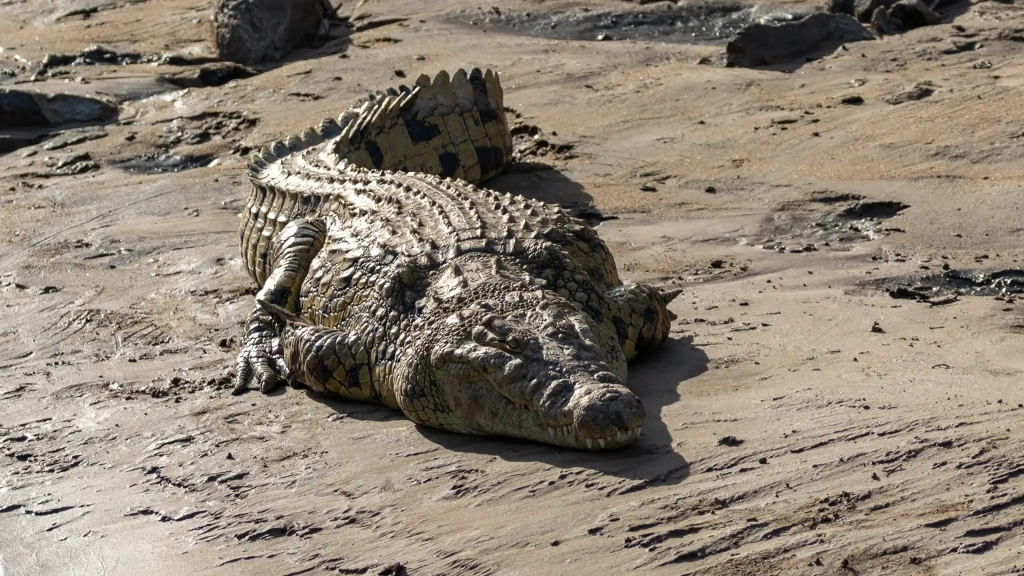
Alligators and crocodiles may look almost identical at first glance, but that resemblance is deceptive. They differ significantly in temperament, anatomy, and hunting behavior. Alligators are generally more cautious and tend to avoid people, while crocodiles are more aggressive and far more dangerous, holding the record for the strongest bite force of any living animal. Below are the key differences between crocodiles and alligators.
How crocodiles differ from alligators: at a glance
Living fossils: origin and habitat of crocodiles and alligators
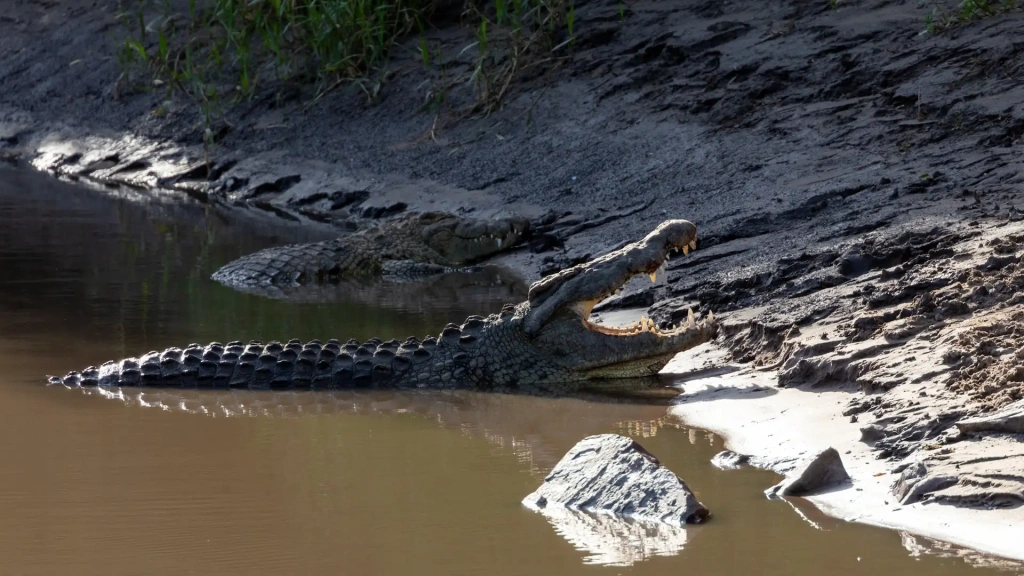
Crocodiles and alligators are often called “living fossils.” Their ancestors hunted dinosaurs and survived a mass extinction 66 million years ago that wiped out all non-avian dinosaurs. You can still see what these reptiles looked like, as their appearance has barely changed since that time.
Crocodiles are considered slightly more “advanced” in evolutionary terms. They adapted better to a wide range of environments, from salty mangrove swamps to open coastal lagoons. Alligators, by contrast, largely stuck to their original strategy and live mainly in freshwater.
Alligator species
There are only two alligator species: the American and the Chinese alligator. The American alligator was driven to the brink of extinction in the US in the mid-20th century due to poaching for its skin and habitat loss. In 1967, the species was listed as endangered, thereby banning hunting and the trade in its skin. Over the next 20 years, the population recovered. Today, several million American alligators live in the wild, with estimates ranging from 3 to 5 million individuals.
Chinese alligators are critically endangered and among the rarest large predators on the planet. Centuries of modification of the Yangtze River floodplain (wetland drainage, dam construction, rice paddies) and poaching reduced their wild population to just a few dozen individuals by the late 20th century. Today, around 150 remain.
Crocodile species
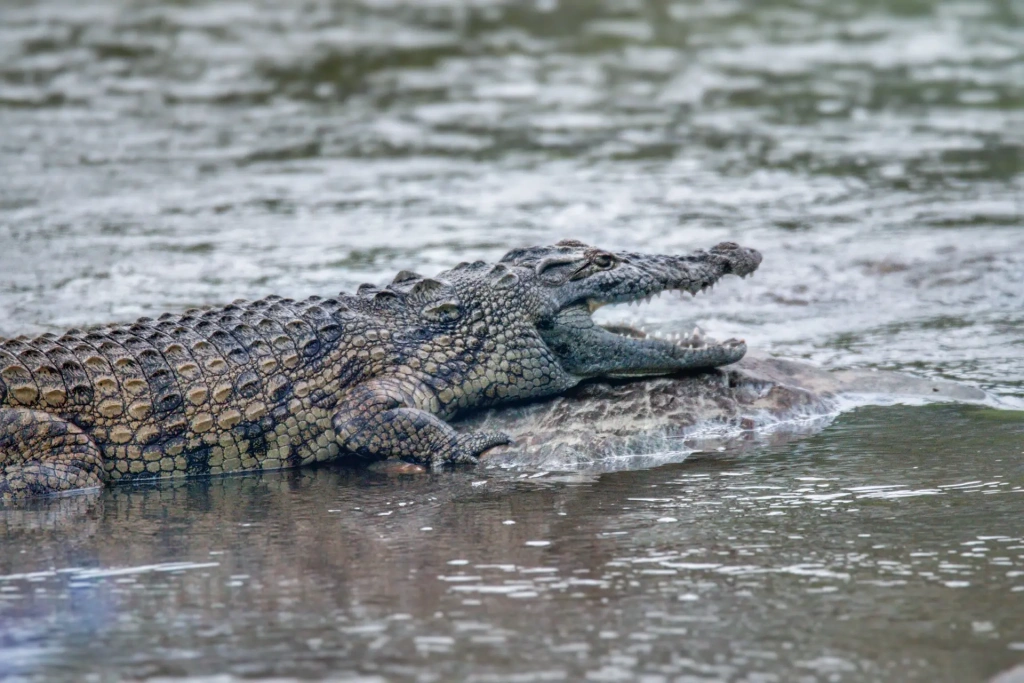
Crocodile diversity is far greater than that of alligators. Today, 14 species are known worldwide, ranging from the Caribbean to Africa and Australia. Their population sizes vary greatly.
The largest and most stable crocodile populations are the Nile crocodile (estimated at 250,000–500,000 individuals) and the saltwater crocodile (approximately 400,000 individuals). The Nile crocodile is widespread across sub-Saharan Africa and can be encountered on safari in Tanzania, while the saltwater crocodile inhabits coastal regions of Australia and Southeast Asia.
The Philippine crocodile (approximately 130 individuals) and the Orinoco crocodile (up to 250 individuals) are critically endangered, primarily due to poaching and habitat loss.
Appearance and size differences between alligator and crocodile
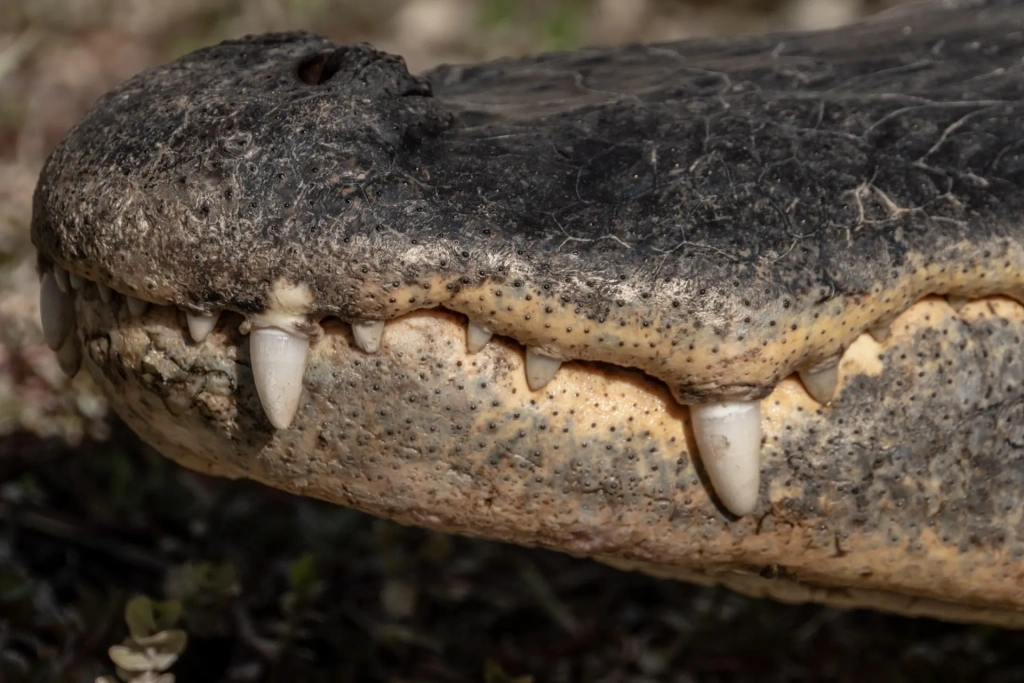
Alligators and crocodiles share a similar body shape, thick keratinized skin, and bony armor plates, but there are clear differences between the two families.
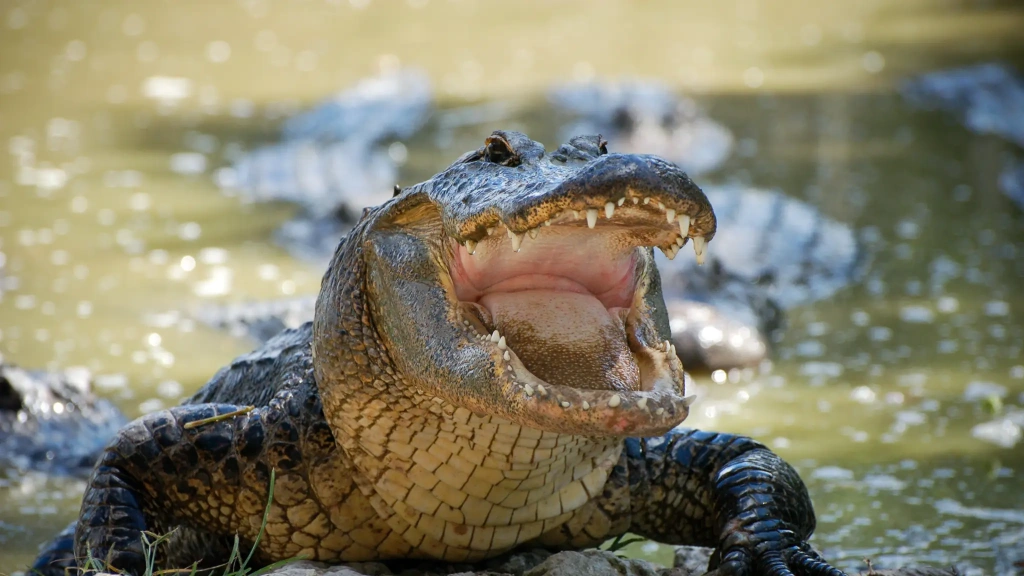
Alligators have a broader, more rounded, U-shaped snout, and their lower teeth are barely visible when the mouth is closed. Their coloration is usually dark gray or almost black. Adults measure 3–4.5 m (10–15 ft) in length and can weigh up to 450 kg (1,000 lb). Around the jaws are sensitive receptors (small dark dots) that detect water vibrations even in complete darkness, an important hunting adaptation. Thanks to a low heart rate, alligators can hold their breath for 30–45 minutes.
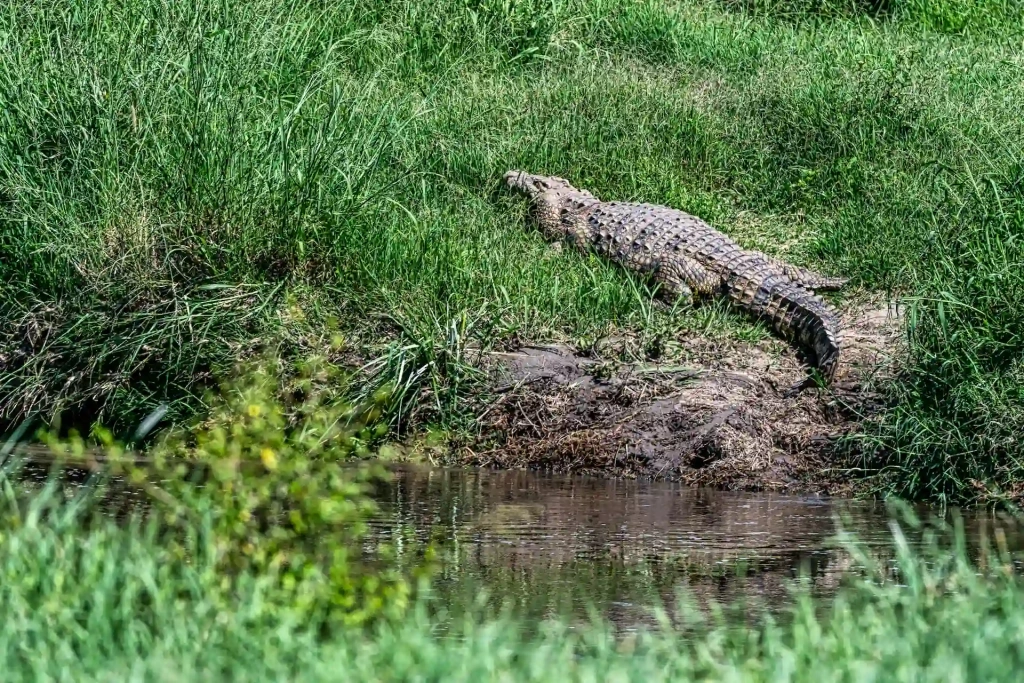
Crocodiles, on the other hand, have a narrower, pointed, V-shaped snout, with lower teeth protruding outward. Their color ranges from gray-brown to olive, helping them blend into lighter coastal environments. Crocodiles are significantly larger than alligators: some species, such as the Nile and saltwater crocodiles, reach 6–6.5 m (20–21 ft) in length and weigh up to 1,000 kg (2,200 lb).
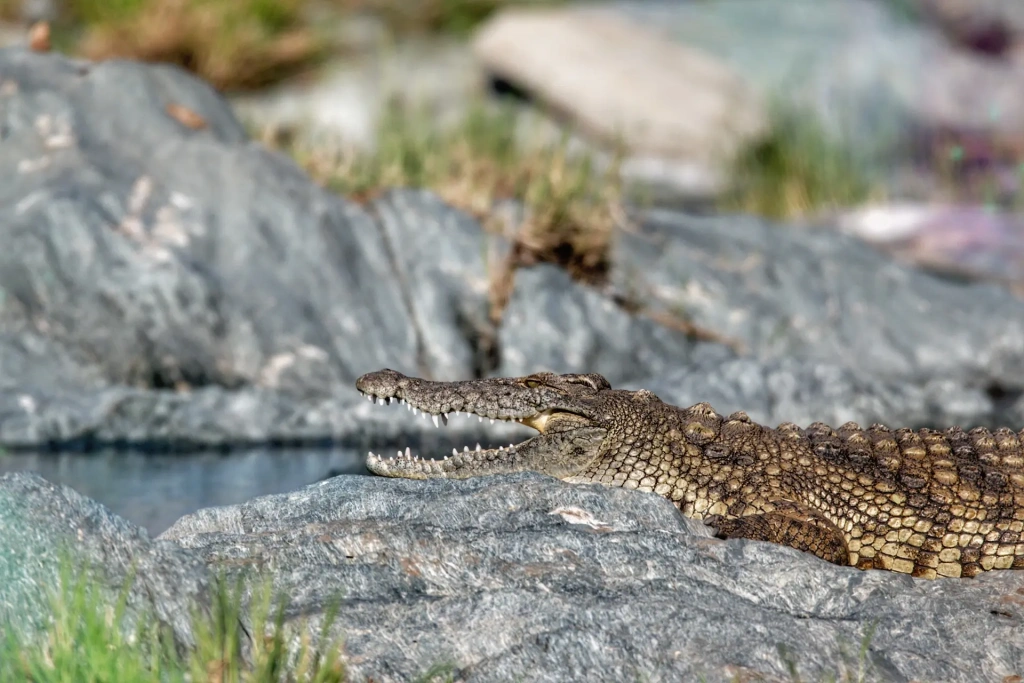
Unlike alligators, crocodiles have sensory receptors covering their entire body, making them extremely sensitive to water vibrations and prey movement. They can also remain underwater for long periods; large individuals may stay submerged in cold water for several hours.
Social behavior and reproduction
Despite being ancient and dangerous predators, crocodilians are among the most attentive parents among reptiles. Females usually lay eggs in a nest or shallow pit near the shore. Alligator clutches contain 20–40 eggs, while crocodiles lay 40–60. Incubation lasts about 60–90 days. Throughout this period, the female guards the nest and, after hatching, helps the young reach the water safely and accompanies them for several months. Even so, only 1–2% of offspring survive to adulthood, with most falling prey to other predators such as fish, birds, and snakes.
Both alligators and crocodiles are solitary. They communicate using low-frequency sounds that create ripples on the water, detected by other individuals through their sensory receptors. This helps them mark territory and attract mates.
Champion jaws: bite force differences between crocodile and alligator
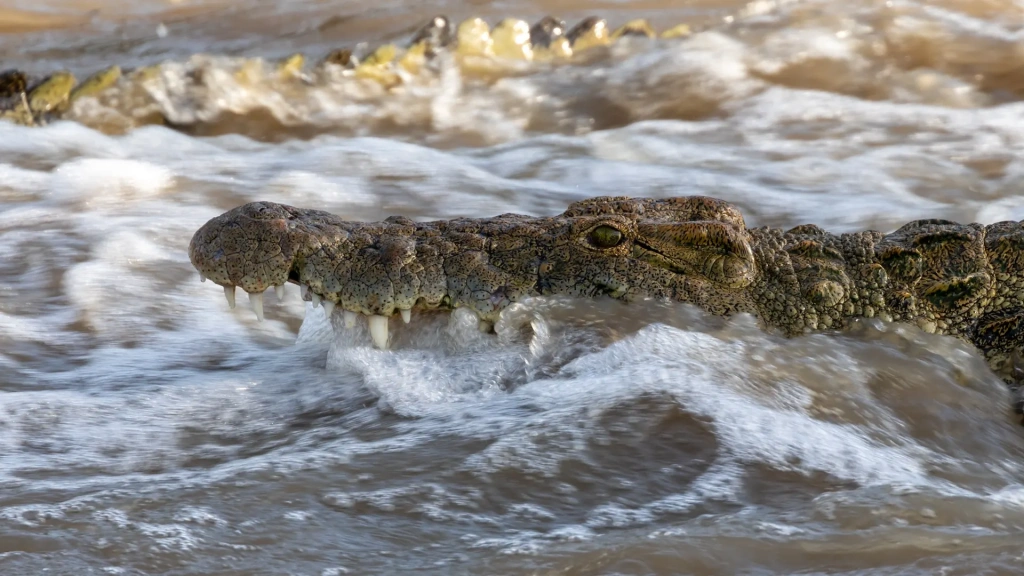
Debates over which animal has the most powerful jaws inspired a team of scientists from Florida State University to measure actual bite force across all living crocodilian species. The saltwater crocodile is the undisputed champion among living animals, clamping its jaws with a force of 16,400 Newtons. This is only slightly less than the force of hydraulic rescue cutters used to slice through thick metal beams (15,000–20,000 Newtons).
Previously, scientists believed that snout shape determined bite strength, with narrow V-shaped crocodile snouts expected to be stronger than the broader U-shaped snouts of alligators. Researchers from the University of Florida proved this assumption wrong, showing that body mass is the key factor. They also applied their findings to extinct giants such as Deinosuchus (a massive alligatoroid up to 10.5 m / ≈ 34.4 ft long that lived 82–73 million years ago). Its bite force may have reached 100,000 newtons, strong enough to prey on large dinosaurs.
Alligators are also considered bite-force champions at 9,400 newtons. This is less than a crocodile’s bite but far stronger than that of lions (1,800 N) and hyenas (4,500 N). This power comes from the muscles that close the jaws. The muscles that open them are extremely weak, which is why an alligator’s or crocodile’s mouth can be held shut with one hand.
Temperament and danger to humans
Alligators and crocodiles are often perceived as equally dangerous, but statistics indicate otherwise. In 2025, researchers from the University of Florida and Central College in Kentucky found that alligators do not intentionally hunt humans. In 96% of incidents, attacks were linked to swimming in prohibited areas, nighttime activity near water, walking dogs, or attempts to feed the reptiles. In terms of behavior, alligators are secretive and cautious, avoid conflict, keep their distance from people, and never view humans as prey.
Since 1948, about 500 alligator attacks have been recorded, 31 of them fatal. That is less than one fatality per year, despite Florida’s population exceeding 22 million.
Crocodiles are more aggressive. They defend territory, actively compete for prey, and are less likely to avoid confrontation. Many species inhabit coastal zones, mangroves, river deltas, and lakes, where human contact is almost inevitable. They make no distinction between their usual prey and humans once someone enters the “strike zone.” As of 2024, crocodiles kill up to 1,000 people worldwide each year.
Frequently asked questions
Crocodiles are much larger, reaching up to 6.5 m (≈ 21.3 ft) in length, and have a narrow, pointed, V-shaped snout. When the mouth is closed, the lower jaw teeth remain visible. Alligators have a wide, rounded, U-shaped snout, their lower teeth are hidden, and they grow to a maximum of about 4.5 m (≈ 14.8 ft).
Crocodiles are more aggressive. Worldwide, up to 1,000 people die each year from encounters with these reptiles. Alligators in Florida pose minimal risk; around 30 fatal incidents have been recorded over 70 years, mostly due to unsafe behavior in their habitats.
Such encounters do not occur in nature, but hypothetically, a crocodile would have the advantage. It is larger and has stronger jaws, with a bite force of about 16,400 newtons, comparable to hydraulic rescue cutters used to sever thick metal beams.
In water, both can reach speeds of up to 32 km/h (≈ 20 mph) using their powerful tails. On land, they can sprint short distances at up to 16–17 km/h (≈ 10–10.5 mph) but tire quickly.
Average lifespan is 50–70 years, though exceptions exist. For example, a Nile crocodile living at a wildlife conservation center in South Africa turned 125 years old in December 2025.
All content on Altezza Travel is created with expert insights and thorough research, in line with our Editorial Policy.

Want to know more about Tanzania adventures?
Get in touch with our team! We've explored all the top destinations across Tanzania. Our Kilimanjaro-based adventure consultants are ready to share tips and help you plan your unforgettable journey.
 Climbing
  Safari
  About Tanzania
  Islands