





 52 reasons
  Free PDF


 Message us on WhatsApp
  Book a Free Call

 About Tanzania
In 2026, the best African countries for expats are Mauritius, Morocco, Rwanda, South Africa, Tanzania, Kenya, and Namibia. These countries offer visa programs for foreigners, English and French as widely used official languages, and well-developed urban infrastructure. In many cases, safety levels are comparable to those in Europe. Read on for a detailed breakdown from Altezza Travel.
How we compiled this list
To compile this ranking, our team evaluated each country based on several criteria, including safety, cost of living, urban infrastructure, overall development, and residency options, particularly for digital nomads. The assessment was based on the following sources:
- Global Peace Index. The index covers 163 countries representing 99.7% of the world's population. Each country is evaluated using 23 indicators, including internal and external conflicts, crime levels, and militarization.
- Mercer Quality of Living City Ranking. An annual study by international consulting firm Mercer that evaluates 241 cities across 39 criteria, including infrastructure, safety, healthcare, and political stability.
- Numbeo Cost of Living Index. The world's largest crowdsourced database on living costs, covering housing, food, transportation, and service prices in more than 500 cities worldwide. The data is updated in real time.
- InterNations Expat Insider. One of the world's largest surveys of expat life abroad, covering everything from work and personal finances to housing, infrastructure, and quality of life. The ranking is based on responses from more than 10,000 people living in 172 countries, though only 46 destinations make the final ranking.
- Official government visa and immigration portals.
Mauritius
- Population: 1.3 million
- Capital: Port Louis
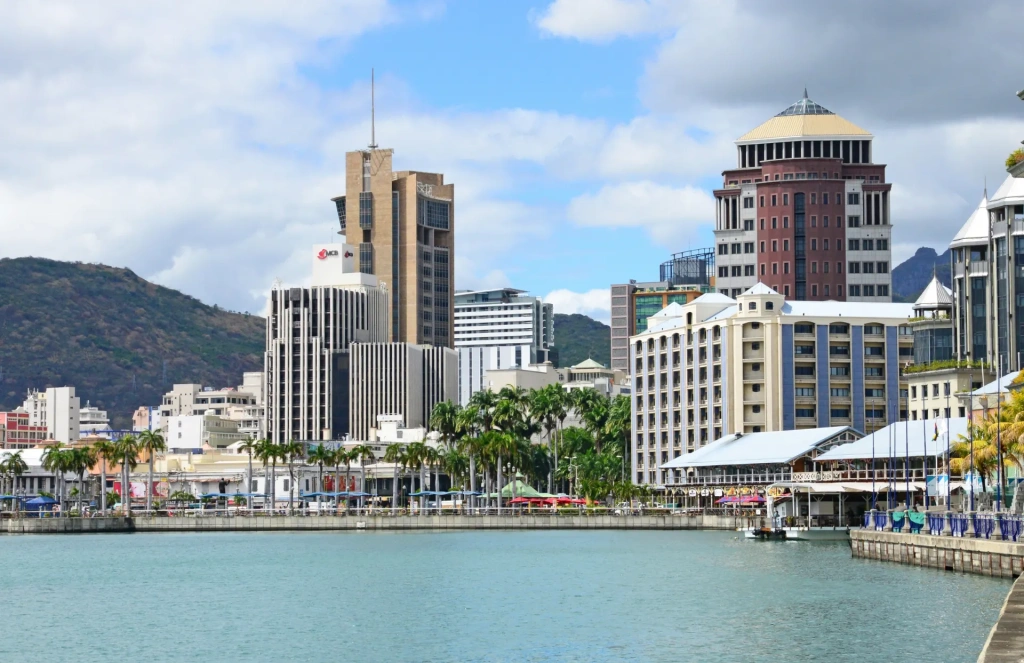
Mauritius consistently ranks first among Africa's countries for safety, quality of life, and political stability. For 18 consecutive years, it has been named the most peaceful country on the continent. In the Global Peace Index, Mauritius ranks ahead of Slovakia, the United Kingdom, Norway, Sweden, the United States, and many other developed nations. Port Louis also ranks first in Africa for quality of life and 88th worldwide. That puts it close to Dubai and Abu Dhabi (83rd and 85th) and Budapest (79th), while placing well ahead of Kuala Lumpur (91st), Buenos Aires (97th), Shanghai (106th), and many other major cities.
Port Louis is a relatively small city with a strong financial sector, high-quality private healthcare, and an international airport. Mauritius itself is a compact tropical island stretching about 65 km (40 mi) from north to south. Life moves at a relaxed pace here. From downtown Port Louis, you can reach beaches, coral reefs, or mountain trails in less than an hour.
A single person living in central Port Louis should expect to spend at least $1,000 per month, including rent for a one-bedroom apartment. This estimate covers utilities, internet, groceries, and other everyday expenses. A family of three or four typically spends around $2,500–3,000 per month, including rent for a two-bedroom apartment. These figures do not include international school tuition, which averages around $7,600 per child per academic year, nor do they account for spending above the average lifestyle level, such as dining out, higher-end groceries, or frequent shopping.
Mauritius offers a Premium Visa for digital nomads. The visa is free, issued online, and available to citizens of for one year, with the option to renew. Applicants must earn at least $1,500 per month from sources outside Mauritius, plus an additional $500 for each dependent. Holders of this visa are not permitted to work for local employers.
Foreigners can qualify for citizenship after living in Mauritius for five to seven years, depending on their current nationality, by marrying a Mauritian citizen (after at least four years of marriage), or by investing $500,000. Investors may become eligible after just two years of continuous residence. It's important to note that Mauritius does not recognize dual citizenship, meaning applicants must renounce their previous nationality.
Morocco
- Population: 40 million
- Capital: Rabat
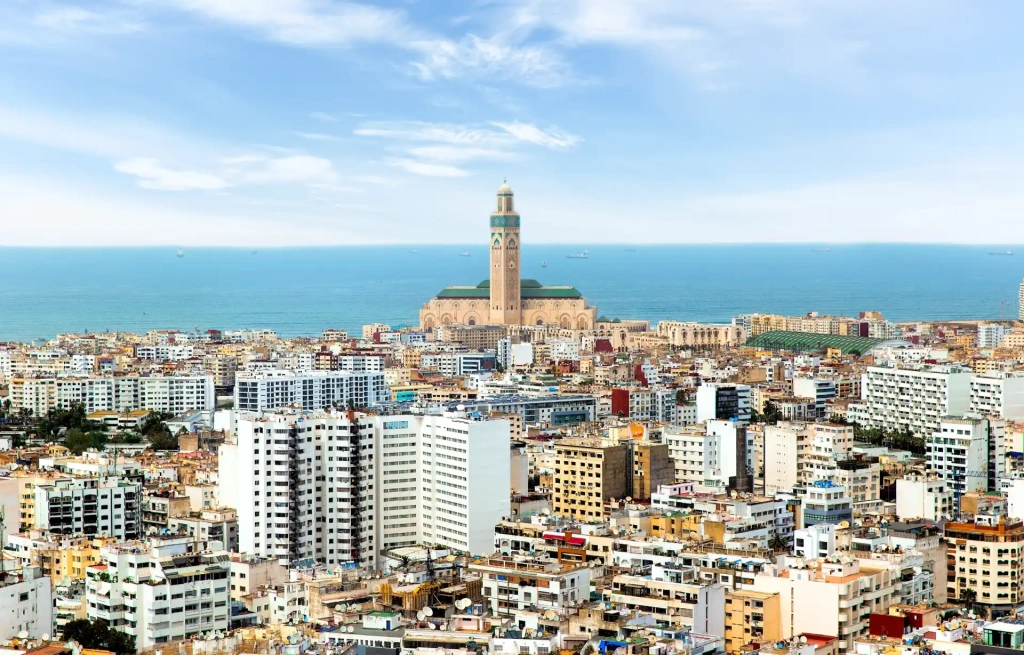
Morocco is one of the continent's most popular destinations for expats. Although geographically part of Africa, the country feels remarkably close to Europe in terms of culture, climate, and infrastructure. A ferry ride from Tangier to Spain across the Strait of Gibraltar takes just 1–1.5 hours. Morocco ranks 85th in the Global Peace Index, ahead of China (98th) and the United States (128th). Rabat ranks 127th worldwide for quality of life, alongside cities such as Bangkok (124th), Tel Aviv (126th), and Istanbul (134th).
Rabat is a relatively small city with European-style neighborhoods, a relaxed atmosphere, and good infrastructure. However, it is far from the only option for expats.
Marrakesh attracts residents with its historic medina and the modern Gueliz district, known for its offices, cafés, and restaurants. Casablanca is the country's business and financial hub and home to the headquarters of many major companies. Fez is Morocco's cultural and spiritual center, and its historic medina is a UNESCO World Heritage Site. Agadir is famous for its beaches and surfing.
Despite this diversity, expats should keep in mind that Arabic and French are the main languages used in everyday life.
Average monthly expenses for one person are around $500, plus approximately $400 for a one-bedroom apartment. A family of three or four should budget at least $1,800 per month, excluding rent, while a three-bedroom apartment typically costs from $650 per month. International school tuition averages around $4,000 per year.
Morocco does not offer a dedicated digital nomad visa. Citizens of the United States, EU countries, the United Kingdom, and many other nations can enter visa-free and stay for up to 90 days. Those wishing to remain longer must obtain a Certificat d'Immatriculation, an official residency document for foreigners. Remote workers earning income outside Morocco must provide proof of income, bank statements, a rental agreement, and health insurance. Applications must be submitted in person rather than online. Residence permits are issued for one year and can be renewed for up to 10 consecutive years. Foreigners may apply for Moroccan citizenship after five years of continuous residence and proficiency in either Arabic or Tamazight.
Rwanda
- Population: 14.8 million
- Capital: Kigali
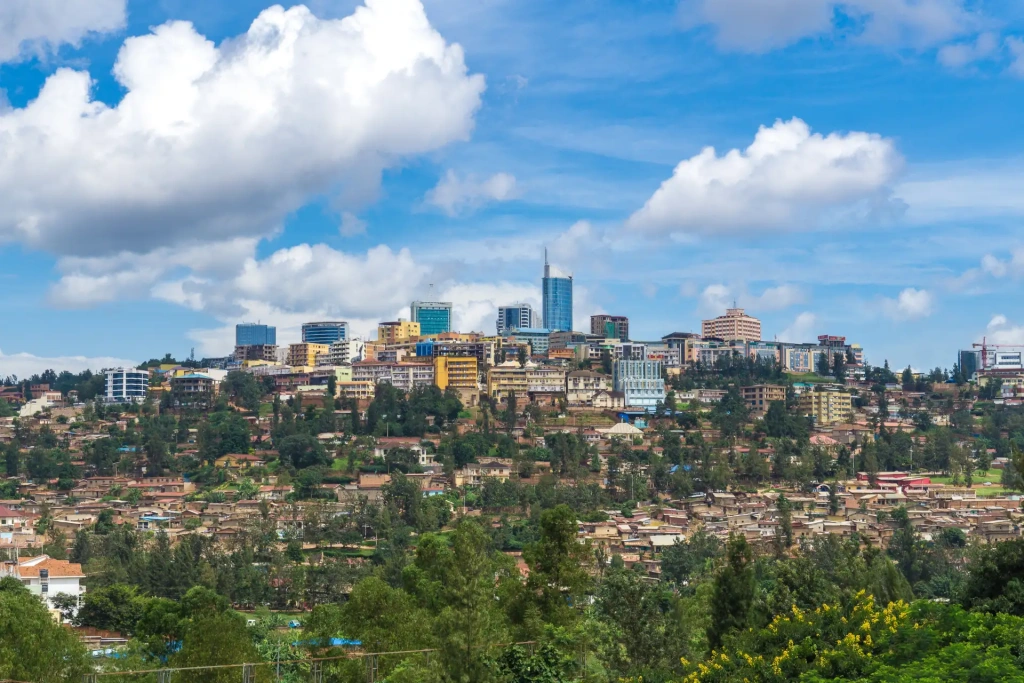
Rwanda ranks as Africa's safest country based on how secure residents say they feel. According to Gallup, 78% of respondents said they feel safe walking alone at night, the highest figure on the continent and comparable to levels seen in the United Kingdom, the Czech Republic, Germany, and several other European countries. Rwanda ranks 91st in the Global Peace Index, ahead of China, the United States, and most African nations.
In 2025, the French publication The Africa Report named Kigali the cleanest city in Africa. The ranking was based on a survey of 7,877 residents across 41 African cities, who evaluated street cleanliness and waste collection. Living costs are also relatively low. A single person typically spends around $420 per month, while a family of three or four needs about $1,500. Housing, utilities, and discretionary expenses such as entertainment, clothing, and leisure activities add another $750–1,500 per month, depending on lifestyle.
Entry requirements are straightforward. Depending on nationality, visitors can either enter visa-free or obtain a visa online or on arrival for $50, allowing stays of up to 30 days. Rwanda does not currently offer a dedicated digital nomad visa, but foreigners can apply for a Category K long-term residence permit. Applicants must provide several documents, including a police clearance certificate and proof of funds. The permit allows remote work for foreign employers, though not for Rwandan companies. Obtaining citizenship is considerably more difficult, as applicants must live in the country for 15 years before becoming eligible.
Rwanda offers more than just career opportunities and city life. A few hours from Kigali lies Volcanoes National Park in the Virunga Mountains, home to roughly one-third of the world's mountain gorillas. In eastern Rwanda, near the Tanzanian border, Akagera National Park offers the chance to see the Big Five. In the southwest, Nyungwe Forest, one of Africa's oldest montane rainforests, is famous for its chimpanzees and canopy walkway suspended above the treetops.
South Africa
- Population: 63 million
- Capital: Pretoria (administrative), Cape Town (legislative), Bloemfontein (judicial)
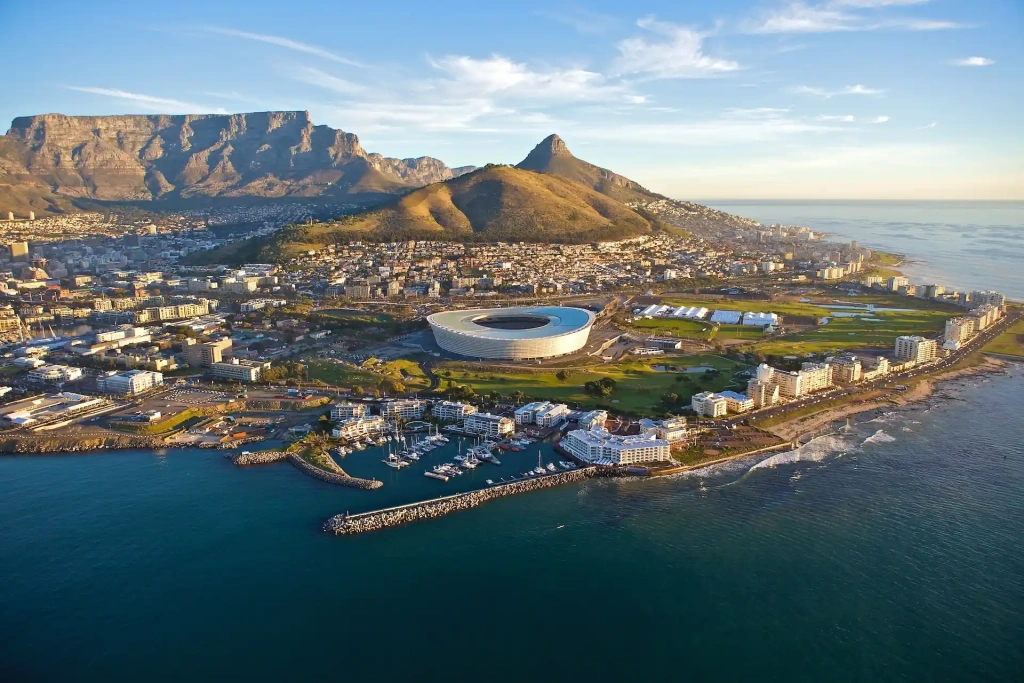
South Africa frequently ranks among Africa's most developed, most visited, and most dangerous countries. Attention usually centers on either Johannesburg, the country's largest city and business hub, or Cape Town, often considered one of the world's most beautiful cities. Cape Town is home to a large international community of expats and travelers and offers beaches, surfing, mountains, vineyards, and well-developed infrastructure with coworking spaces, hotels, cafés, and restaurants. In the InterNations Expat Insider ranking, South Africa placed 35th out of 46 countries. Expats highlighted the country's natural beauty and climate, healthcare, strong expat community, and lack of language barrier as key advantages. English is widely spoken.
All of this comes at a price. Cape Town is noticeably more expensive than the countries listed above. A single person should budget at least $1,400–1,750 per month, including rent for a one-bedroom apartment and basic living expenses. A family of three or four typically spends around $3,800–4,300 per month. International school tuition averages about $5,200 per child annually.
South Africa introduced its Remote Work Visa in March 2025. It is issued for one year and can be extended for up to three years. Applicants must earn at least $37,000 annually, work for a foreign employer, and carry health insurance. However, the visa does not provide a pathway to permanent residency. After three years, holders must either leave the country or switch to a standard work visa. Citizenship takes even longer: foreigners must first spend five years in the country on a work visa to qualify for permanent residency, followed by another five years before they can apply for citizenship.
Safety is an important consideration for anyone moving to South Africa. The country ranks 124th out of 163 in the Global Peace Index, slightly ahead of the United States (128th) but well behind most European countries and many African nations. Carjackings and street robberies, especially in isolated areas, high-crime neighborhoods, and at night, remain risks that residents and expats need to take into account.
Tanzania
- Population: 71.7 million
- Capital: Dodoma (official), Dar es Salaam (economic and cultural center)
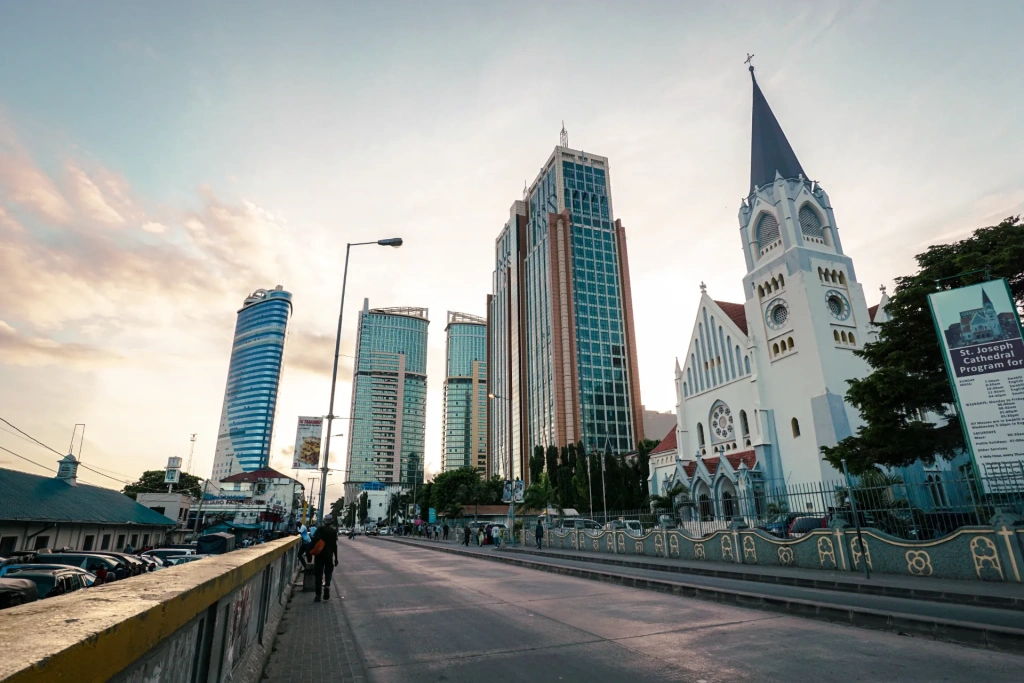
Safe, welcoming, and incredibly diverse, Tanzania deserves a place on any list of Africa's best countries for expats. The country ranks 73rd in the Global Peace Index, ahead of France, China, the United States, and neighboring Kenya.
Dar es Salaam, Tanzania's largest city and economic hub, is a bustling port on the Indian Ocean with lively markets, a growing skyline, and some of the most vibrant cultural life on the East African coast. Arusha offers a quieter atmosphere and serves as the country's safari hub. It is common to meet climbers returning from Mount Kilimanjaro, Africa's highest peak at 5,895 m (19,341 ft), alongside travelers who have crossed half the world for a safari. Zanzibar is famous for its beaches, coral reefs, colonial architecture, the maze-like streets of Stone Town, and a thriving restaurant and nightlife scene fueled by tourism.
Average monthly expenses range from $450–500 for one person and $1,600–1,700 for a family of three or four, excluding rent. Apartments in city centers typically cost between $450 and $1,400 per month, depending on size and location. Education is expensive, with international school tuition often exceeding $10,000 per year.
Tanzania does not currently offer a digital nomad visa. Most remote workers stay on 90-day tourist visas and periodically leave and re-enter the country. Tourist visas do not allow employment with Tanzanian companies. Long-term residency generally requires either opening a business or securing local employment. Work permits cost roughly $3,000 and are valid for two years, while companies face quotas that prioritize Tanzanian citizens over foreign workers. As a result, finding a local job can take time. Citizenship is also difficult to obtain: applicants must reside in Tanzania for at least seven years, pay a $1,500 application fee, and renounce their previous citizenship.
Kenya
- Population: 62.8 million
- Capital: Nairobi
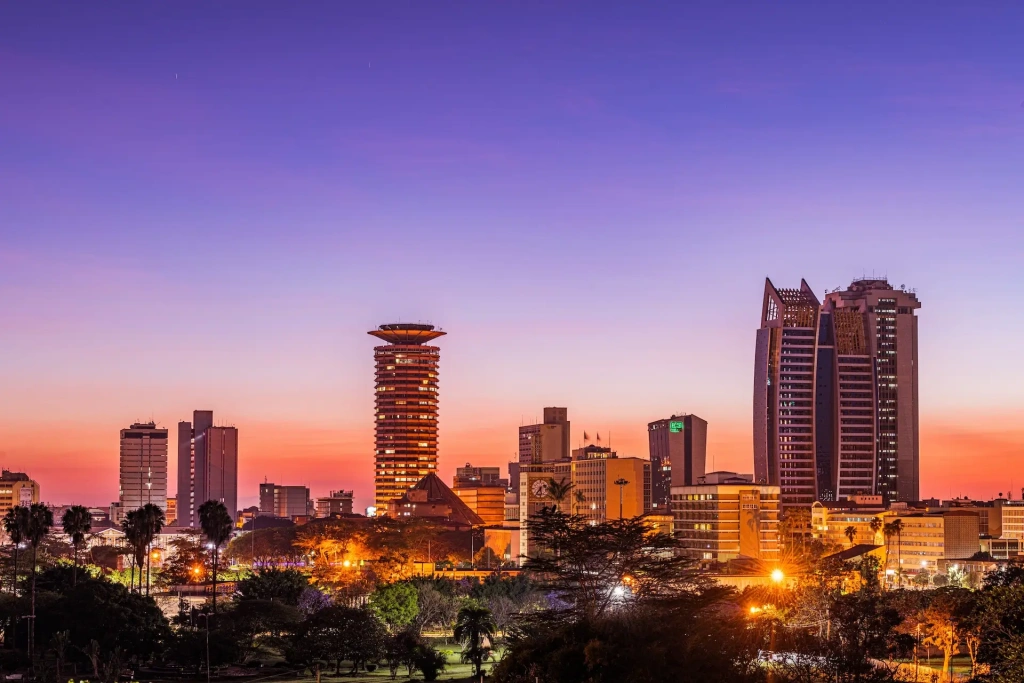
Kenya embodies many of Africa's contrasts. It is beautiful, diverse, and economically dynamic, but safety remains a concern. The country ranks 127th in the Global Peace Index, slightly below South Africa. Nevertheless, Nairobi remains one of the continent's most comfortable cities for expats. Petty theft and carjackings do occur, but many foreigners choose neighborhoods such as Westlands, Karen, and Gigiri, where security concerns are comparable to those in other major cities.
Nairobi offers more than modern infrastructure. The city hosts regional offices of Google, Microsoft, IBM, Cisco, and many other international companies. Its startup ecosystem, often referred to as the "Silicon Savannah," attracts entrepreneurs and investors from around the world. Since 2024, relocating has become easier thanks to Kenya's Class N digital nomad visa. The visa is issued for one or two years and can be renewed. Applicants must earn at least $24,000 annually and work for an employer based outside Kenya. Citizenship becomes available after seven years of continuous residence, and Kenya allows dual citizenship.
Basic monthly expenses for one person average around $600, with one-bedroom apartments costing roughly $500. A family of three or four should budget at least $3,250 per month. As in Tanzania, international schools are expensive, with annual tuition often exceeding $10,000.
Namibia
- Population: 2.9 million
- Capital: Windhoek
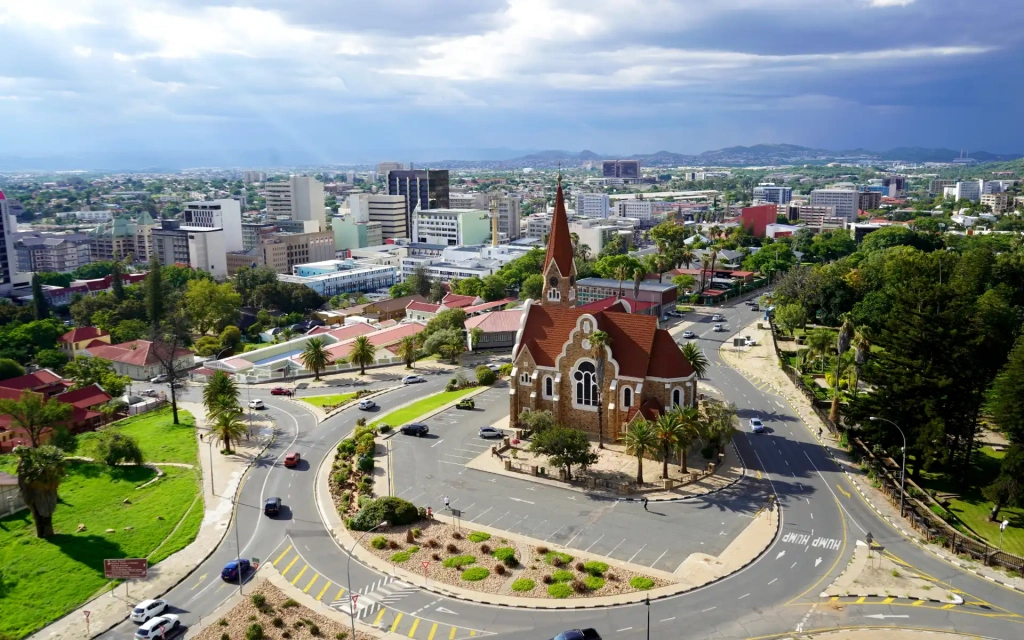
Namibia may be the most underrated country on this list. In the Global Peace Index, it ranks ahead of the UAE, France, Serbia, Moldova, and many other countries. English is the official language, and Namibia has one of the lowest population densities in the world. Fewer than 3 million people live across 824,000 km² (318,000 sq mi), with around 530,000 residing in the capital.
Windhoek is a tidy and well-planned city with a strong German colonial heritage. Cobblestone streets, traditional pubs, and the Christuskirche Lutheran church, consecrated in 1910, give the city a distinctive character. Effective policing and relatively strong protection of civil rights further contribute to its appeal. As a result, Windhoek ranks among Africa's most livable capitals in terms of both quality of life and safety.
Monthly expenses for one person average around $700, while a one-bedroom apartment costs about $500. A family of three or four typically spends around $2,500 per month, while rent for a larger apartment averages approximately $1,150. International school tuition averages about $5,350 annually.
Namibia introduced a digital nomad visa in 2022. Applicants must earn at least $2,000 per month, and the visa is valid for six months. However, it cannot be renewed immediately, as applicants must wait a year before applying again. Those wishing to stay longer generally need to secure local employment. Citizenship requires 10 years of residence, and successful applicants must renounce their previous nationality.
All content on Altezza Travel is created with expert insights and thorough research, in line with our Editorial Policy.

Want to know more about Tanzania adventures?
Get in touch with our team! We've explored all the top destinations across Tanzania. Our Kilimanjaro-based adventure consultants are ready to share tips and help you plan your unforgettable journey.
 Climbing
  Safari
  About Tanzania
  Islands