





 52 reasons
  Free PDF


 Message us on WhatsApp
  Book a Free Call

 Safari
Rainforests are among the oldest ecosystems on Earth, dating back around 60 million years. According to the World Wide Fund for Nature (WWF), they cover only about 6–7% of the planet’s land area, yet they are home to roughly 80% of plant and animal species. Below, we explore some of the most striking and recognizable rainforest inhabitants.
What is a rainforest?
Rainforests are dense, multi-layered forests near the equator, where it stays warm and humid year-round. The largest rainforest is the Amazon in South America, covering about 5.5 million km² (2.1 million sq mi). Germany, France, Spain, Italy, and the UK combined could fit inside it.
More than half of the Amazon lies in Brazil, with the rest spread across Peru, Colombia, Ecuador, Bolivia, and other neighboring countries. The second-largest is the Congo Basin rainforest (3.7 million km² / 1.4 million sq mi). It stretches across the Democratic Republic of the Congo, Cameroon, the Central African Republic, the Republic of the Congo, Gabon, and Equatorial Guinea.
A rainforest has four layers:
- Upper layer: individual tall trees that rise above the main canopy
- Canopy: a dense green “roof” where most animals live
- Understory: dark, humid thickets where sunlight barely reaches
- Forest floor: the lowest layer, where leaves, branches, and everything that falls from above decomposes
Together, these layers create living conditions for thousands of mammal, bird, and reptile species, many of them endemic, meaning they exist nowhere else in the world.
A list of tropical rainforest animals: from the Amazon to Tanzania
13 animals in the rainforest you can spot during your travels
1. Okapi
- Diet: Leaves, buds, shoots, mushrooms, fruit, sometimes bark and charcoal, rarely bat guano (droppings).
- Distinctive feature: The giraffe’s only living relative, although the striped pattern on its legs resembles a zebra’s markings.
- Habitat: Democratic Republic of the Congo.
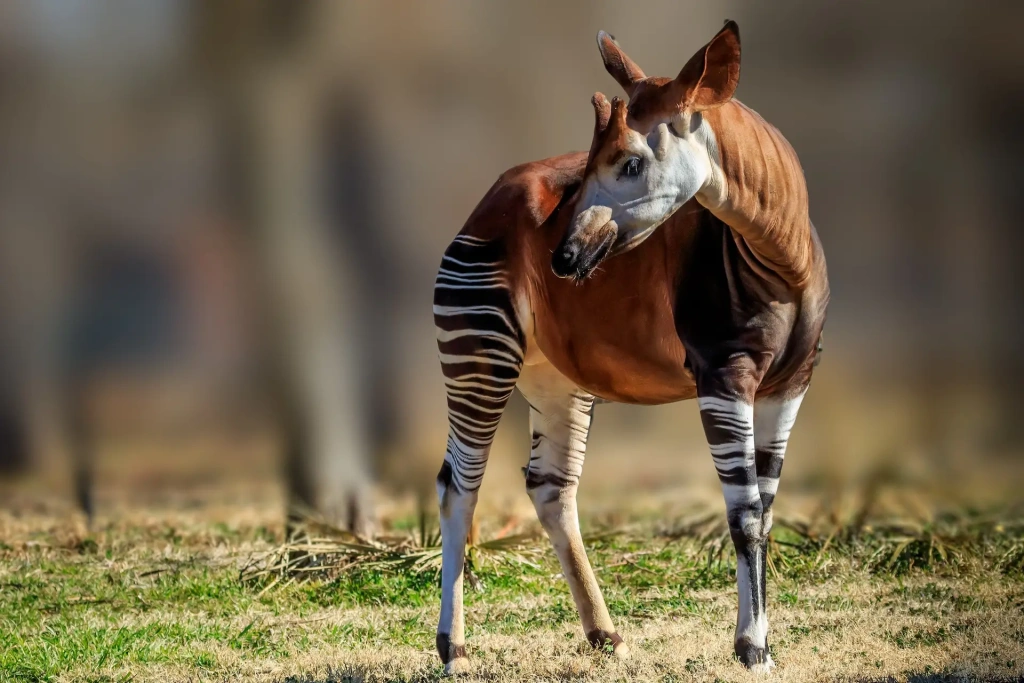
Okapis prefer to hide in dense vegetation, often near rivers, where there is thick understory and protection from direct sunlight. At a glance, the animal can resemble a small giraffe or a zebra. The head and body are usually dark brown, while the sides of the muzzle are lighter. The most striking detail is the black-and-white striping on the rear part of the body, especially noticeable on the thighs and lower legs.
Adults reach about 2 meters (6.6 ft) in length and 1.5–2 meters (4.9–6.6 ft) in height. Females are usually slightly larger than males. A particularly interesting feature is their long, prehensile tongue, flexible and highly mobile. According to Berlin Zoo, it can reach 35 cm (13.8 in) in length. It helps okapis reach leaves in high branches and groom themselves, including licking their ears and eyes.
2. Jaguar
- Diet: Caimans, capybaras, deer, and fish.
- Distinctive feature: The most powerful bite among big cats.
- Habitat: Central and South America (Brazil, Peru, Colombia, Venezuela).
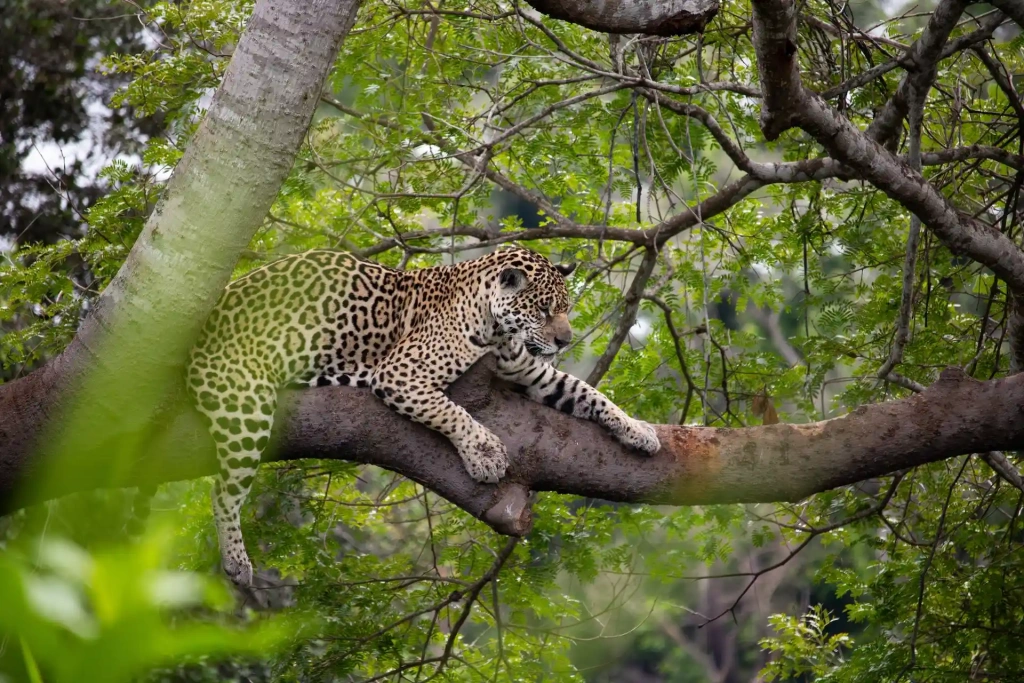
Jaguars live in dense rainforests and seasonally flooded plains. They hunt on land, stalking prey through thickets, and in rivers too, diving for fish or attacking caimans. Unlike leopards, they rarely haul prey into trees, since they face little competition in their habitat. Jaguars have the most powerful bite among big cats, and during a hunt, they can puncture a caiman’s skull or crack the shell of a river turtle.
Male jaguars grow up to 2 meters (6.6 ft) in length and up to 95 kg (about 209 lb) in weight. They live solitary lives except during the breeding period, which can last up to 20 days. During this time, the male guards the female, but leaves after conception. Three months later, up to four cubs are born, and they stay with their mother for about two more years.
By the latest estimates, around 173,000 jaguars remain in the wild. The primary drivers of population decline are deforestation and poaching.
3. Three-toed sloth
- Diet: Leaves, buds, shoots, and sometimes fruit.
- Distinctive feature: Extreme slowness and a greenish coating of algae on the fur. It helps them blend in among leaves and can also provide vitamins and minerals when they lick it off.
- Habitat: Central and South America.
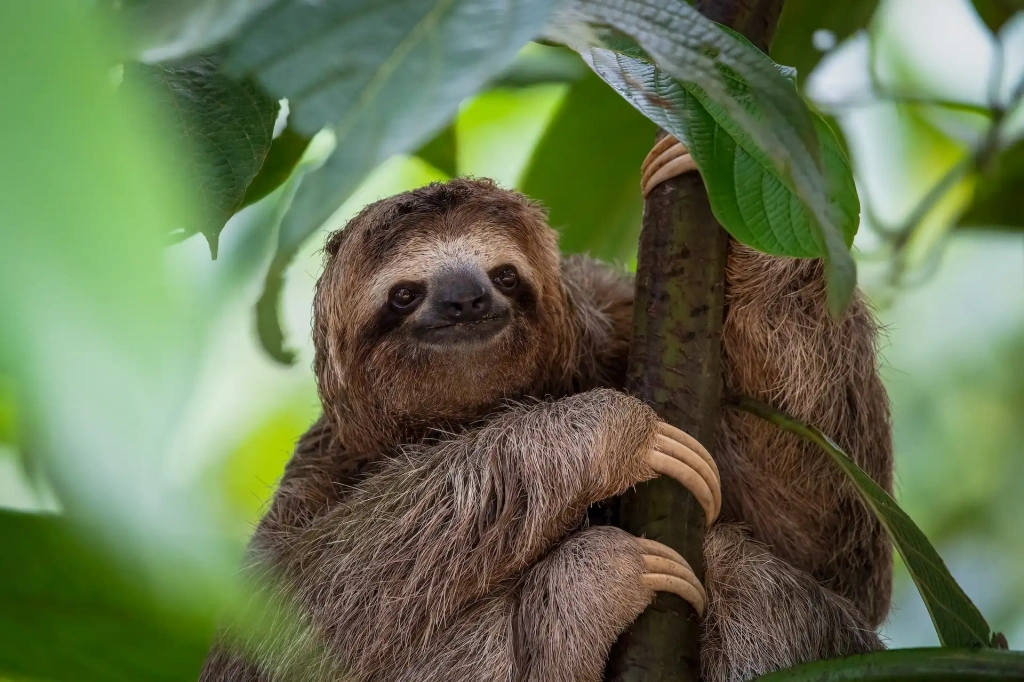
A three-toed sloth spends almost its entire life in trees, moving at a speed of about 0.24 km/h (about 0.15 mph). These animals sleep up to 20 hours a day and come down to the ground about once a week to relieve themselves.
Unlike two-toed sloths, which may eat insects, bird eggs, and even chicks, three-toed sloths are vegetarian and feed only on plant matter. Despite this diet, sloths are quite strong, with a powerful grip. Combined with long, curved claws, it allows them to hang upside down for hours at a time.
They grow to 60 cm (24 in) long, weigh up to 5 kg (11 lb), and live solitary lives. Females typically give birth to a single baby after six months of pregnancy, then carry it on their back for about another six months. Lifespan in the wild is around 20–30 years.
4. Leopard
- Diet: Medium-sized mammals, birds, reptiles.
- Distinctive feature: They drag prey into trees to protect it from competitors.
- Habitat: Asia (Indonesia), Africa (DR Congo, Cameroon, the Central African Republic, Gabon). They also live in Tanzania’s woodlands and savannas (Serengeti, Ngorongoro, Tarangire, Lake Manyara).
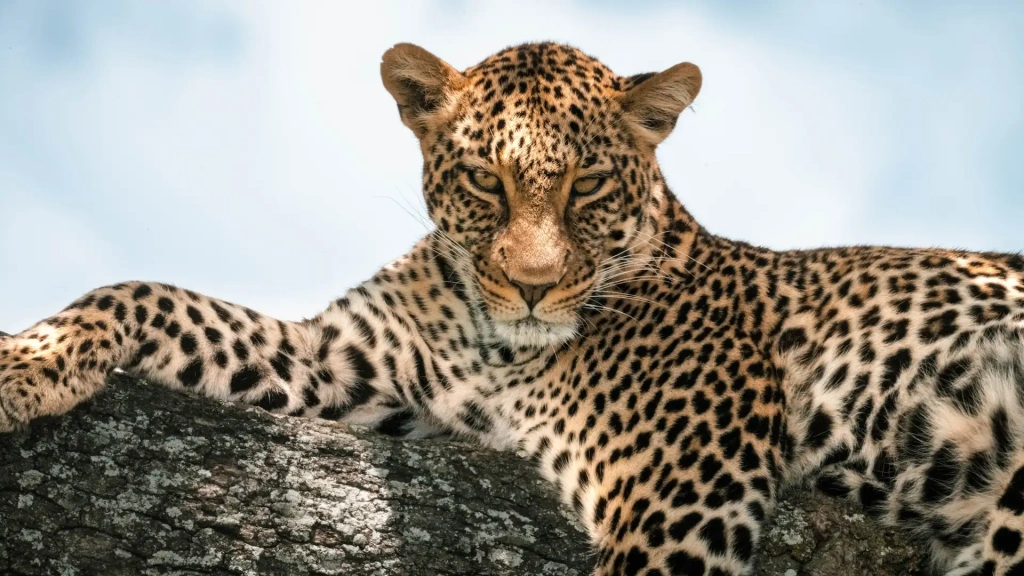
The leopard is a nocturnal predator. It navigates dense rainforest vegetation with ease, silently tracking prey. After a successful hunt, it drags the carcass up into a tree to protect it from lions, hyenas, and other competitors. This behavior is very typical of leopards.
One study mentions an individual leopard that managed to hoist the carcass of a young giraffe weighing about 125 kg (276 lb), meaning 2–3 times heavier than the predator itself, to a height of about 5.7 meters (18.7 ft). This ability is one of the adaptations that help leopards compete successfully in habitats shared with other large predators.
5. Black-and-white colobus
- Diet: Young leaves, flowers, unripe fruit, seeds.
- Distinctive feature: The ability to digest and absorb toxic plants.
- Habitat: Africa (Uganda, Kenya, DR Congo, Cameroon, Gabon, Ethiopia). In Tanzania, they are easy to spot in the montane forests of Arusha, Kilimanjaro, Uluguru, and Udzungwa.
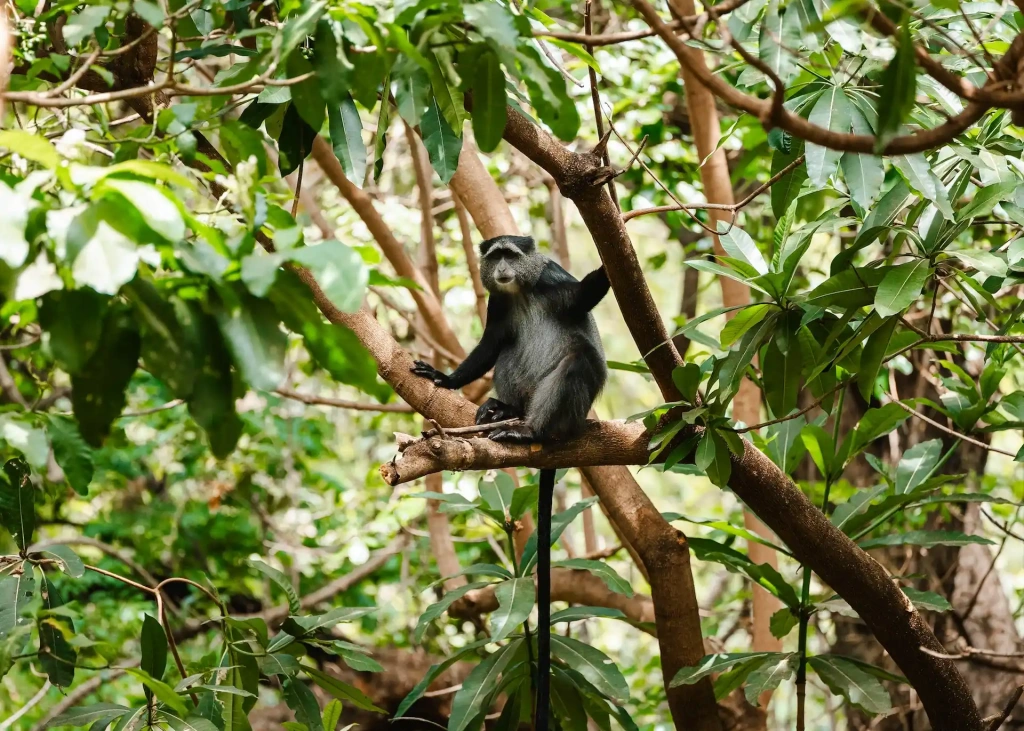
The black-and-white colobus is a relatively rare primate species that lives mainly in the treetops. It rarely touches the ground and is well adapted to life in the canopy. Black fur with white areas around the shoulders, back, face, and tail helps it blend into foliage.
One interesting feature is an underdeveloped thumb. Most primates have one, but in colobus monkeys, it is reduced to a small nub. This “defect” is what gave the animal its name: the Greek word “kolobos” means “mutilated.” For the monkey, however, it’s a normal evolutionary trait.
Colobus monkeys live in groups of up to 15 individuals, usually with one dominant male. Adults reach 50–70 cm (20–28 in) in body length, not including the tail, and weigh about 7–14 kg (15–31 lb). Females give birth to one baby per year. The young stay closely attached to the mother and remain in the group for 4–5 years until sexual maturity. Afterward, males typically leave to breed with another group.
6. Dwarf galago
- Diet: Insects (including beetles, moths, and caterpillars), sometimes frogs, as well as fruit and young leaves.
- Distinctive feature: Can leap up to 2m (7 ft).
- Habitat: West and Central Africa (from Sierra Leone and Senegal to Uganda, DR Congo, Gabon, and Cameroon). In Tanzania, they occur in the Kilimanjaro region and Udzungwa.
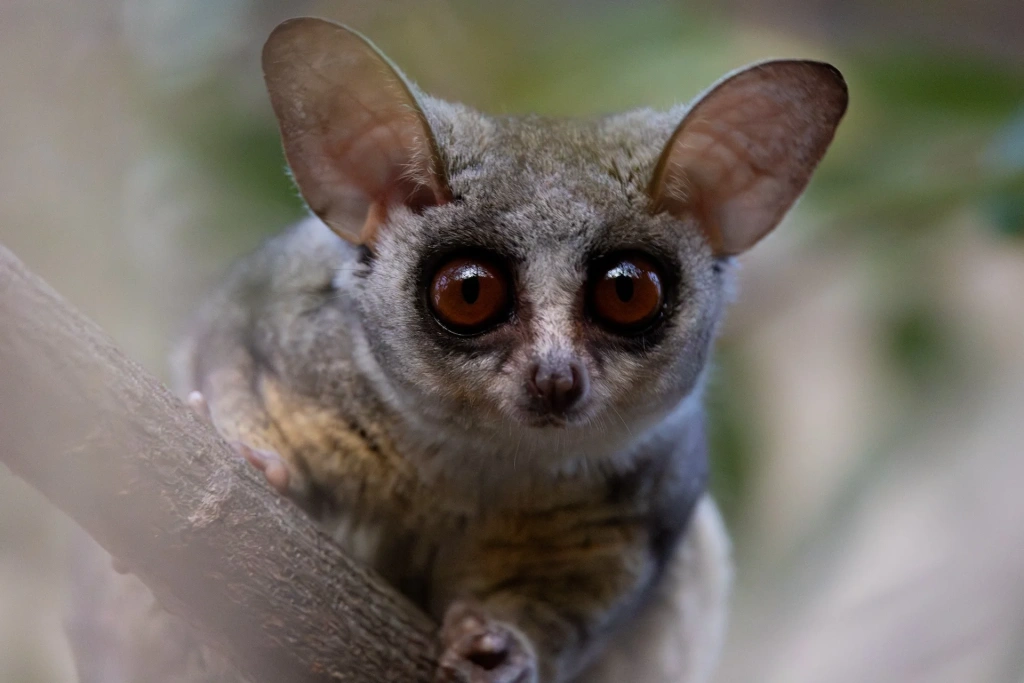
Also known as bushbabies, galagos are small primates that weigh up to 155 grams (5.5 oz). They prefer wooded habitats with plenty of branches and a dense understory, where they can hide from predators. Thanks to their elongated hind legs and long tail, they can leap 2 meters (7 ft) between trees, change direction midair, and land precisely on thin branches. Their large eyes and ears help them navigate in low light.
Galagos are nocturnal animals. During the day, they typically rest in tree hollows or thick foliage, becoming active only after sunset. They communicate with one another using clicking and high-pitched sounds. They also have good memory, easily finding food they hid earlier and returning to places where they once found plenty to eat.
7. Mountain gorilla
- Diet: Leaves, stems, fruit, sometimes insects.
- Distinctive feature: Each gorilla has a unique “nose print,” which researchers use to identify individuals and track families.
- Habitat: Africa (Uganda, Rwanda, DR Congo).
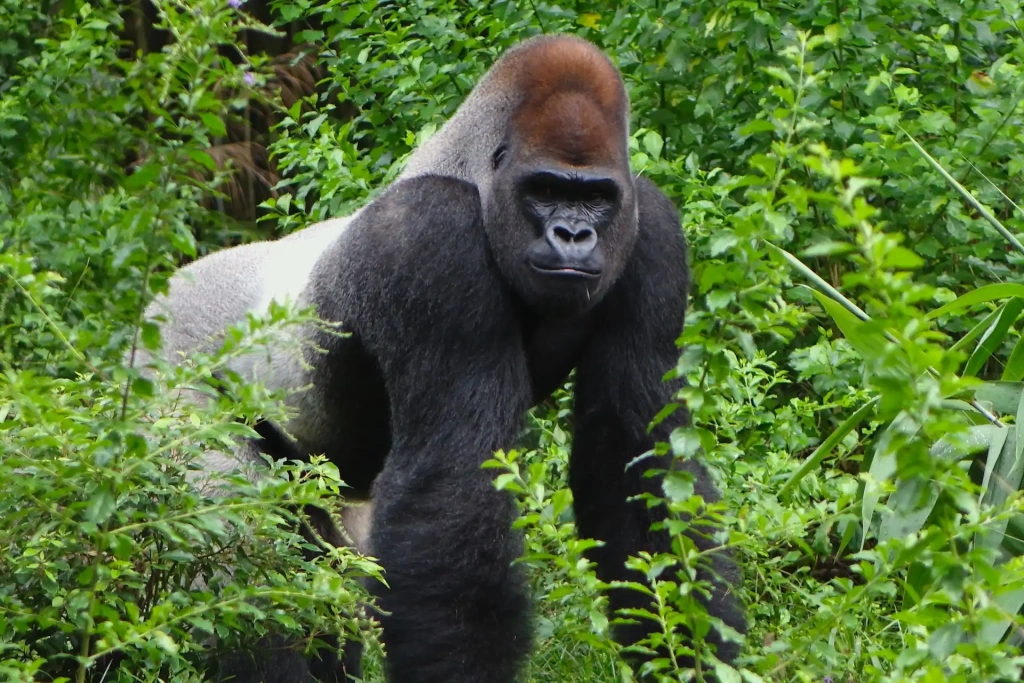
Mountain gorillas live in the dense rainforests of Central Africa at elevations of up to 3,500 meters (11,500 ft). Groups may include 5 to 30 individuals and occupy territories of up to 20 km² (8 sq mi). They don’t have a permanent “home.” Instead, they look for a new sleeping spot every day and build nests from branches.
In temperament, gorillas are calm and restrained, communicating through gestures and quiet sounds. The exception is the dominant male, the silverback, named for the silvery sheen of fur on his back. He protects the group and drives away threats by beating his chest loudly, a sound that can be heard from 500–800 meters away (1,600–2,600 ft).
Gorillas, like chimpanzees, are considered among humans’ closest relatives. Their DNA matches human DNA by about 98%. They can use simple tools. For example, a branch to test river depth or to help cross swampy ground.
Thanks to conservation measures, their numbers have increased several times over recent decades: in the 1980s, there were around 240 individuals, and by 2018, there were already 1,063. Still, gorillas remain endangered due to habitat loss, poaching, and disease risks (such as flu) from contact with humans.
8. African forest elephant
- Diet: Leaves, branches, bark, seeds, and fruit.
- Distinctive feature: The largest inhabitant of the rainforest.
- Habitat: DR Congo, Gabon, Cameroon, the Central African Republic. In Tanzania, only savanna elephants occur, in Tarangire, Serengeti, Ngorongoro, and Ruaha.
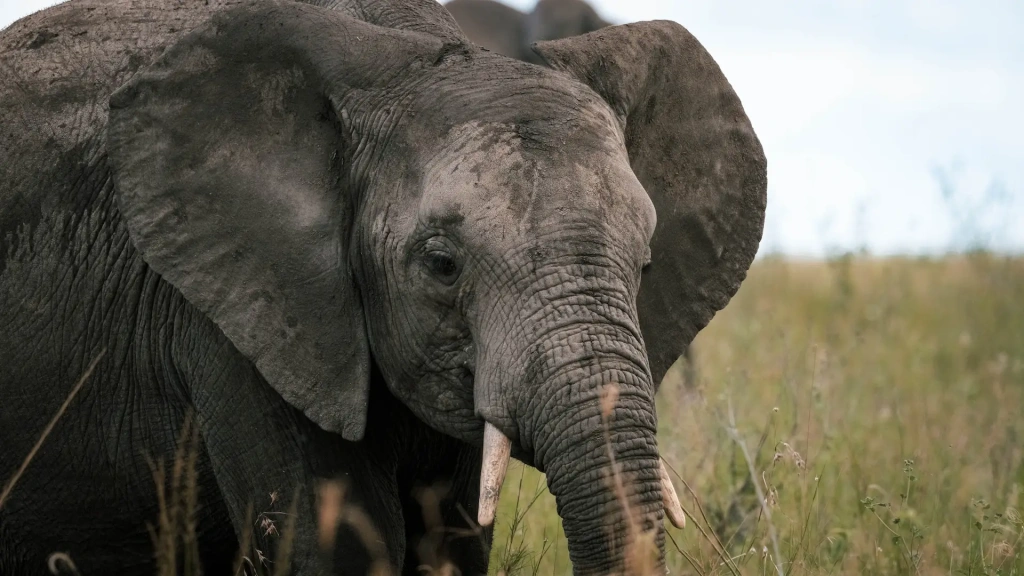
The African elephant is the largest land animal and holds the Guinness World Record. Savanna elephants can reach 4 meters (about 13.1 ft) in height, and their weight can exceed 6 tons (13,200 lb), roughly the weight of three cars.
Forest elephants are smaller, usually weighing up to several tons. They also have slightly smaller ears and thinner tusks that angle almost straight downward. These physical differences are adaptations to life in the forest.
For a long time, scientists believed both were subspecies of a single African elephant. However, a 2010 study found that savanna and forest elephants are separate species, with their lineages diverging between 2.5 and 5 million years ago.
There are behavioral differences as well. Forest elephant herds are generally much smaller, typically consisting of just a few individuals. By comparison, savanna elephants form groups of 10 to 70 elephants or more.
9. Toucan
- Diet: Fruit, berries, more rarely insects, frogs, and bird eggs.
- Distinctive feature: A large, brightly colored beak.
- Habitat: Tropical forests of Central and South America.
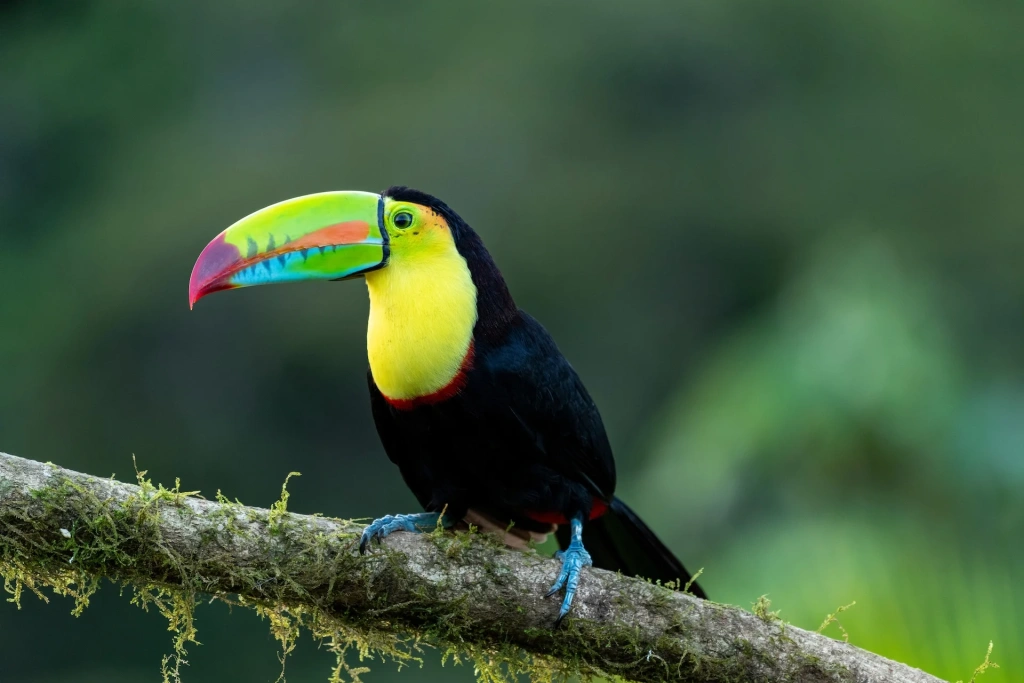
Toucans live high in the dense rainforest canopy, flying in zigzags to maneuver through foliage. Unlike many birds, toucans do not build nests. Instead, they occupy hollows in trees. They spend most of their time searching for fresh fruit, sometimes coming down for insects or frogs. Their large, brightly colored bill, up to 20 cm (8 in) long, helps them reach hard-to-access fruit on branches. It also helps them cool down in the heat by releasing excess body warmth.
The bird’s body length is about 50–60 cm (20–24 in), and its weight is up to 850 g (2 lb). The female lays 2–4 eggs and incubates them for 16–18 days. Chicks hatch blind with a small, weak bill, so they stay in the hollow and are fed by the parents for about two months. The species is currently not endangered, with a population of up to 500,000 individuals, but numbers are gradually declining due to deforestation.
10. Capybara
- Diet: Grass, aquatic plants, bark, fruit.
- Distinctive feature: The largest rodents on Earth. They sometimes eat their own feces to digest food more efficiently.
- Habitat: Tropical forests and savannas of South America.
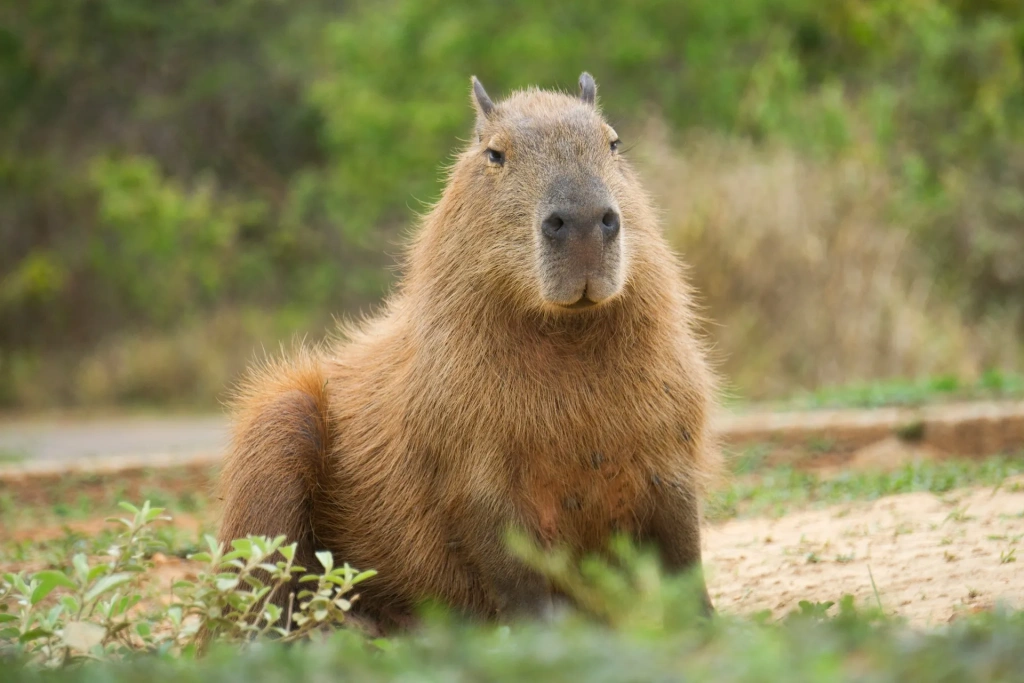
Capybaras graze near rivers, lakes, and swamps, eating up to 3 kg (6.5 lb) of grass per day. They live in groups of up to several dozen individuals, communicate through grunts and short whistles, and, when threatened, dive into the water, where they can remain for up to 5 minutes.
Capybaras are known for a calm, peaceful temperament. They do not conflict with one another, with other animals, or with humans. If they are raised in captivity around people, they may even allow petting.
Adult capybaras weigh 35–60 kg (75–130 lb) and reach about 1.3 m (4.3 ft) in length. A female carries her young for about five months and can give birth to up to 8 pups, all of which can feed independently. The whole group helps raise them, teaching them how to interact, follow hierarchy rules, and stay safe.
11. Two-horned Kilimanjaro chameleon
- Diet: Grasshoppers, locusts, cockroaches, beetles, spiders.
- Distinctive feature: A pair of false “horns” on the males’ heads, which is why it’s called “two-horned.”
- Habitat: Montane forests of East Africa (the eastern and southern slopes of Mount Kilimanjaro and the area around Mount Meru in Tanzania).
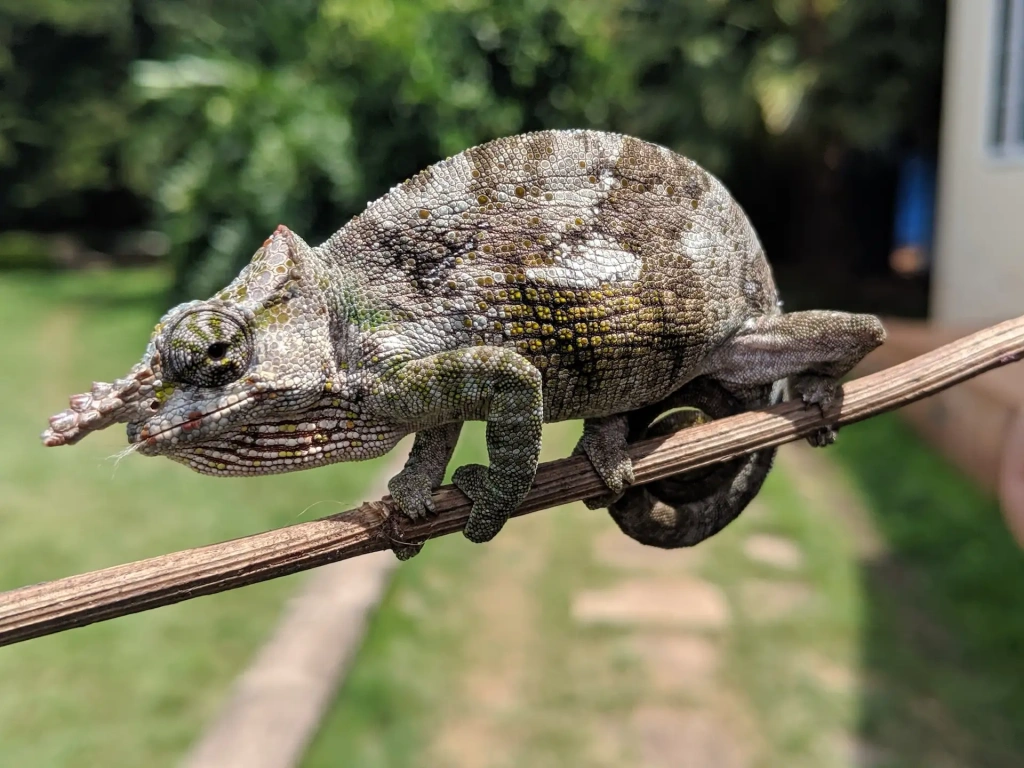
This chameleon species prefers dense foliage and avoids open areas, so it spends most of its time in the treetops. An adult reaches 24 cm (about 9.5 in) in length, and its coloration ranges from gray-green to brown. Males have two flat “horns” on the nose. In females, they are either faint or absent.
There is still no definitive information on the function of these protrusions in this species. However, in other chameleons of the genus Kinyongia, they typically serve as a visual signal to other males or females, indicating size, strength, and overall health.
In terms of behavior and hunting strategy, the two-horned Kilimanjaro chameleon is similar to other arboreal species. It catches insect prey with a long tongue and can shift color from green and yellow to brown and nearly black, helping it camouflage, regulate body temperature, and communicate with others of its kind.
12. African rock python
- Diet: Rodents, birds, more rarely small mammals (moles, monkeys, antelope calves).
- Distinctive feature: Africa’s largest snake. It can swallow prey several times larger than itself.
- Habitat: Rainforests and savannas of Africa.
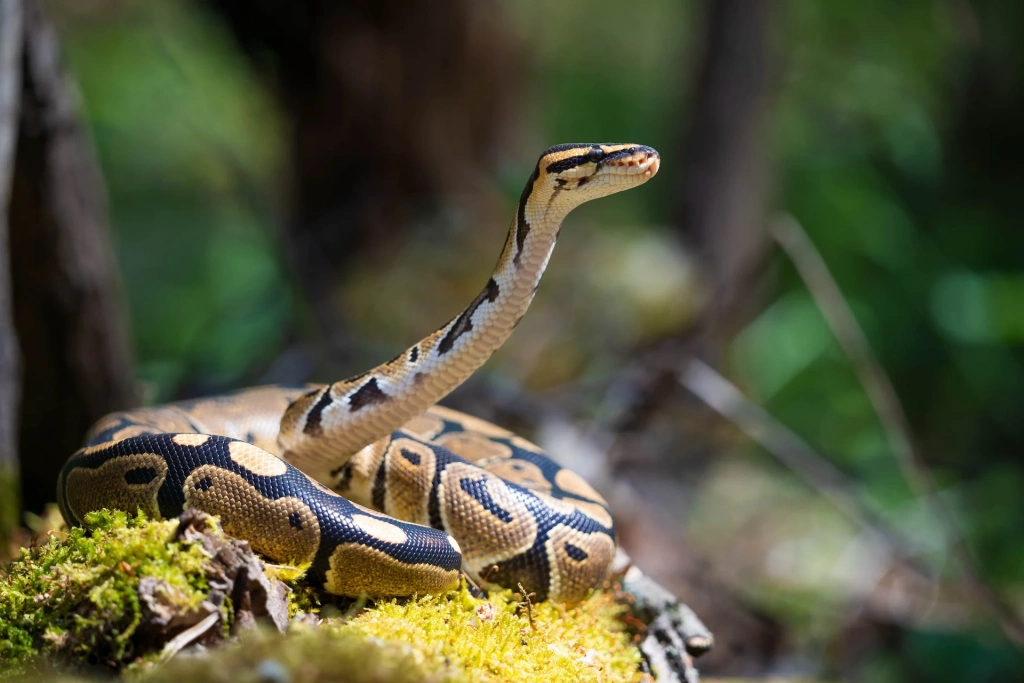
This python species is found throughout Tanzania, from coastal forests to savannas and swamps. It prefers areas with dense vegetation for cover and access to water, since it swims well. Still, it mainly lives on the ground, occasionally climbing low branches, which can be convenient for hunting and for resting.
Adults range from 3 to 5 meters (10–16.5 ft) in length, and exceptionally large individuals can exceed 90 kg (200 lb). A patterned yellowish-brown coloration helps it blend into foliage and tree trunks. This snake is not venomous. During a hunt, it constricts the victim, then swallows it whole. Pythons are secretive and most active during the dark, when it is cooler, and prey is more active.
13. Green anaconda
- Diet: Fish, birds, capybaras, caimans.
- Distinctive feature: The heaviest snake in the world. Females may eat males after mating.
- Habitat: Tropical rainforests of South America (Brazil, Venezuela, Colombia).
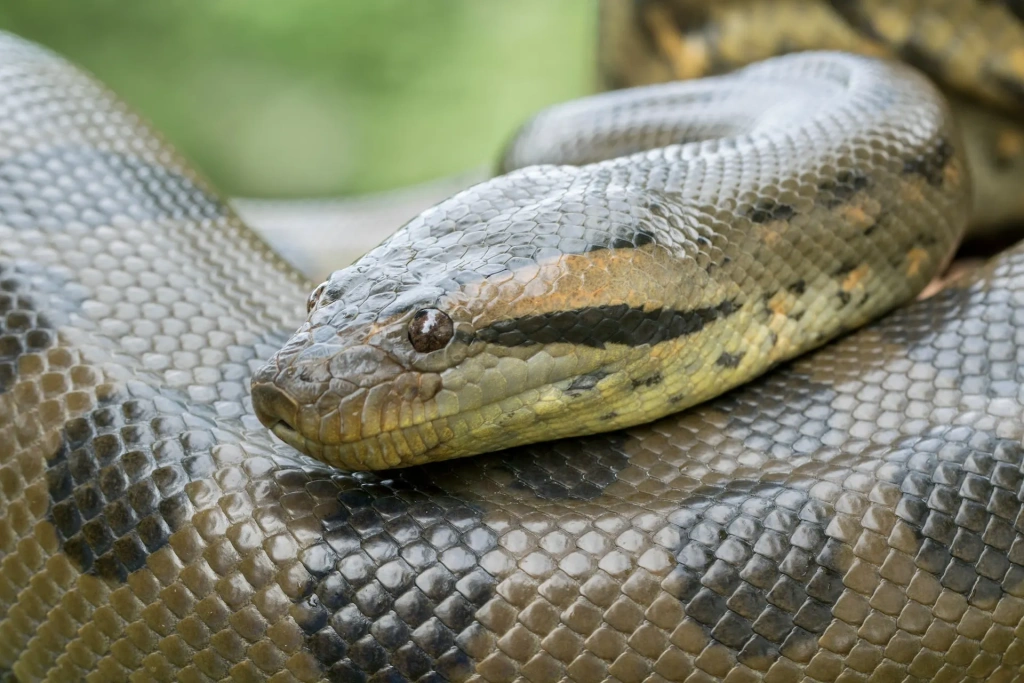
The green anaconda is one of the largest snakes in the world. Females can reach over 9 meters (30 ft) in length and weigh over 250 kg (550 lb), although most individuals are smaller. It lives in rivers and swamps of the rainforest, lying in wait for prey, often from the water. The anaconda’s eyes and nostrils are positioned on top of the head, allowing it to track prey while keeping only its head above the surface. When it strikes, it coils around the prey, constricts it, and then swallows it whole.
Females give birth to 20–40 young after 6–7 months of pregnancy. Each baby is 60–90 cm (about 24–35 in) long and can swim and hunt independently. In rare cases, a female may eat the male after mating. Cannibalism can help her build up strength before pregnancy.
All content on Altezza Travel is created with expert insights and thorough research, in line with our Editorial Policy.

Want to know more about Tanzania adventures?
Get in touch with our team! We've explored all the top destinations across Tanzania. Our Kilimanjaro-based adventure consultants are ready to share tips and help you plan your unforgettable journey.