





 52 reasons
  Free PDF


 Message us on WhatsApp
  Book a Free Call

 About Altezza
 Tanzania is known as one of Africa’s best safari destinations. People come here to see wildlife in all its diversity and to observe animals up close that many have only seen in documentaries. It’s an ideal country for exploring African wildlife, with many reserves and national parks.
But reality is more complex than safari travel photos suggest. Beyond protected areas, Tanzania also has villages, farms, and other places where people live. This is where most conflicts between local communities and wildlife occur. How does conservation work when people and wildlife share the same space?
Human–wildlife conflicts
One such place is the shoreline of Lake Eyasi. It lies near the Ngorongoro Conservation Area but is not a park or reserve. It’s home to the Datoga and Hadza communities, who, in many ways, preserve their traditional way of life.
The Datoga raise livestock. Their cattle are periodically attacked by lions, leopards, and hyenas. In the past, they would kill predators in retaliation, but today this practice is less common.
The Hadza rely on hunting and gathering for their livelihood. They are among the last peoples in Africa still living largely self-sufficiently. However, their population is declining. They face pressure from expanding farming and modern life, while also sharing the same land with lions, buffalo, and hyenas.
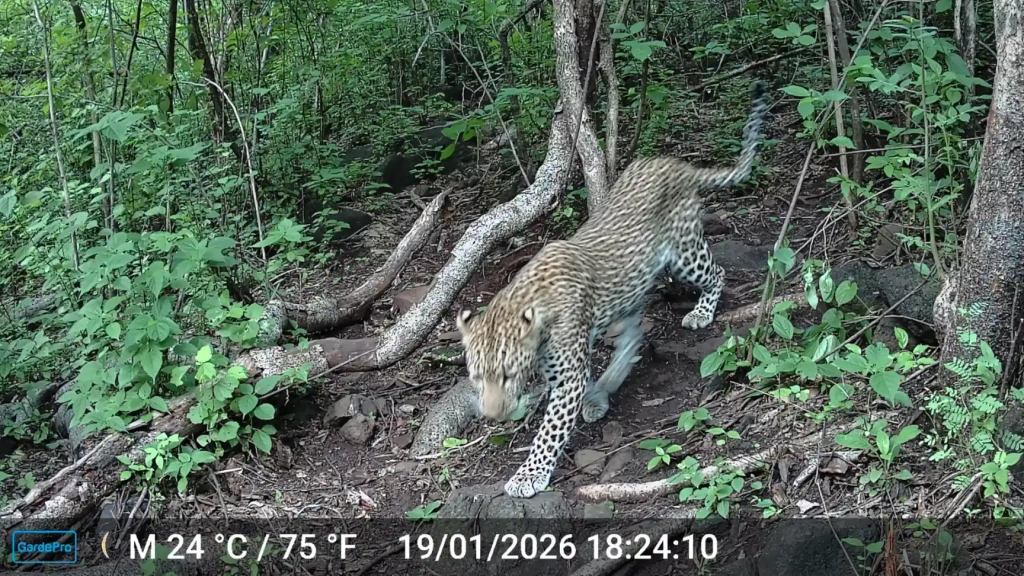
Both hunter-gatherer communities and wild animals are rapidly losing the territories they depend on, which makes coexistence difficult. Historically, animal migration corridors existed between Lake Eyasi and nearby Lake Manyara. Today, these corridors have narrowed dramatically or have been broken up entirely. This is where tensions are highest.
This is where the conservation organization United Tansania e.V. works.
United Tansania e.V. and hyenas
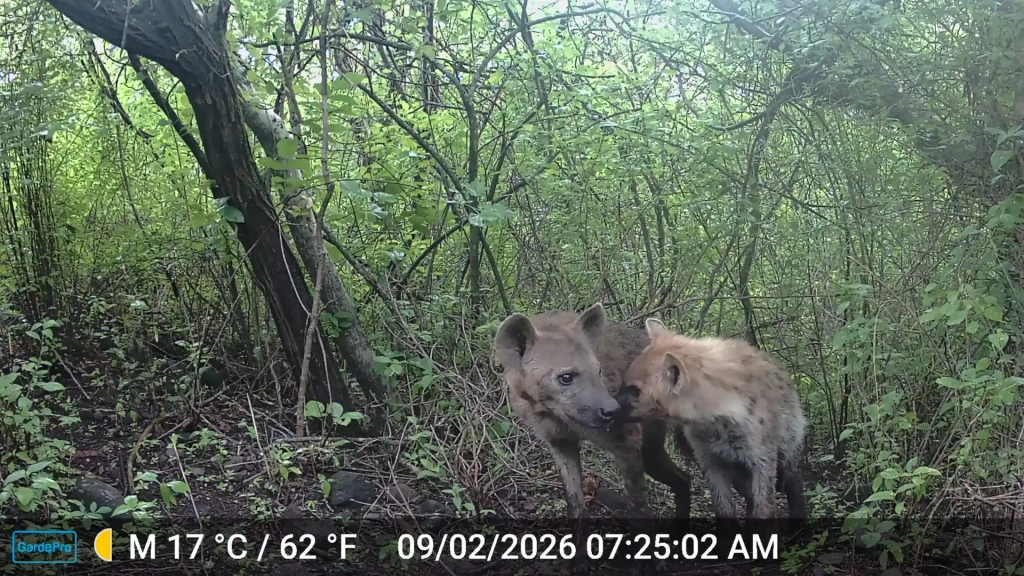
United Tansania e.V., led by veterinarian and wildlife specialist Dr. Judith Lazak, launched the Camera Scout Project. Its goals are to study predator populations around Lake Eyasi, involve local residents in the work, and reduce the number of conflicts between people and wildlife. The methods Dr. Lazak chose are particularly interesting. Here’s how it works.
Dr. Lazak’s team chose to focus on hyenas. From the start, this was a challenging choice because:
- These animals are not typically seen as cute, beautiful, or “worthy” of attention
- They’re often portrayed as sneaky, cowardly predators
- Over centuries of coexistence, people have created many ominous myths about them, including stories about grave-digging and witchcraft
In reality, hyenas are an important part of the ecosystem, true “clean-up crews” of the savanna. By consuming carrion, they reduce biological waste and help limit the spread of diseases that affect both wild animals and livestock.
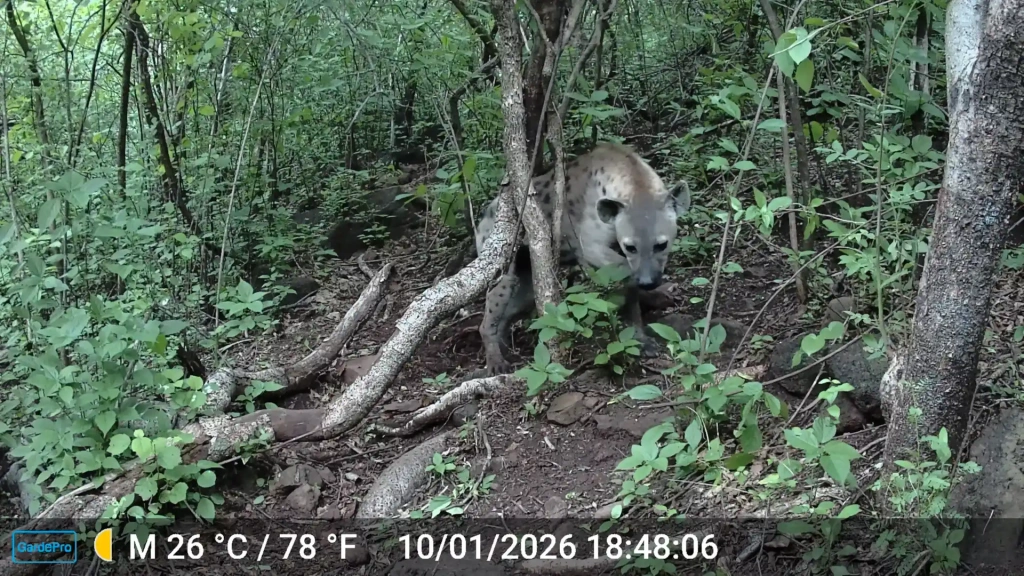
Three species of hyenas live in Tanzania. The Camera Scout Project near Lake Eyasi studies two of them: spotted hyenas and striped hyenas. The striped hyena is considered Near Threatened.
Camera Scout Project near Lake Eyasi
The United Tansania e.V. team involved local residents in the work. In six villages, volunteer scouts were selected to coordinate monitoring within their assigned areas. Camera traps were installed near each village, in areas where hyenas were likely to be active. The scouts’ task is to replace batteries in the cameras, regularly review recorded footage, and patrol the area while looking for tracks and other signs of animal activity.
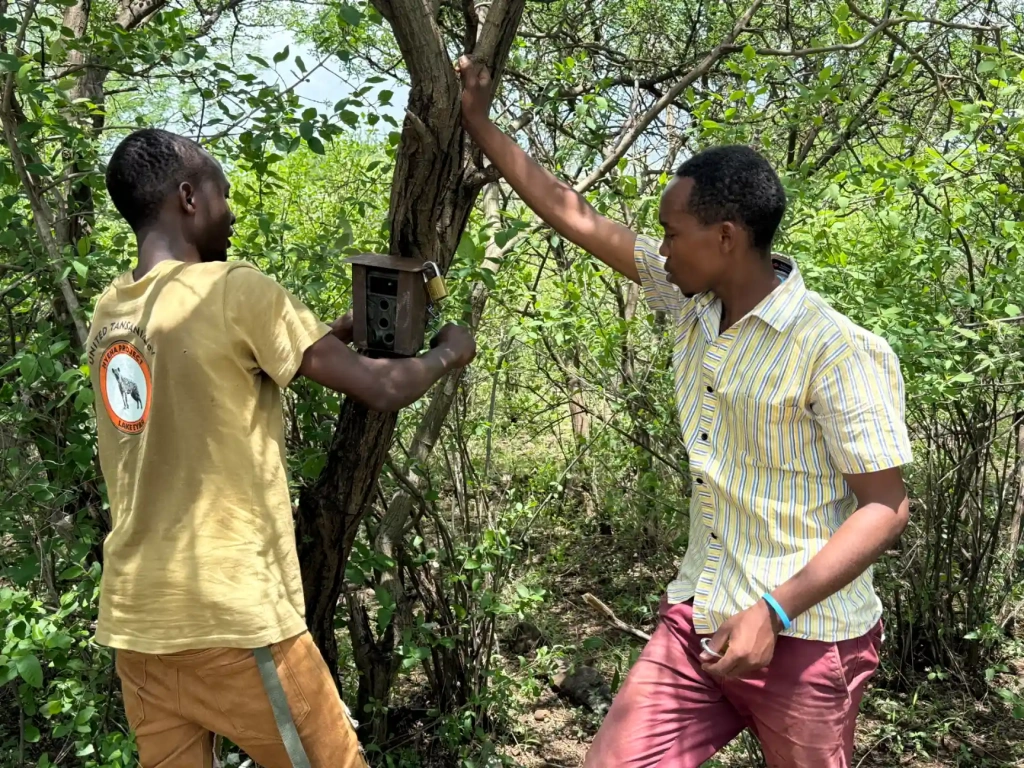
To motivate volunteers, United Tansania e.V., together with the project sponsor, introduced a competition system. For each detected animal from a list of rare or vulnerable species, villages receive points.
At the end of each month, points are tallied, and the village with the highest score receives a financial award of 200 euros. By community decision, these funds go toward local village improvements. In this way, wildlife monitoring becomes practically valuable for the community.
At community meetings, reviewing the footage together encourages villagers to discuss hyenas from a more scientific perspective, learn more about their behavior, and gradually change their attitude toward them. Over time, systematic monitoring helped the project identify three hyena clans and determine the members of each. Scouts learned to recognize individual animals by their unique markings.
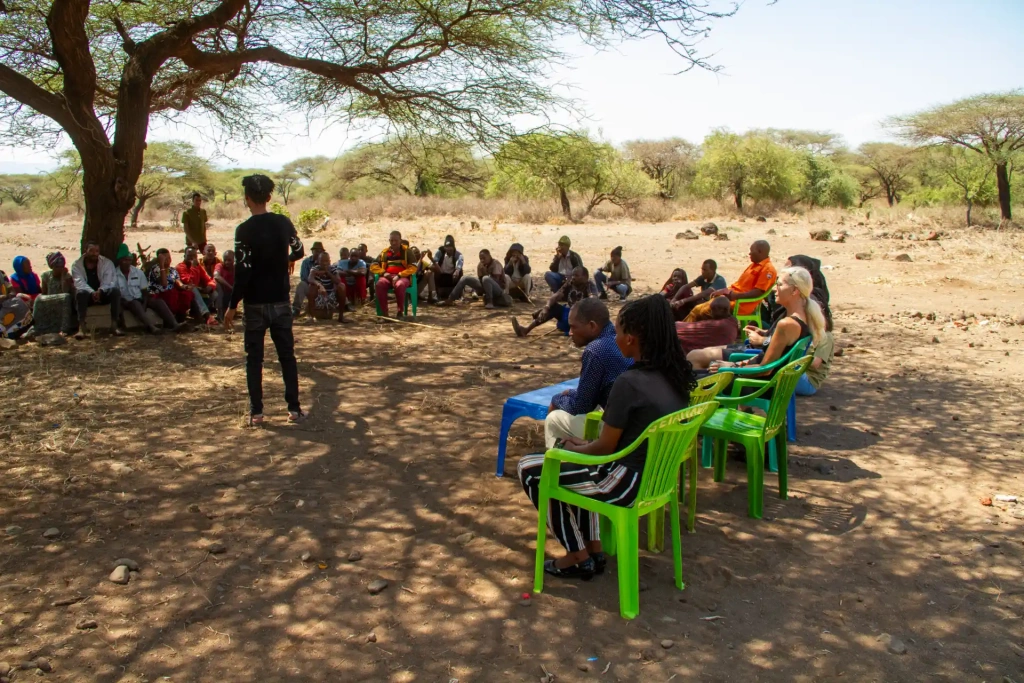
This approach helps people better understand animal behavior, rather than reacting out of fear or old stereotypes. Hyenas are no longer seen only as a threat. Local villagers are increasingly seeing them as part of their environment.
The role of Altezza Travel
Altezza Travel, a Tanzanian tour operator offering safaris and Kilimanjaro climbs, provides financial support for the Camera Scout Project. We also support other initiatives:
- Nature Tanzania’s project to conserve Critically Endangered long-billed forest warblers
- Mkomazi National Park’s black rhino sanctuary
- forest restoration in the Kilimanjaro River buffer zone in Rundugai
- and other conservation and community projects
We support projects like these because they deliver measurable results that benefit both people and nature.
We’re grateful to the United Tansania e.V. team and Dr. Judith Lazak for their dedication to Tanzania’s wildlife and for the opportunity to take part in this work. You can support the project too. The easiest way is to donate on the United Tansania e.V. website.
All content on Altezza Travel is created with expert insights and thorough research, in line with our Editorial Policy.

Want to know more about Tanzania adventures?
Get in touch with our team! We've explored all the top destinations across Tanzania. Our Kilimanjaro-based adventure consultants are ready to share tips and help you plan your unforgettable journey.