





 52 reasons
  Free PDF


 Message us on WhatsApp
  Book a Free Call

 Climbing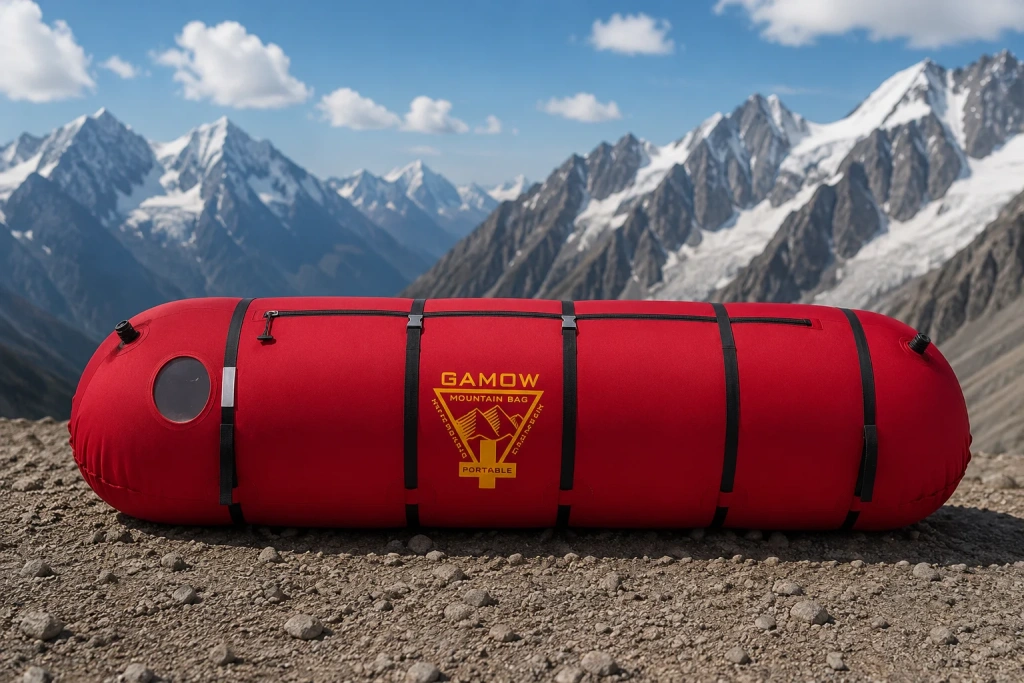
The Gamow bag is used in wilderness medicine for severe altitude sickness when a rapid descent isn't possible. In the right circumstances, it can be an effective, even lifesaving, tool. However, Kilimanjaro trekking is not one of those cases. Here's why we've made a deliberate decision not to bring Gamow bags on our expeditions.
What is a Gamow bag?
Medical references describe the Gamow bag as a portable hyperbaric chamber. The concept is simpler than it sounds: it's an airtight nylon bag that folds down to roughly the size of a regular duffel or sports bag when packed, and opens up like a sleeping bag. In an emergency involving severe acute mountain sickness, such as high-altitude pulmonary edema or high-altitude cerebral edema, a patient is placed inside, and a pump is used to fill the interior with air. The increased pressure gives the body the equivalent of a descent of roughly 1,500 to 1,800 meters (5,000 to 6,000 feet).
The bag was developed in the late 1980s by microbiology professor Igor Gamow. It was first used in the field during a 1988 Everest expedition and has been a staple of wilderness medicine ever since. Its primary purpose is to stabilize a patient at altitude when a rapid descent or evacuation isn't immediately possible, for example, due to weather, time of day, or difficult terrain. However, it is important to remember: a Gamow bag only simulates descent and does not replace actual evacuation.
Where and when using a Gamow bag is justified
The Wilderness Medical Society (WMS), the leading international organization in wilderness medicine, is clear on this point:
“We recommend that when descent is not feasible or delayed or supplemental oxygen is unavailable, a portable hyperbaric chamber may be used to treat HAPE [high-altitude pulmonary edema]”
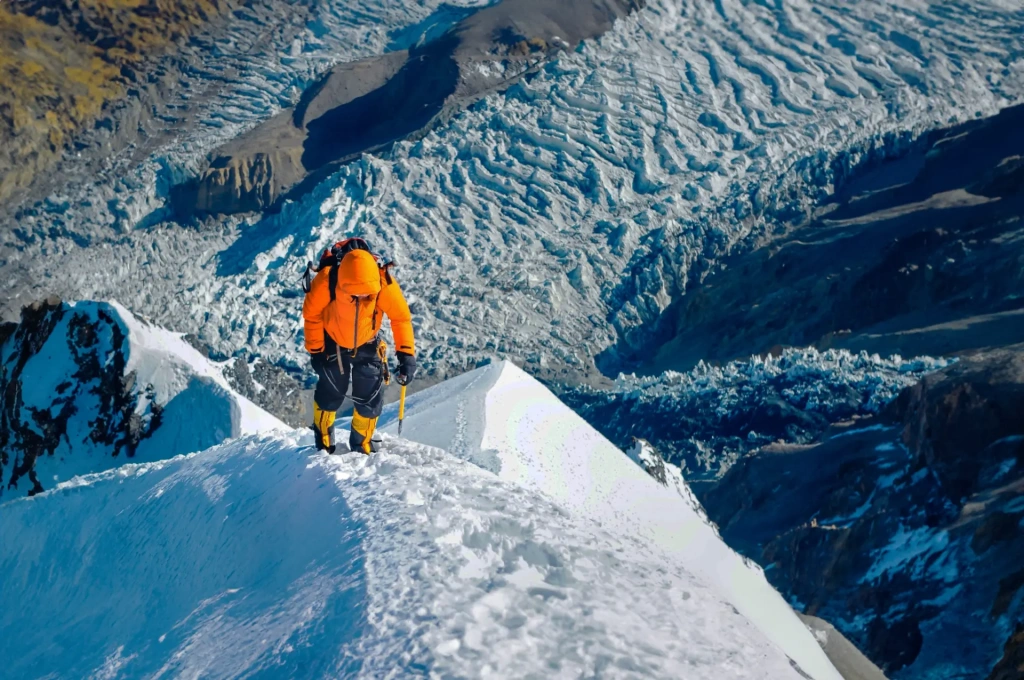
Picture the high camps of Everest, K2, or Denali. A climber is struggling to breathe, severely weakened, confused, and losing coordination. The altitude is above 5,000 meters (16,400 feet). The weather makes a helicopter evacuation impossible, and the terrain's technical difficulty makes a quick carry-down out of the question. In that situation, a Gamow bag is one of the few ways to buy time: stabilize the patient and wait for a window to evacuate.
The challenges of using a Gamow bag
Marketing descriptions from tour operators are usually limited to phrases like “simulates rapid descent.” Much less is said about the operational difficulties and risks involved. Yet there are many.
Continuous manual operation
The affected climber is placed inside the bag, which is then sealed and pressurized by pumping air inside. Carbon dioxide exhaled by the patient escapes through a valve, while fresh air is continuously pumped in from the outside. This must be done manually by a trained member of the mountain team, typically at a rate of 10–20 pump strokes per minute, following the manufacturer’s instructions. If pumping stops or is done incorrectly, carbon dioxide levels inside the bag can quickly rise to dangerous levels.
Risk of depressurization and barotrauma
The simulated descent effect is created by increasing the pressure inside the bag, so the bag cannot be opened immediately. If the team accidentally unzips the bag without first equalizing the pressure, the air inside the patient’s lungs may rapidly expand, causing barotrauma, or damage to body tissues caused by pressure changes. In mild cases, this can lead to chest pain, coughing, or shortness of breath. In severe cases, air bubbles can enter the bloodstream and travel to the brain or heart, potentially causing life-threatening complications. That is why the pressure inside the Gamow bag must first be gradually reduced, the bag allowed to deflate, and only then can the zipper be opened.
The need for professional training and the human factor
Operating a Gamow bag requires practiced skills. On Kilimanjaro, as on many other mountains, medical training for most tour operators is conducted only once every couple of years. If 6–12 months have passed since the last training session, the likelihood of mistakes increases significantly. In addition, altitude sickness may be accompanied by vomiting, the patient may suffer from claustrophobia, and under intense sunlight, the sealed bag can become very hot, like a greenhouse.
Inability to transport the patient
The Gamow bag does not solve the main problem, which is remaining at high altitude. The patient cannot simply be placed inside the bag and carried down like on a stretcher. So even if symptoms temporarily improve, descent is still required.
Why a Gamow bag is not necessary on Kilimanjaro
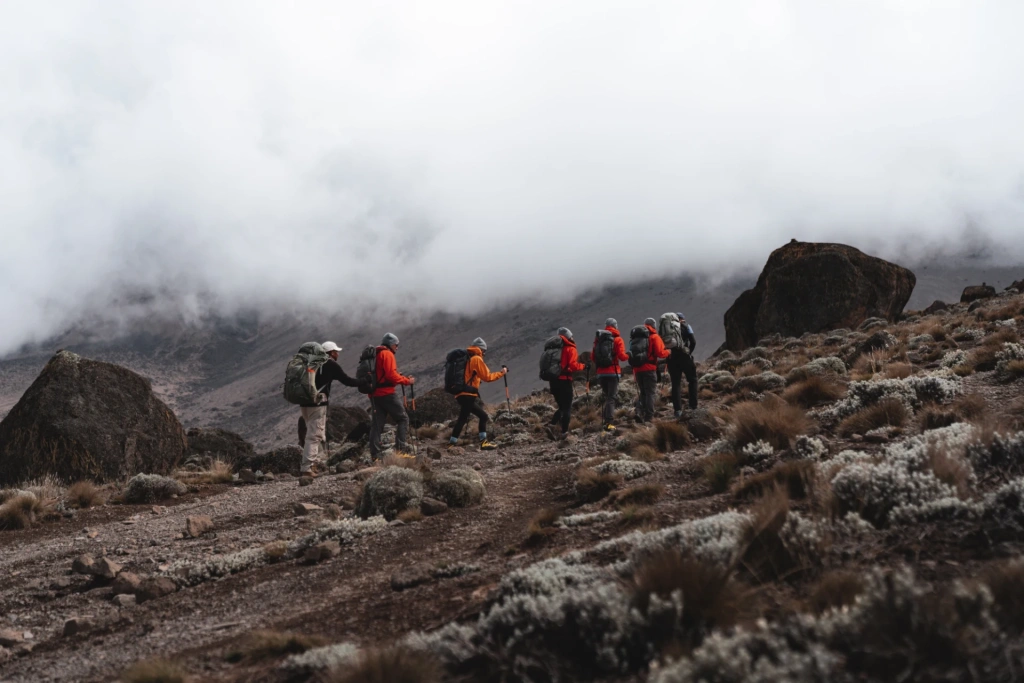
Kilimanjaro is not only the highest mountain in Africa at 5,895 meters (19,341 ft), but also the tallest free-standing mountain in the world. At the same time, climbing it does not require technical mountaineering equipment or professional climbing skills. The routes leading to the summit do not include technically difficult sections that would make an emergency descent impossible or especially dangerous.
However, this does not mean the climb should be taken lightly. According to a study published in the journal High Altitude Medicine & Biology, around 47% of climbers on the Marangu Route during 5 to 6-day expeditions experience symptoms of altitude sickness at 4,730 meters (15,518 ft). Yet only 1% require professional medical assistance. Altezza Travel’s 2025 climbing safety report shows a similar picture: out of 4,371 travelers who attempted the climb, 3,892 successfully reached the summit. Another 215 reached one of the key crater points on Kilimanjaro, Stella Point at 5,739 meters (18,829 ft) or Gilman’s Point at 5,681 meters (18,638 ft). A total of 264 climbers ended their ascent early. Reasons included insufficient acclimatization, fatigue, and accompanying friends or family members. 52 people turned back simply to stay with someone who could not continue.
We refer to any early termination of the climb as an evacuation, even if the climber is not in danger and descends independently without a stretcher or oxygen tank – in 2025, there were 90 such cases. Helicopter evacuation was required for 64 climbers, and every evacuation was successful. This demonstrates that using a Gamow bag on Kilimanjaro is an unnecessary measure, and can even worsen the situation in some cases by loosing time. Emergency descent is possible here virtually year-round.
To make the comparison with Everest or Denali concrete, imagine the following scenario. You're on the Lemosho Route, at Barafu Camp, 4,673 meters (15,331 feet). One of the climbers is showing worsening symptoms of altitude sickness. The team has two options:
- The first option is to set up the Gamow bag, place the person inside, and pump air until the operational pressure is reached. Even with a coordinated team, this takes time. Then follows approximately an hour inside the bag, with constant pumping, gradual depressurization, and finally removal of the patient. Altogether, this process may take up to an hour and a half.
And this assumes the bag is immediately available. During a Kilimanjaro ascent, especially on summit night, the group often spreads out. Some climbers move more slowly while others move faster. If the sick climber belongs to the subgroup without the bag, additional time will be needed to bring it from elsewhere.
- The second option, used by Altezza Travel, is to provide bottled oxygen to relieve symptoms and begin descent immediately. Within 45 minutes, the support team and the affected traveler will already be around 1,000 meters (3,300 ft) lower. Even a descent of every 300 meters (1000 ft) usually brings noticeable relief. A few hours later, the climber will reach the park gate, where either the tour operator’s vehicle or an ambulance will be waiting if necessary.
The same approach applies during helicopter evacuations. The patient receives oxygen and is transported as quickly as possible to the nearest landing site. From there, they are airlifted to a hospital. Even in this situation, the Gamow bag becomes an unnecessary extra step that consumes time and introduces additional risks.
How Altezza ensures safety on Kilimanjaro
Proper acclimatization and careful monitoring of climbers’ condition are the best protection against severe altitude sickness. On our expeditions, we do everything possible to prevent situations in which a Gamow bag would even be theoretically needed. Here’s how:
Professional mountain team training
All Altezza Travel guides have completed the international Wilderness First Responder (WFR) program and are qualified mountain rescuers. In addition, they undergo extra training through Altezza Travel’s own internal program, which goes beyond the standard WFR curriculum. Responsibility for medical protocols on the mountain and guide training within the company lies with Philip Swart, a UK-certified paramedic. Altezza also operates its own rescue and emergency operations center. It is the only specialized facility of its kind among operators on Kilimanjaro.
Daily medical check-ups
Daily medical check-ups are a mandatory part of every Altezza Travel expedition. Guides examine and interview each climber, measure oxygen saturation levels, monitor their adaptation to the altitude, and assist with acclimatization. If necessary, they adjust the climbing pace, provide supplemental oxygen, or end the ascent if symptoms worsen and complications become likely.
High-quality equipment
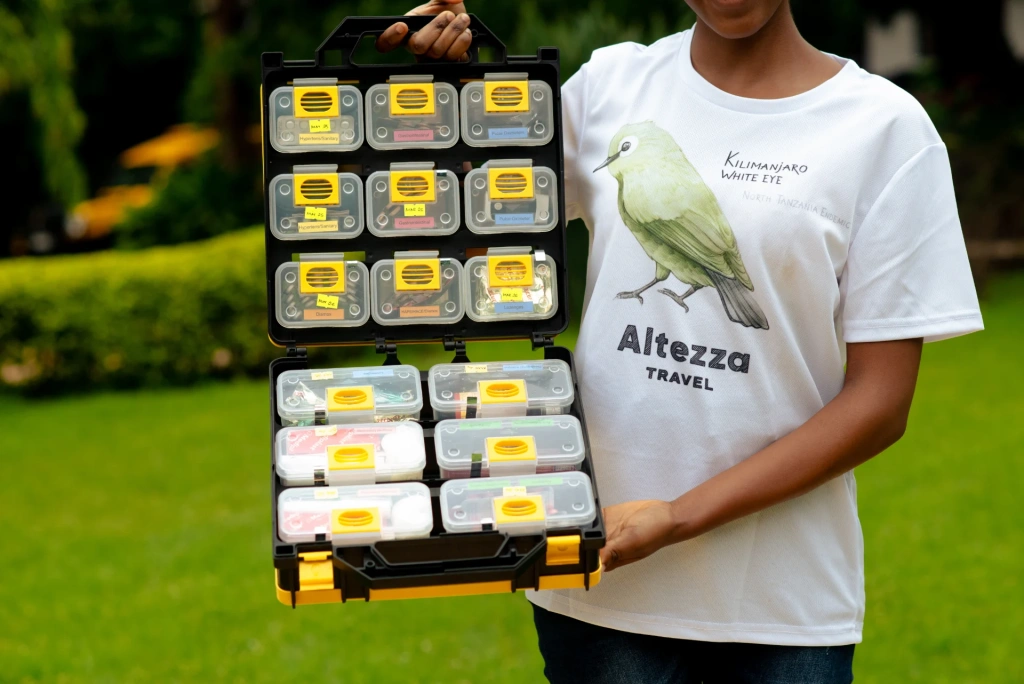
Every guide carries a radio, a satellite phone for emergencies, a foldable stretcher, a tactical first aid kit, and an oxygen cylinder. Each camp also has a larger medical kit with a wider range of medications and medical devices, including a stethoscope for assessing breathing and heart rhythm, an Ambu bag for artificial ventilation, cough and sore throat medicine, and medications such as nifedipine, dexamethasone, and acetazolamide (Diamox). Their use for altitude sickness and related complications is widespread in mountain medicine and recommended by the CDC’s Yellow Book.
There is also an oxygen reserve in camp. We use more than 500 oxygen systems, more than all other Kilimanjaro operators combined. But it is not only about quantity. These are 4-liter carbon-fiber cylinders designed to provide roughly 6 hours of oxygen delivery. Guides carry them during the climb, and additional reserves are kept in camp. Compared to standard metal cylinders, they are lighter, which is especially important during ascents and emergency descents. Moreover, Altezza uses masks rather than nasal and conservative regulators rather than standard free-flow systems. This significantly improves efficiency because oxygen is delivered only when the person inhales.
Proper acclimatization matters more than any equipment
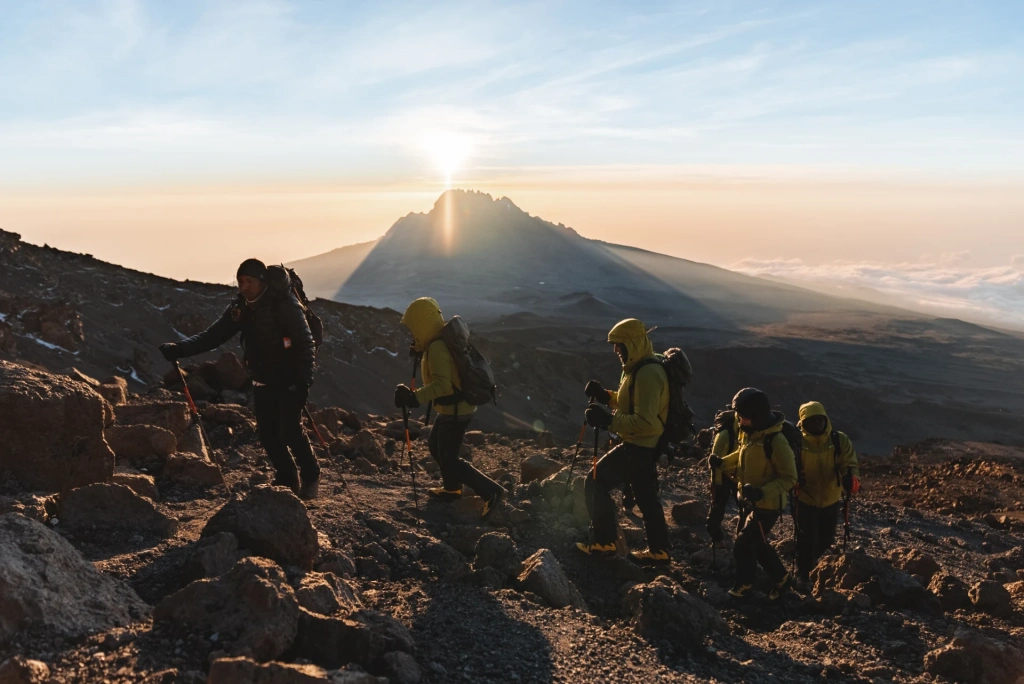
The best protection against altitude sickness is time. The slower the ascent, the higher the chances of successfully reaching the summit. To improve acclimatization, it is important to follow a few simple rules:
Choose a suitable itinerary and maintain a slow pace
This is less about the specific trail and more about the length of the expedition. For beginners, we recommend programs lasting at least 7 days. In the vast majority of cases, this gives the body enough time to adapt to high altitude. Five and six-day climbs are better suited to experienced trekkers. The same principle applies to the pace between camps. Do not rush. Enjoy the scenery, take photos, and stop to rest whenever necessary. The more gradually you gain altitude, the better.
Do not ignore symptoms or hide them from guides
Headaches, poor sleep, fatigue, and mild shortness of breath are normal at high altitude. However, even these symptoms should be reported to your guide, who needs to be aware of any changes, however small. Only then can the team properly assess your condition and decide whether action is needed.
Drink plenty of water and eat even when you don’t feel hungry
At altitude, the body loses fluids faster than at sea level. Dehydration can also cause headaches, weakness, and reduced concentration. Try to drink 3–4 liters (0.8–1 gallon) of water per day, preferably in small but frequent sips. The same applies to food: during a climb, the body requires roughly twice as much energy, even though appetite may decrease during acclimatization. Do not skip meals or snacks, even if you do not feel hungry. There is also a practical reason for this: digestion generates body heat. If you skip dinner, you will feel noticeably colder during the night.
Conclusion
The decision not to use a Gamow bag on our expeditions is not about compromising safety. It is a deliberate choice in favor of faster and more effective measures. However, this approach is justified only when comprehensive alternatives are in place: a professional mountain team that undergoes continuous training in evacuation and first aid, high-quality oxygen systems available in sufficient numbers, and a full range of essential medications.
That is why the approach described in this article works for Altezza Travel, but should not be viewed as a universal recommendation for every operator. We do not carry Gamow bags on our expeditions because we can rely on hundreds of oxygen systems, two types of medical kits, Wilderness First Responder training for our mountain teams, and our own rescue and emergency operations center.
All content on Altezza Travel is created with expert insights and thorough research, in line with our Editorial Policy.

Want to know more about Tanzania adventures?
Get in touch with our team! We've explored all the top destinations across Tanzania. Our Kilimanjaro-based adventure consultants are ready to share tips and help you plan your unforgettable journey.