





 52 reasons
  Free PDF


 Message us on WhatsApp
  Book a Free Call

 Climbing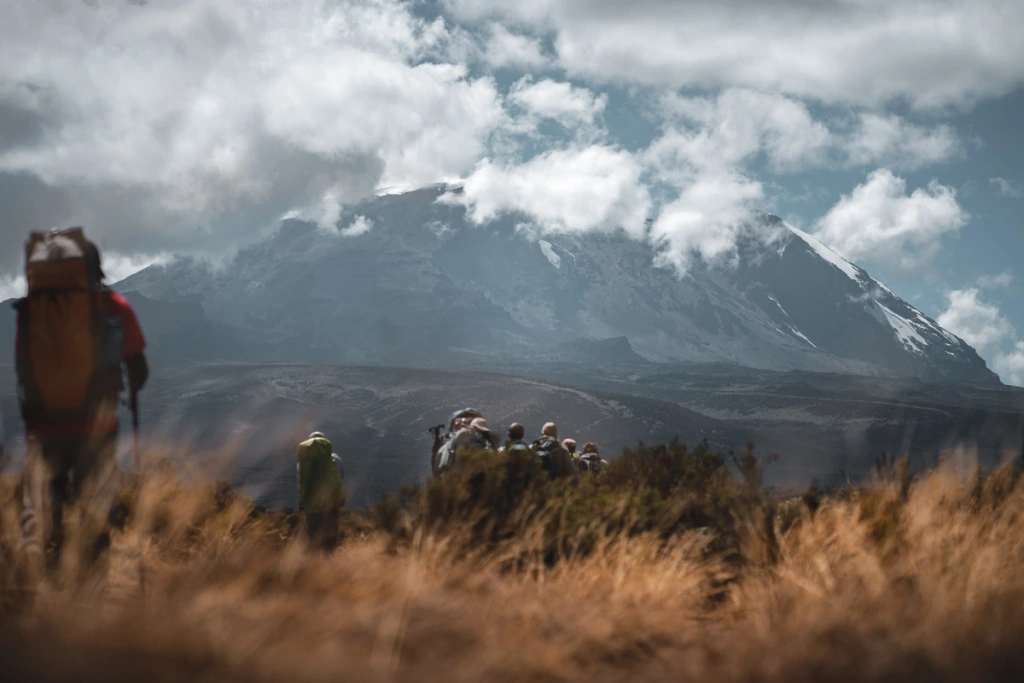
At the summit of Kilimanjaro, at an altitude of 5,895 meters (19,341 ft), each breath contains about half as much oxygen as at sea level. Yet climbers do not rely on oxygen cylinders throughout the ascent, as they often do on Mount Everest. On Kilimanjaro, a healthy body can adapt to these conditions on its own through a process known as acclimatization.
Why does acclimatization come easily to some people but not to others? How to avoid altitude sickness on Kilimanjaro? Which symptoms are normal, and which mean it is time to descend? Learn more in this new article by Altezza Travel.
Oxygen level at the top of Kilimanjaro
Only 1.1% of people on Earth, about 81.6 million, live at altitudes above 2,500 meters (8,202 ft) and are genetically adapted to thin air, such as residents of Tibet, the Himalayas, and the Andes. The remaining 99% begin to feel the effects of altitude already between 2,500 and 3,000 meters (8,202 to 9,843 ft), which becomes the main challenge on the way to the summit of Kilimanjaro.
Saying that there is “not enough oxygen” in the mountains is not entirely accurate. The composition of the atmosphere remains the same, and the proportion of oxygen is always about 21%. What changes is atmospheric pressure. As altitude increases, pressure drops; at 3,000 meters (9,843 ft), the body receives about 71% of the oxygen it receives at sea level with each breath, and at 5,895 meters (19,341 ft), about 49%.
Should I use supplemental oxygen on Kilimanjaro?
Climbers do not use supplemental oxygen continuously on Kilimanjaro. However, it is helpful as a safety measure to ease acclimatization and prevent altitude sickness. Oxygen is also required as an emergency measure during evacuations.
As altitude and pressure change, the body adjusts the function of almost all major systems in the body, including the kidneys, lungs, heart, and brain. This process takes time and is almost always accompanied by mild headaches, fatigue, sleep disturbances, and shortness of breath.
Continuous use of bottled oxygen can mask these symptoms, but does not protect against altitude sickness. In rare cases, it can even be dangerous. A climber may feel better than their condition actually allows, move faster than recommended, and miss warning signs that it is time to slow down.
That said, this does not mean oxygen is completely unnecessary on Kilimanjaro. Altezza Travel warehouses store more than 500 oxygen systems, more than all other tour operators combined. The key is using them correctly. We do so in two situations.
- First, when it is necessary to ease acclimatization symptoms without putting the climber at risk, making the journey to Africa’s highest peak more comfortable. This may include using oxygen in camps to recover and sleep better, or during descent if someone feels unwell at the summit.
- Second, when supplemental oxygen is required as an emergency measure to stabilize a person’s condition and evacuate them to a lower altitude.
Acclimatization and altitude sickness: how to tell symptoms apart
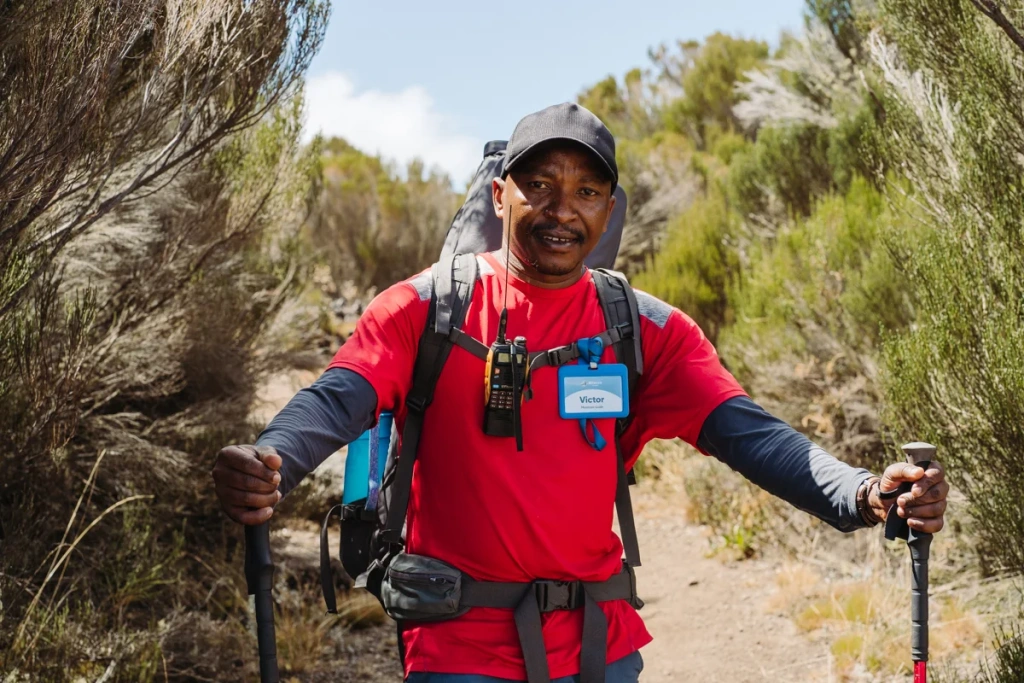
As you ascend the mountain, your body gradually adjusts to new conditions: breathing becomes deeper and more frequent, the heart works faster, and sleep may become restless. Mild headache, fatigue, or reduced appetite may appear. These symptoms do not require treatment and usually pass on their own after a short rest and a slower walking pace. If this is the case, acclimatization is progressing normally.
Concern arises when these sensations intensify. Headaches become stronger, nausea appears, shortness of breath becomes severe, or confusion sets in. These are signs that the body is failing to adapt and that acute mountain sickness (AMS) is developing. In such cases, you should inform your guide immediately so they can assess your condition and decide on the next steps.
Severity levels of altitude sickness
All decisions regarding descent or evacuation are made by the lead guide, who is responsible for the safety of everyone in the expedition. It is crucial to inform your guide immediately about any alarming symptoms and not attempt to endure them. Severe altitude sickness can progress to pulmonary or cerebral edema, both of which are life-threatening conditions.
How to avoid altitude sickness on Kilimanjaro
Slow ascent
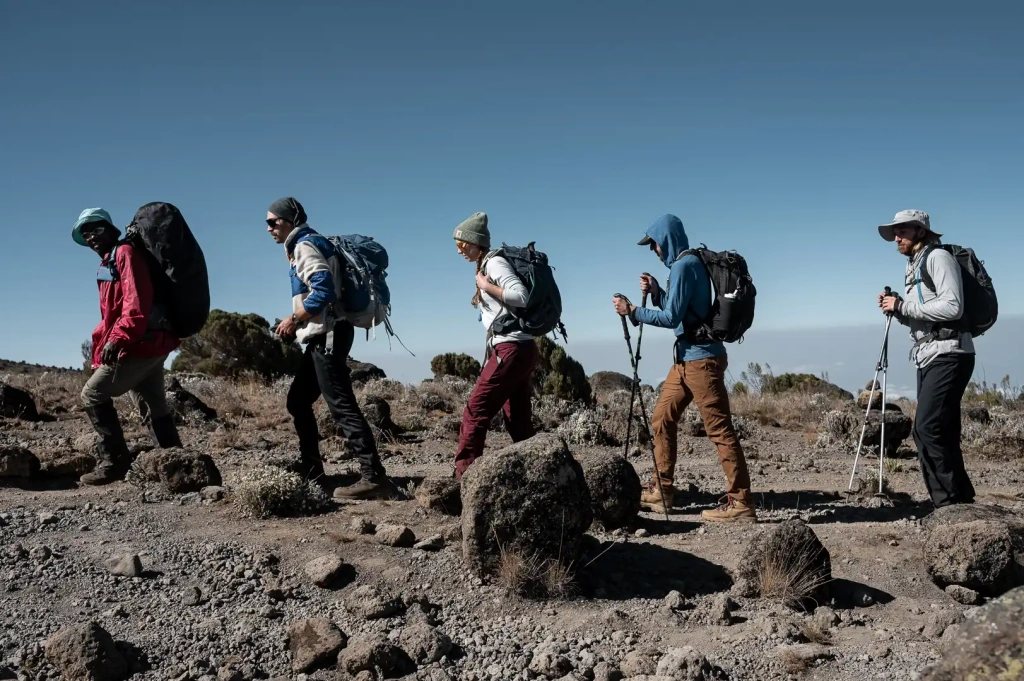
The main way to combat altitude sickness is not medication or supplemental oxygen, but patience. On Kilimanjaro, there is an important rule you will often hear during the expedition: “pole pole,” which in Swahili means “slowly, slowly.” The slower you go, the higher the chance that your body will acclimatize properly. This also means avoiding unnecessary physical exertion when possible, conserving energy for the summit push.
The climbing program itself plays a key role. There are eight routes to the “Roof of Africa”:
- Lemosho
- Machame
- Marangu
- Rongai
- Northern Circuit
- Umbwe
- Kilema
- Western Breach (rarely used by tour operators due to rockfall risk)
We recommend choosing programs lasting at least 7 days. They offer a gentler acclimatization profile and much higher chances of a successful summit.
Acclimatization hikes
During the expedition, guides regularly lead so-called acclimatization hikes, and we strongly recommend not skipping them. After the day’s trek, you will be invited on a short hike where you gain additional altitude and then return to camp. This approach is known as “climb high, sleep low,” a widely accepted practice even among professional mountaineers. It helps the body adapt and prepares it for further altitude gain.
Nutrition and hydration
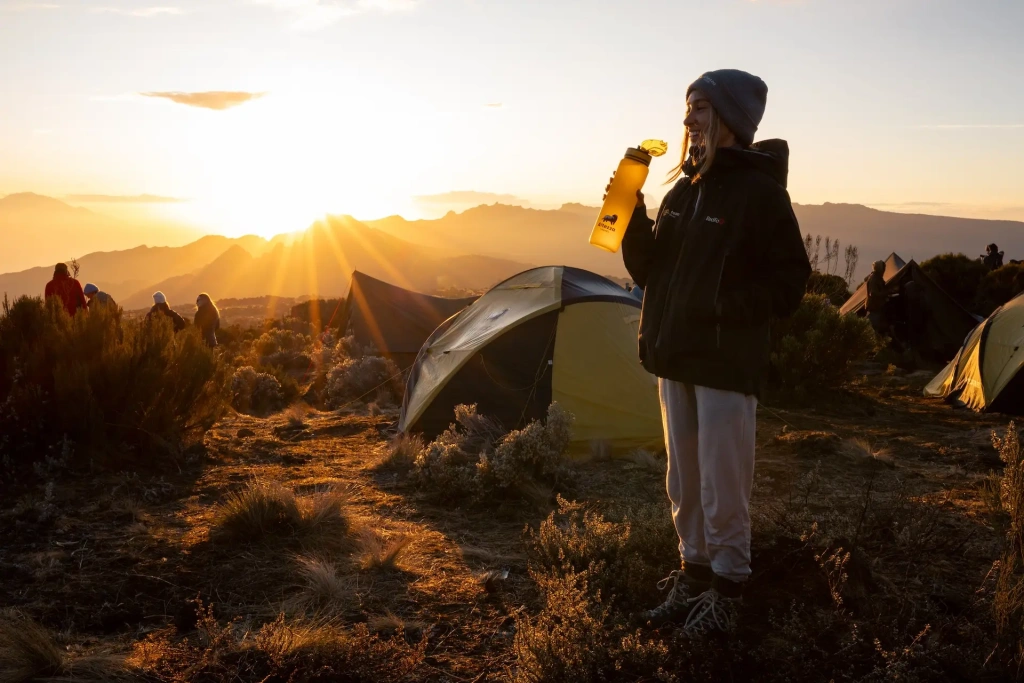
At altitude, the body loses fluids much faster than on flat terrain. In thin air, breathing becomes deeper and more frequent, and with each exhale, some fluid is lost as it evaporates from the mucous membranes of the airways and lungs. Physical exertion also increases during the ascent, leading to additional fluid loss through sweating.
For this reason, it is recommended to drink at least 3 to 4 liters (0.8 to 1.1 gallons) of water per day. Proper hydration helps maintain normal blood circulation, which is essential for delivering oxygen to body tissues. It is best to drink small amounts frequently to replenish fluid loss steadily throughout the day.
In terms of nutrition, emphasis should be placed on carbohydrates, as they require less oxygen to metabolize than fats or proteins and provide energy for movement. Altezza Travel’s team of mountain chefs offers a balanced menu: porridge, chicken, beef, eggs, spaghetti, vegetables, herbs, fresh fruits, soups, and much more.
Altitude sickness tablets on Kilimanjaro
A medication called Diamox helps the body adapt to altitude. It reduces symptoms of altitude sickness and helps prevent its development. At the same time, alcohol and sleeping pills should be avoided before and during the climb, as they can interfere with acclimatization.
Frequently asked questions
Kilimanjaro’s altitude (5,895 meters / 19,341 ft) does not require continuous oxygen use. Most climbers successfully acclimatize on their own, provided they follow a good climbing itinerary and pace. Supplemental oxygen may be administered in some cases to facilitate acclimatization and prevent altitude sickness, and during evacuations.
Most climbers without prior high-altitude acclimatization experience acclimatization symptoms such as fatigue, mild headache, or nausea. This is a normal bodily response to reduced oxygen levels, not altitude sickness.
If headache worsens, confusion appears, appetite is lost, or shortness of breath occurs even at rest, these are warning signs. Contact your guide immediately. Guides always carry a pulse oximeter to measure blood oxygen saturation. Based on this reading and observed symptoms, the guide will assess the climber’s condition and the safety of continuing ascent, and if necessary, provide bottled oxygen.
Monitor your pace — the slower you gain altitude, the better. Drink at least 3–4 liters (0.8–1.1 gallons) of water daily, do not skip meals (even if you are not hungry), try to get enough sleep, and avoid overexertion during hikes. Rest whenever you feel significant fatigue.
Diamox can reduce symptoms, speed up acclimatization, and help prevent altitude sickness. If you have contraindications or are taking other medications, consult your doctor.
All content on Altezza Travel is created with expert insights and thorough research, in line with our Editorial Policy.

Want to know more about Tanzania adventures?
Get in touch with our team! We've explored all the top destinations across Tanzania. Our Kilimanjaro-based adventure consultants are ready to share tips and help you plan your unforgettable journey.
 Climbing
  Safari
  About Tanzania
  Islands