





 52 reasons
  Free PDF


 Message us on WhatsApp
  Book a Free Call

 Climbing
Blind travelers, wheelchair users, and climbers without lower limbs have reached the summit of Mount Kilimanjaro, with some completing the ascent using only their arms. Their accomplishments show that Africa’s highest peak is within reach for anyone ready to challenge themselves.
In this article, we share real stories of climbers who reached the summit despite physical limitations and speak with Dmitry, Head of the Climbing Department at Altezza Travel, to learn how these expeditions are thoughtfully planned and operated.
5 Inspiring stories of disabled climbers on Mount Kilimanjaro
Blind climbers: from first attempts to world records
February 1969: Seven blind travelers, accompanied by four guides and porters, made a historic ascent of Mount Kilimanjaro. It was the first expedition of its kind, and the preparations took the team just a couple of weeks.
Harsh weather prevented them from reaching the highest point, Uhuru Peak (5,895 meters / 19,341 ft). However, they did reach the summit plateau and one of the intermediate points: sources vary, citing either Stella Point (5,756 meters / 18,875 ft) or Gilman’s Point (5,685 meters / 18,650 ft). Achieving such heights without modern equipment, in extreme cold, and without the ability to see their surroundings was indeed a remarkable accomplishment.
Forty years later, in 2009, another team of eight blind climbers, supported by 17 assistants, successfully summited Kilimanjaro, setting two world records. The first was for the largest group of visually impaired climbers to reach Kilimanjaro's highest summit, and the second went to 13-year-old Max Ashton, who became the youngest blind climber to reach the Roof of Africa.
Bernard Goosen — the first man in a wheelchair on Mount Kilimanjaro
South African Bernard Goosen was born with cerebral palsy. Yet in 2003, he successfully reached Uhuru Peak, marking one of the most well-documented examples of wheelchair mountain climbing on Mount Kilimanjaro. Even more impressively, he repeated the ascent in 2007, cutting his previous time from nine days to six.
At the time, the South African platform Mail & Guardian Thought Leader not only covered his climb but also offered an option to follow it online.
Goosen used a specially designed wheelchair with a reinforced frame, which allowed him to navigate most of the route independently.
The final push to the summit, one of the most challenging sections, is tough even for experienced climbers, and the terrain there isn’t suitable for wheelchairs. On this stretch, he was assisted by a guide and a porter.
Erica Davis — the first paraplegic woman on Mount Kilimanjaro
In 2005, at age 23, Erica Davis was diagnosed with a spinal condition that left her paralyzed from the waist down. But she didn’t let that stop her. She became actively involved in sports, taking part in cycling races and marathons. In 2009, the Challenged Athletes Foundation (CAF) invited her to join an expedition to Mount Kilimanjaro.
“I was especially concerned about altitude sickness and getting too cold. But I never thought of not making it. It was going to be fun and hard,” Erica said later.
Erica’s Kilimanjaro climbing preparation took three and a half months. For the climb, Colours Wheelchairs specially built a chair with reinforced wheels and frame. Joining Erica were her friend and fellow athlete, Tara Butcher, who has a below-knee amputation, along with three guides and 33 porters. Each day, the team spent up to 12 hours on the trail.
Erica completed most of the route on her own, with the support team stepping in on the steeper sections. The expedition reached Uhuru Peak on January 31, 2010. Later, Erica’s journey became the subject of the documentary Through the Roof.
"It's almost sunset when we summited, so we had a really special moment up there," said Davis to NBC Los Angeles. "I thought I couldn't do sports again. Going up there and doing something so incredible like this, it's showing everyone, whether they are in chairs or not, that anything is possible."
Kyle Maynard reached the summit without prosthetics
Kyle Maynard was born in the USA in 1986 with a congenital condition that affects limb development. Despite this, he became a wrestler, practiced CrossFit, and opened his own gym. His autobiography, No Excuses: The True Story of a Congenital Amputee Who Became a Champion in Wrestling and in Life, became a New York Times bestseller.
In 2010, he attempted his first climb in Georgia. Participants had to row 1,000 meters (3,281 ft) on a rowing machine as part of the preparation, then sprinted to the top of Stone Mountain, which rises 512 meters (1,680 ft). While most completed the course in 25 minutes, Maynard took 1 hour and 46 minutes. He later recalled:
"I ripped all the skin off my hands, but I reached the top. That evening, I told a friend that I wanted to climb Kilimanjaro. I didn’t know if I could, but I knew I wanted to find out."
In 2011, Kyle set out to climb Kilimanjaro without prosthetics. During training, he used custom modules, made from bicycle tires, and protective pads secured with duct tape. Later, Orthotic Specialists created custom devices with Vibram soles molded to his limbs. Using these, he reached Uhuru Peak without a wheelchair or crutches.
Spencer West climbed most of the route using his hands
American Spencer West was born in 1981 with a severe congenital condition that led to the amputation of his legs below the pelvis at age five. In June 2012, he set out to climb Kilimanjaro with friends. The expedition supported the Redefine Possible project, which aimed to raise $750,000 to expand access to clean water in East Africa.
West completed about 80% of the route using his hands, relying on a wheelchair for the remaining 20%. On the most challenging sections, his friends assisted.
“That was the only time in my life I have ever wished to have legs,” said West. “Because I wished I could have helped them like they helped me. But in the end we did it together, we completed our journey as a team.”
According to West, the journey was demanding from the start, with heat, rough terrain, and the growing effects of altitude. His friends began to experience symptoms of altitude sickness, including dizziness, weakness, and nausea. Despite these challenges, the entire team reached the summit after seven days.
Climbs for people with disabilities with Altezza Travel
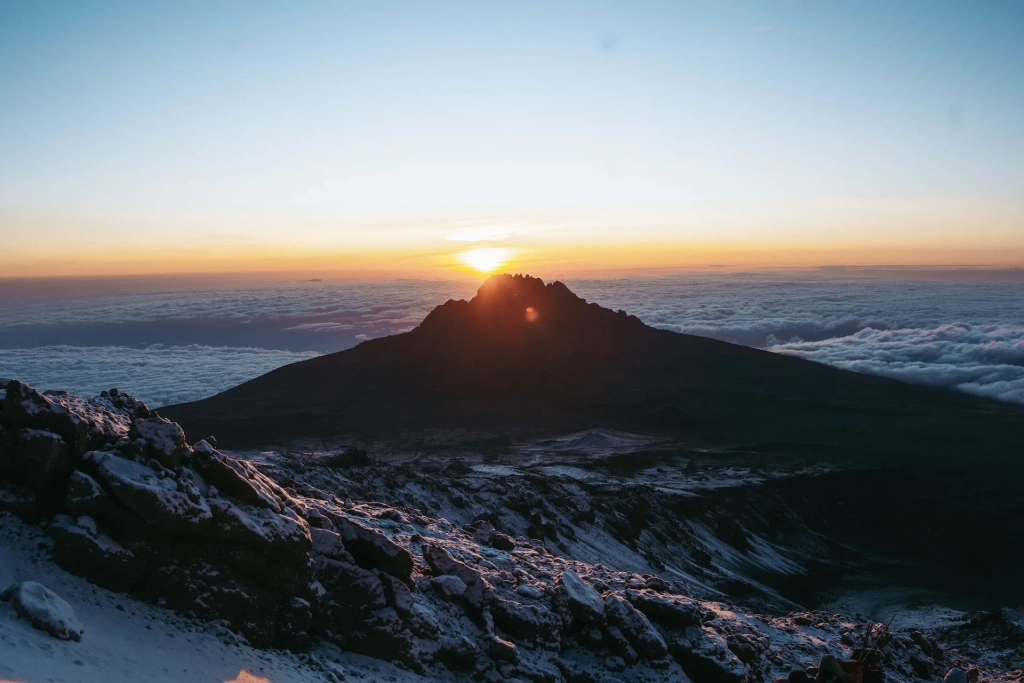
Altezza Travel has been organizing Mount Kilimanjaro climbs for more than 10 years and has led numerous tours for people with disabilities. The team includes professional, licensed guides trained in wilderness first aid. They always carry extra oxygen, Diamox to help manage altitude sickness symptoms, as well as radios and satellite phones to stay in constant contact with the tour support center and emergency services.
Tour Preparation
Among travelers with disabilities, the most common are those with amputations or visual or hearing impairments. There is no one-size-fits-all approach to preparing these tours: each case is considered individually. Guides assess the risks and adapt daily routines and technical aspects of the climb, explains Dmitry, Head of the Climbing Department at Altezza Travel.
“For climbers with hearing impairments and those who are blind, climbing Kilimanjaro places essentially the same demands as it does on other travelers. For those with hearing loss, it’s especially important that information is communicated clearly on sections of the route where extra caution is required. Blind climbers need physical support on more challenging terrain.
At the same time, guides give them as much independence as possible on sections where they can move safely on their own, using a specialized cane for orientation. In all other respects, these tours are no different from any other.”
Climbers with amputations require special preparation, as standard prosthetics aren’t designed for mountain terrain. Specialized sports prosthetics are available and are selected on an individual basis. Before attempting Kilimanjaro, we recommend starting with an easier trek to build strength and test the prosthetic.
The same applies to wheelchairs: standard models aren’t suitable for mountainous terrain, so specialized bicycle-style wheelchairs are used instead. In both cases, climbers are always accompanied by assistants.
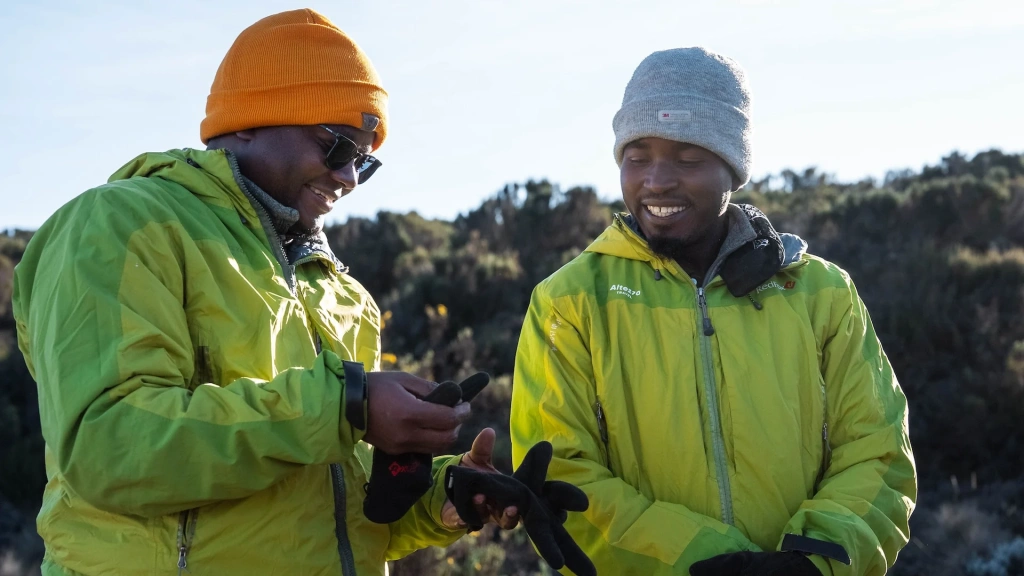
On the way to the summit
Tours follow standard Kilimanjaro climbing routes, and there are no formal restrictions, though certain considerations apply. For example, climbers using specialized wheelchairs are generally better suited to the Kilema bicycle route. For those using prosthetics, the Rongai route is often considered more accessible. It has fewer technically demanding sections, such as the Barranco Wall, though the ascent takes longer than on the Lemosho, Machame, or Umbwe routes.
Regardless of the route, climbers still require support from a team, so the final choice should be based on personal preferences. Having a support team is also a requirement of Kilimanjaro National Park for all climbers.
“From a comfort standpoint, it’s important to remember that many climbers don’t want excessive supervision. Each person needs to feel like an equal member of the team. That’s why we offer assistance only when a climber asks for it or when it’s truly necessary for safety. In all other cases, it’s important to allow them to reach the summit as independently as possible,” Dmitry concluded.
All content on Altezza Travel is created with expert insights and thorough research, in line with our Editorial Policy.

Want to know more about Tanzania adventures?
Get in touch with our team! We've explored all the top destinations across Tanzania. Our Kilimanjaro-based adventure consultants are ready to share tips and help you plan your unforgettable journey.
 Climbing
  Safari
  About Tanzania
  Islands