





 52 reasons
  Free PDF


 Message us on WhatsApp
  Book a Free Call

 Safari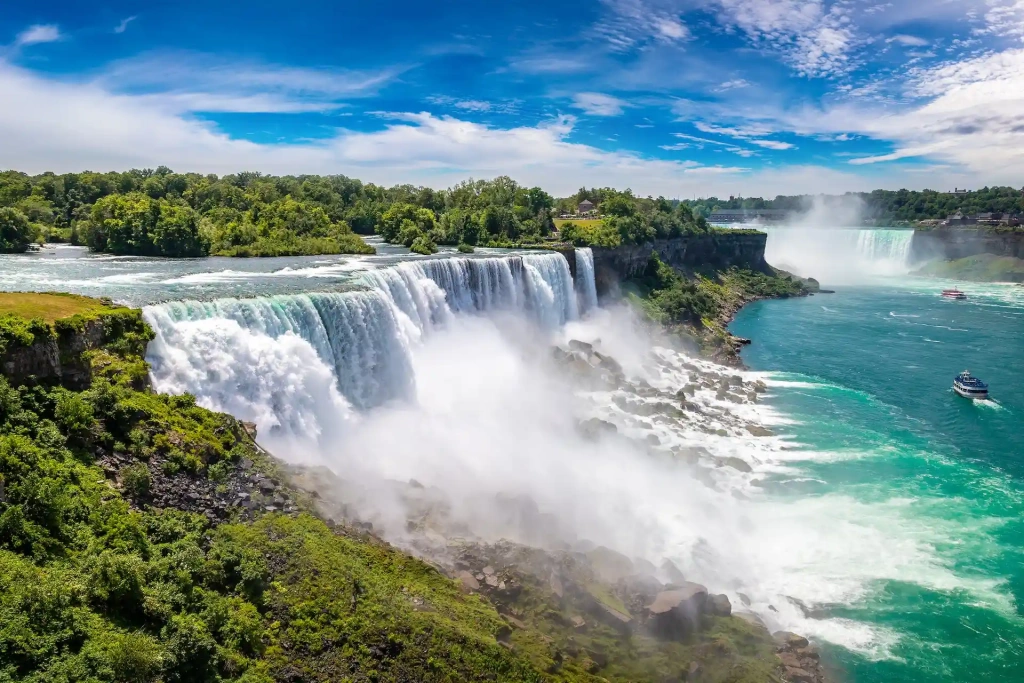
The tallest waterfall in the world is Tugela, located in South Africa (948 meters / 3,110 ft). The most powerful is Inga Falls in Congo, with 25,768,000 liters (≈ 6,806,000 gallons) of water passing through it every second. But this is far from the full list: there are dozens of waterfalls around the world that amaze with their scale. Learn more about them in this Altezza Travel feature.
The largest waterfalls in the world by width and water volume
Iguazu Falls, Argentina / Brazil
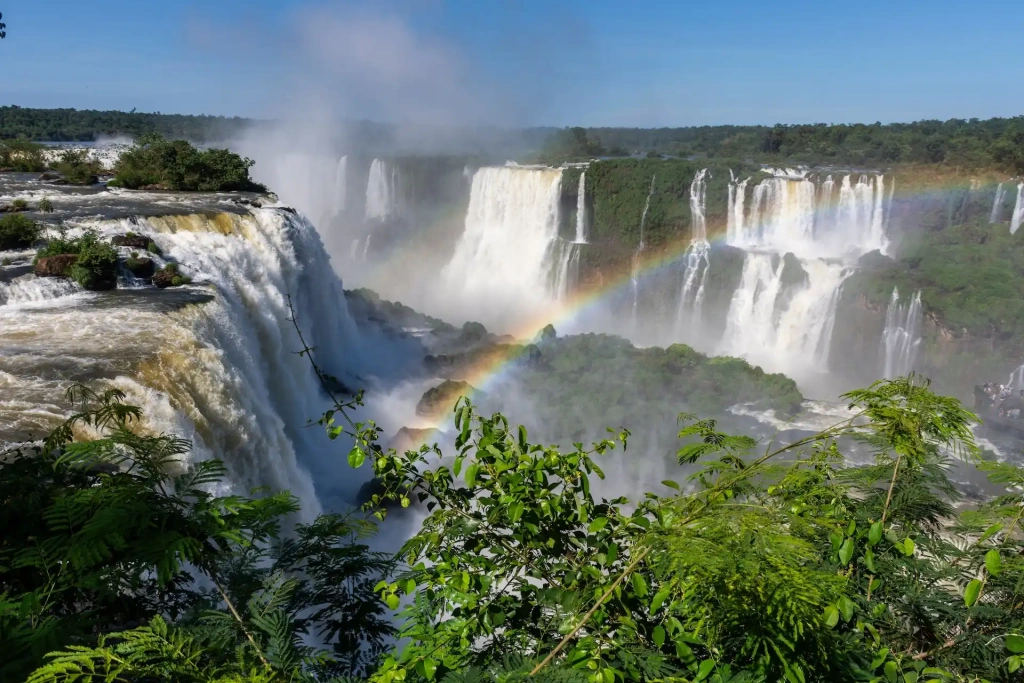
Iguazu is the biggest waterfall system in the world. The height of individual cascades reaches 60–80 meters (197–262 ft), roughly the height of a 20–25-story building. Their total number, about 275, stretches the waterfall almost 2.7 km (1.68 mi) along the border of Argentina and Brazil. The waterfall formed where the river crosses the edge of the Paraná basalt plateau. The most impressive section is known as the Devil’s Throat (Garganta del Diablo). This is a U-shaped cliff 82 meters (269 ft) high, into which powerful streams of water plunge, creating a cloud of spray that rises tens of meters into the air.
About 80% of the waterfalls are located in Argentina, with the remaining 20% in Brazil. National parks on both sides are home to rare bird species, jaguars, toucans, and tropical plants. As reported by The Times, on the Argentine side visitors can see the water from very close range, approach it by boat, and walk along suspension bridges nearby. The Brazilian side offers panoramic views.
Victoria Falls, Zambia / Zimbabwe
In the language of the local Lozi people, the waterfall is called Mosi-oa-Tunya, meaning “the smoke that thunders,” because of the loud roar of the water and the mist cloud visible from tens of miles away.
The height of the Victoria Falls is about 108 meters (354 ft), but its width is even more impressive. Here, the Zambezi River plunges over a cliff almost 1,708 meters (5,604 ft) wide, creating the largest continuous water curtain in the world. During the rainy season, massive flows generate dense mist visible for dozens of miles. The scale of the waterfall allows it to be observed from several vantage points at once – from the riverbank, from the opposite cliffs, and from the air.
One of Africa’s most iconic and largest waterfalls formed where the river crosses a plateau and drops into a deep canyon. This is also where the African savanna meets the Zambezi river ecosystem. The landscape changes with the seasons: during the rains, a powerful continuous wall of water forms, while in the dry season, individual rocky sections and the famous Devil’s Pool — a natural rock basin at the edge of the falls — become visible.
From the Zimbabwean side, visitors get the best frontal view, while from the Zambian side, it is possible to approach the very edge of Victoria Falls. However, the most spectacular perspective opens from a helicopter.
Nearby stands the historic bridge of the same name, built in 1905 and over 100 years old. It still connects Zimbabwe and Zambia and is also used as a site for extreme bungee jumping and as a viewing platform.
Inga Falls, Congo
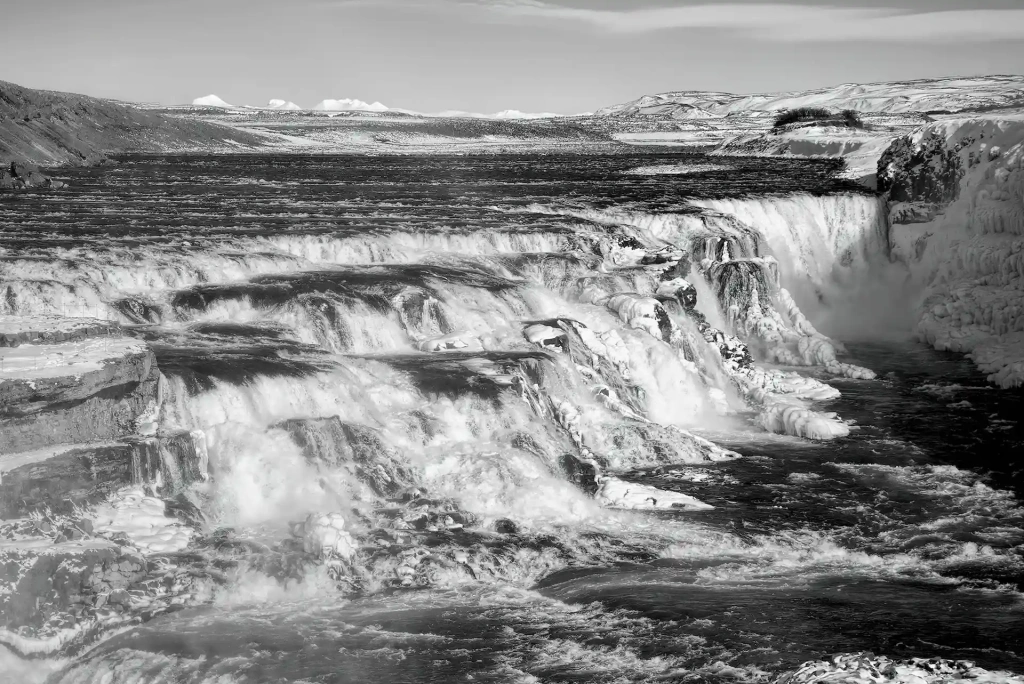
Located on the Congo River near the port city of Matadi in the Democratic Republic of the Congo, Inga Falls does not resemble a classic vertical waterfall. It is a series of cascades stretching about 15 km (9.3 mi) with a total height of around 96 meters (315 ft).
By average water volume, it is considered the most powerful waterfall in the world, with an estimated discharge of 25,768 m³/s (910,000 cu ft/s). That equals 25,768,000 liters (≈ 6,806,000 gallons) per second, or roughly 10 Olympic swimming pools per second.
Nearly ten times more water flows through Inga than through the famous Niagara Falls (2,832 m³/s / 100,000 cu ft/s). Because Inga Falls is located in a remote and hard-to-reach area, its main significance lies not in tourism but in its energy potential. The Congolese government has already built the Inga 1 and Inga 2 power stations and plans to launch the large-scale Grand Inga hydropower project. However, despite investments having been secured many years ago, construction has yet to begin.
Livingstone Falls, Congo
A series of 32 rapids on the Congo River stretches for 354 km (220 mi) and features a total vertical drop of about 260 meters (853 ft). This section records one of the highest average water discharges in the world — 25,060 m³/s (885,000 cu ft/s) or 25,060,000 liters (≈ 6,620,000 gallons) per second. In some places, the river channel narrows to less than 300 meters (984 ft), significantly increasing the force of the flow and its hydropower potential.
In terms of tourism, Livingstone Falls is not very popular. Its remoteness, difficult access, and lack of nearby infrastructure hinder tourism development.
The tallest waterfalls in the world
Tugela Falls, South Africa
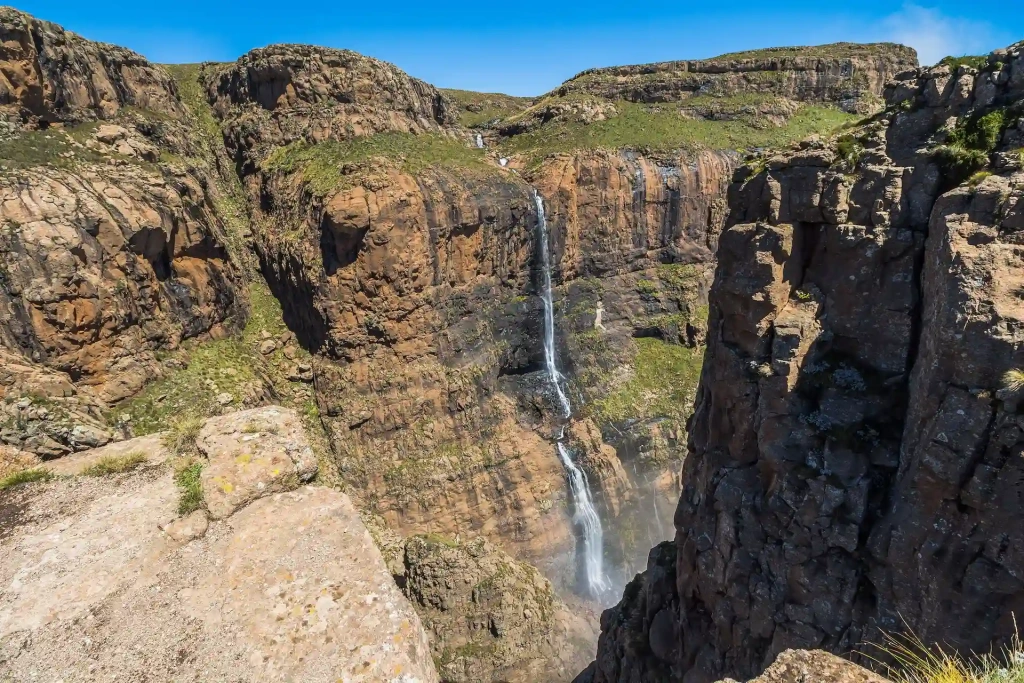
Today, Tugela is considered the tallest waterfall in the world. It is a complex of seasonal waterfalls located in South Africa’s Drakensberg Mountains, within Royal Natal National Park. Its total height is 948 meters (3,110 ft). Water plunges from the Mont-aux-Sources plateau in several cascades.
The best time to visit is from March to April, when water flow increases after rainfall. It becomes even more powerful from November to February, though trails may be slippery and visibility reduced.
Reaching the tallest waterfall in the world is possible via the Sentinel Peak route, which leads to the Amphitheatre summit and offers panoramic valley views. The hike is 11–12 km (6.8–7.5 mi) long and ends with a chain-assisted metal ladder along a sheer cliff. For a gentler walk, the Tugela Gorge Trail follows the river through the gorge for about 15 km (9.3 mi). It is less steep but very scenic.
Mattenbach Falls, Switzerland
Mattenbach Falls is a cascading waterfall with four main tiers descending along the eastern wall of the Lauterbrunnen Valley in the canton of Bern, Switzerland. The waterfall is fed primarily by meltwater from the Schilthorn and Giesen glaciers.
Its total height was previously estimated at around 840 meters (2,756 ft), ranking it among Europe’s tallest cascading waterfalls. However, in 2020, the Vertical Water Canyoning Team conducted new measurements, estimating the height at 930 meters (3,051 ft), making Mattenbach the tallest cascading waterfall in Eurasia.
The best time to visit Mattenbach Falls is from early spring to late summer, when snow and ice melt and the waterfall becomes noticeably stronger. In dry summers, the flow can decrease significantly, especially toward the end of the season.
Three Sisters Falls, Peru
This is the tallest waterfall in Peru and the third-highest in the world, with a total drop of about 914 meters (3,000 ft). The waterfall consists of three massive, stepped cascades plunging into a deep canyon, which is how it earned its name.
Since its discovery in the early 2000s and its designation as one of the world’s tallest waterfalls, access has remained extremely restricted. Reaching the falls on foot or by ground transport is virtually impossible: the area is surrounded by dense, trackless rainforest with no established trails. In practice, the only realistic way to see Three Sisters Falls is from the air, and even that requires special permission from SERNANP, Peru’s National Service of Protected Natural Areas.
The waterfall lies deep within Otishi National Park, a remote protected area home to rare animal and bird species. The surrounding jungle remains largely untouched. After heavy rains, the water flow becomes especially powerful and dramatic, but even during the dry months the falls do not dry up completely.
The best time to visit, more precisely, to fly over the waterfall, is from May to November, when rainfall in this part of the Amazon basin is lower and persistent fog is less common. During the rainy season, from December to April, flight cancellations are far more likely due to weather conditions.
Oloʻupena Falls, Hawaii, USA
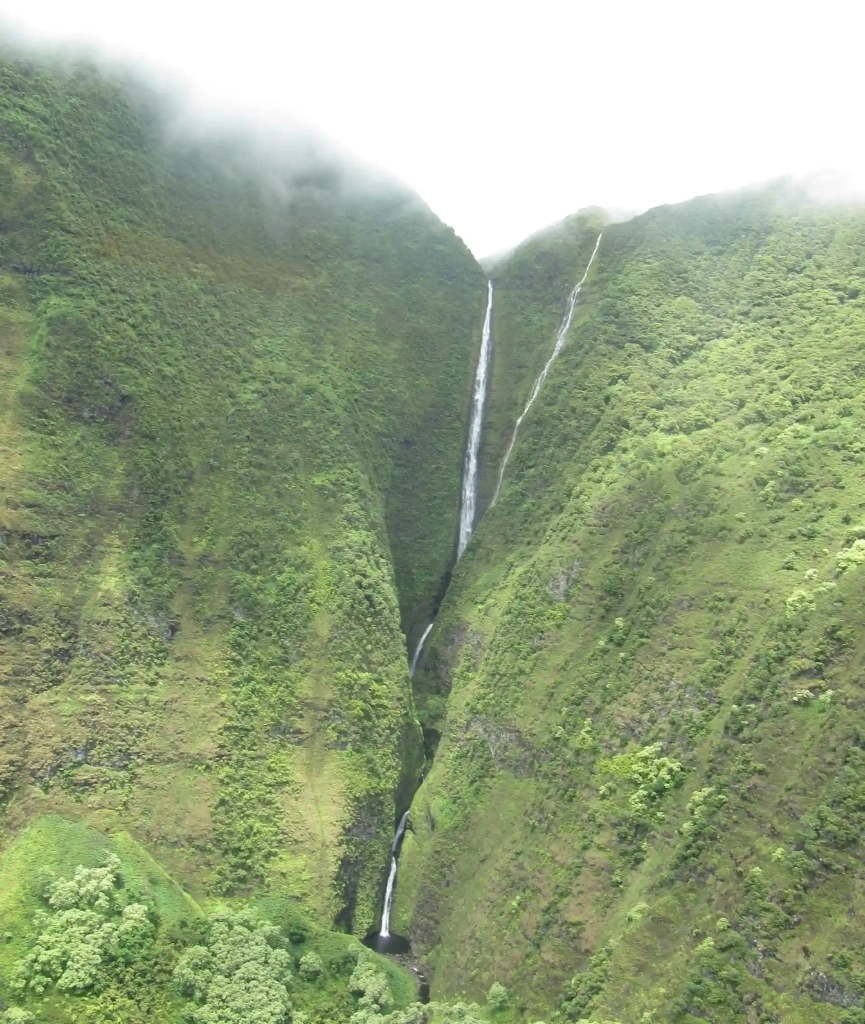
Oloʻupena Falls is located on the highest sea cliff in the world on the island of Molokai, Hawaii. Water slides down an almost vertical slope from a height of 900 meters (2,953 ft) directly into the Pacific Ocean.
The best time to see Oloʻupena at its most impressive is from November through March. During this period, rainfall is plentiful, and water flow remains relatively stable. In the dry months, like many giant waterfalls, it can nearly disappear.
Yumbilla Falls, Amazonas, Peru
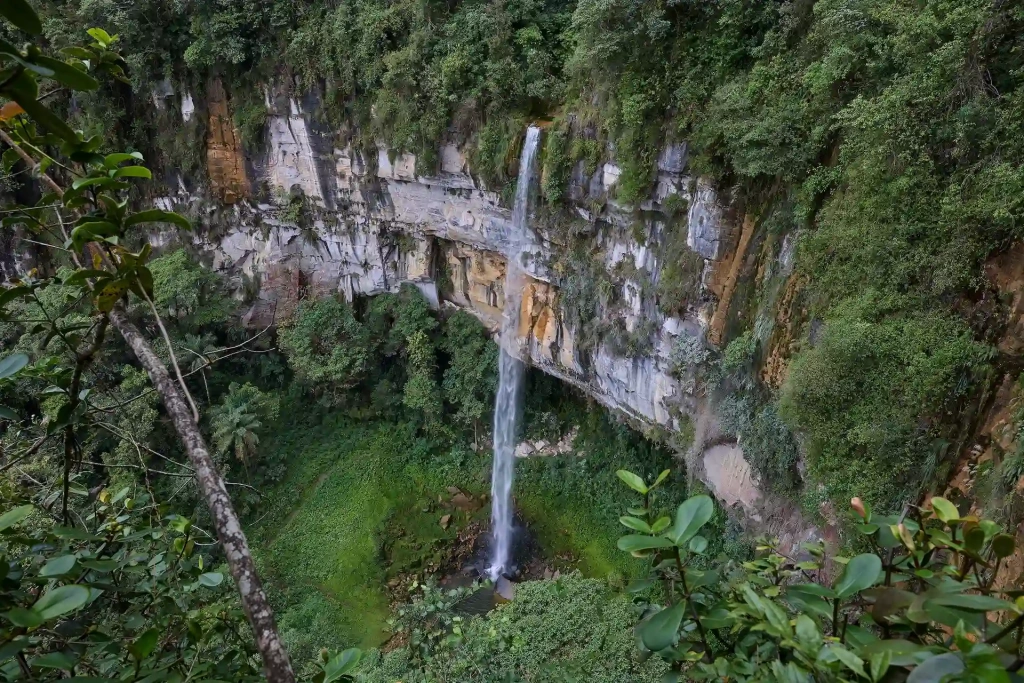
Located in the Amazonas region of northern Peru, Yumbilla is part of a cascading system together with Chinata and Pabellón Falls and consists of approximately 4–5 tiers. Despite its relatively modest water volume, its height reaches about 895 meters (2,936 ft). The upper point lies at roughly 2,720 meters (8,924 ft) above sea level, while the base is around 1,830 meters (6,004 ft).
The trail begins in the town of Cuispes and passes through tropical forest, including climbs, stream crossings, and slippery sections, especially during the rainy season. The best time to visit is from May to August, when rainfall decreases.
Vinnufossen, Norway
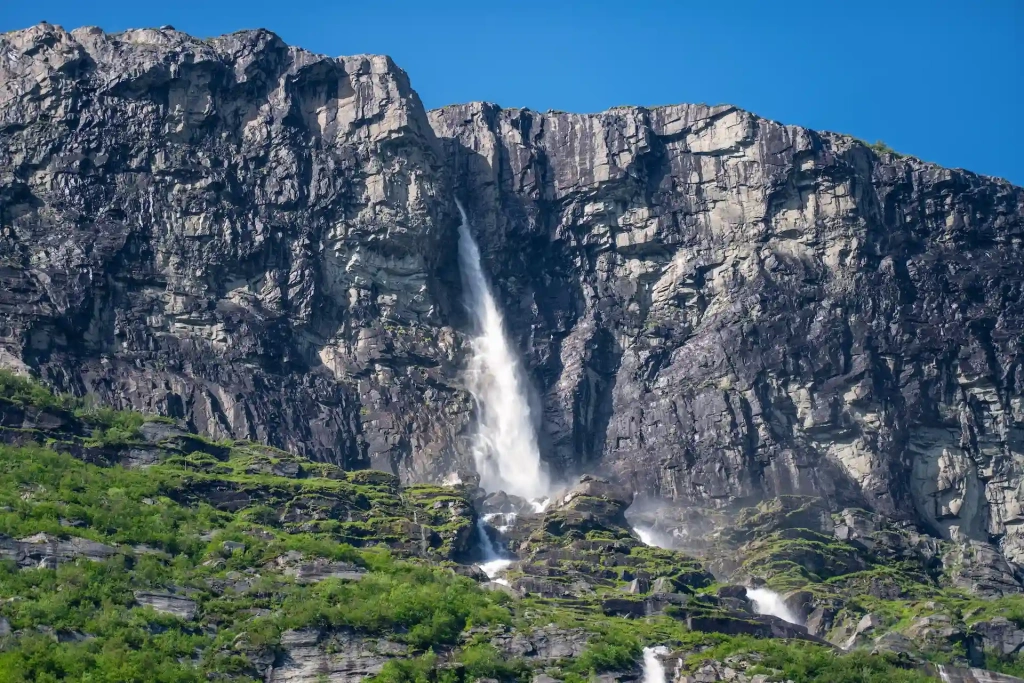
A multi-tiered waterfall on the Vinnu River in Norway, fed by the Vinnufonna glacier. Its total drop is 845 meters (2,772 ft). As the water descends the mountainside, the waterfall gradually widens to over 150 meters (492 ft). A stone staircase about 300 meters (984 ft) long leads to the waterfall, with several viewing platforms along the way.
The best time to visit is spring and early summer, from May to July, when snow and glacier melt peak. The staircase is usually open from May 15 to November 1; outside this period, access may be restricted due to slippery conditions.
Brown Falls, New Zealand
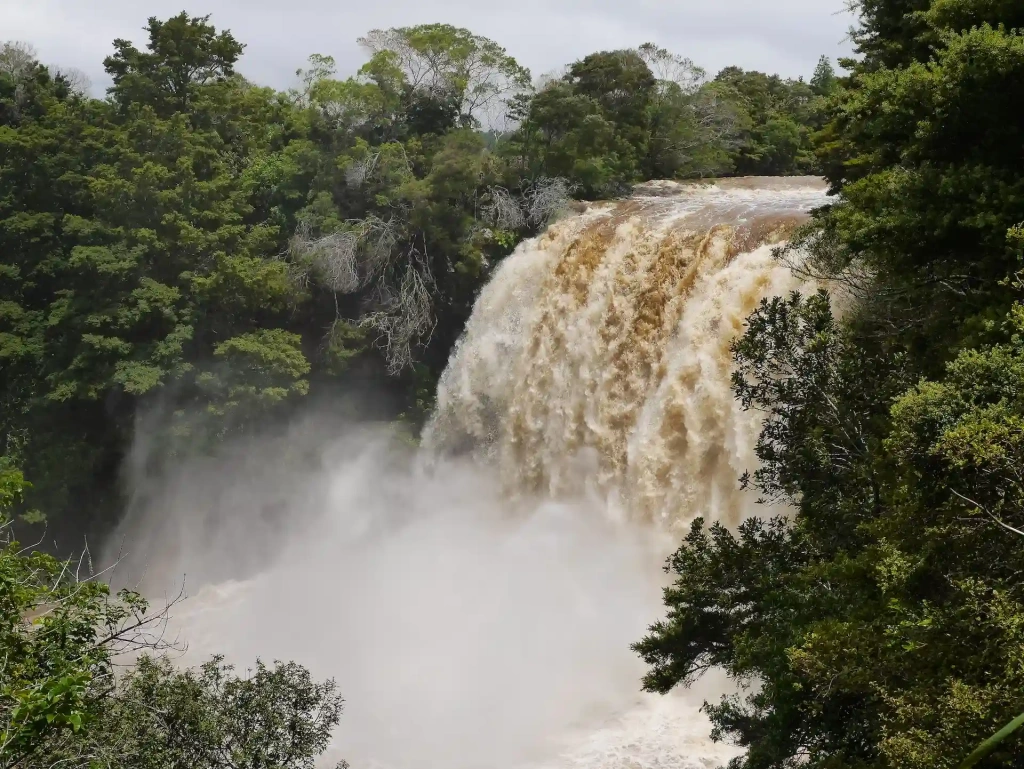
Located in Doubtful Sound in southwestern New Zealand, Brown Falls lies within Fiordland National Park and originates from the small alpine Lake Brown at an elevation of about 836 meters (2,743 ft) above sea level. When the lake overflows after heavy rainfall, water spills over the edge and cascades down rocky slopes, forming a long, multi-tiered stream.
The height is 836 meters (2,743 ft). Unlike other largest waterfalls in the world where water plunges almost vertically, Brown Falls descends at a gentler angle, sliding smoothly over rock surfaces and becoming wider and stronger during rainy seasons.
Situated in one of the country’s most remote and inaccessible areas, the waterfall is best seen from the water during cruises through the Doubtful Sound .
The most famous waterfalls in the world
Niagara Falls, USA / Canada
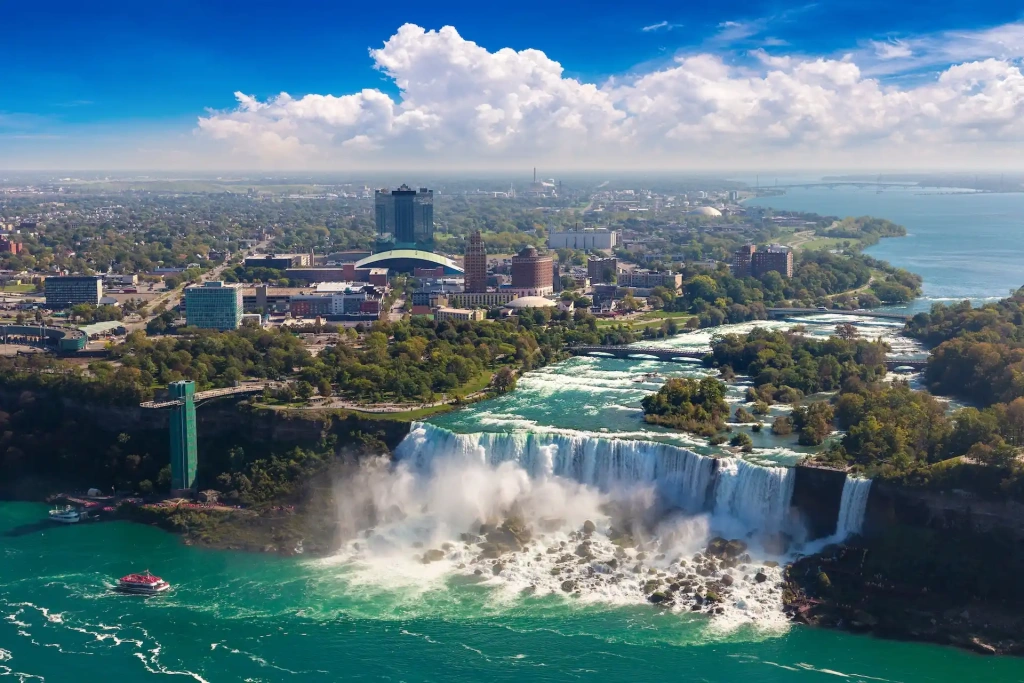
Niagara Falls’ height is only about 51 meters (167 ft), but the water volume makes it one of the most remarkable waterfalls in the world. Its average discharge is 2,832 m³/s (100,000 cu ft/s), or 2,832,000 liters (≈ 748,000 gallons) per second. The waterfall consists of three parts: Horseshoe, American, and Bridal Veil Falls. The strongest flow is usually observed at Horseshoe Falls, especially in summer.
From the Canadian side, visitors enjoy panoramic views of the Horseshoe Falls, while from the American side, it is possible to approach the water closely. Most of the water flow, and thus the power output, is regulated by a 1950 agreement between the USA and Canada: during the low season and at night, minimum flow levels are maintained, while the remaining water is used for hydroelectric power generation.
Yosemite Falls, California, USA
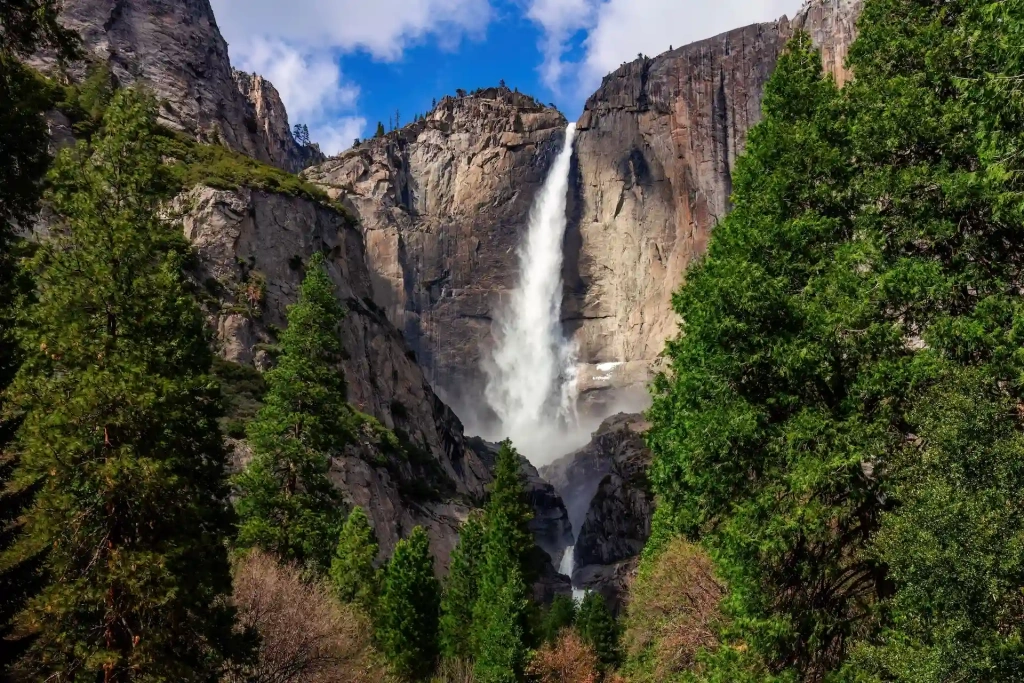
The total drop of the Yosemite Falls is about 740 meters (2,428 ft). The waterfall is divided into three distinct sections: upper, middle, and lower. In spring, when snow melts in the Sierra Nevada, all three cascades are full. By late summer, however, the waterfall nearly dries up.
Visitors have several viewing options, including walking to the base where the water meets the river or hiking up to the top. Although Yosemite Falls is not among the tallest in the world, its impressive scale against the surrounding landscape has made it one of the most famous waterfalls globally.
Kalambo Falls, Tanzania / Zambia
Kalambo is the second-highest uninterrupted waterfall in Africa. Its highest drop is 215 meters (705 ft), but the river continues cascading for nearly 700 meters (2,297 ft) over a distance of 10 km (6.2 mi).
Archaeological excavations conducted here in the 1950s revealed evidence of early human presence, dated to around 250,000 years ago. Artifacts include stone tools and remains of ancient dwellings. Due to its archaeological significance, Kalambo Falls was designated a national monument of Zambia in 1964 and added to UNESCO’s Tentative World Heritage List in 2009.
In Zambia, the nearest town is Mbala, located about 65 km (40 mi) away, with a drive of just over an hour. From Tanzania, the best route is via the town of Sumbawanga in the southwest of the country, followed by a 116 km (72 mi) drive taking about 2.5 hours.
Blood Falls, Antarctica
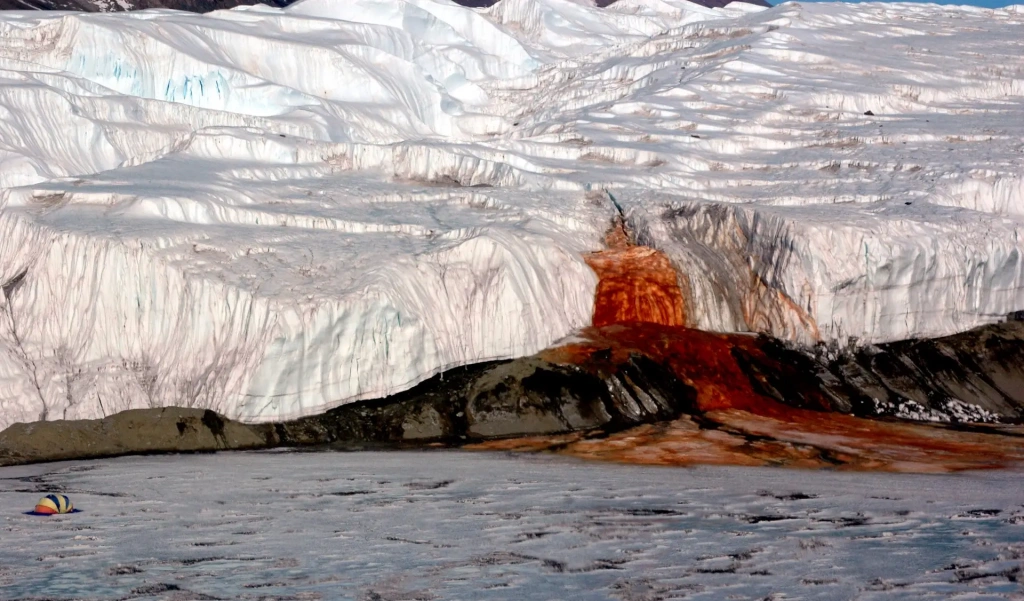
A stream of iron-rich saline water flows out from beneath Taylor Glacier, staining the ice surface a vivid red. This unusual natural phenomenon was first discovered in 1911 by Australian geologist Thomas Griffith Taylor.
Previously, scientists believed the color might be caused by algae. However, a 2017 study published in the Journal of Glaciology settled the matter. The red color results from high concentrations of iron oxide. When it comes into contact with oxygen, oxidation occurs, forming rust that gives the water its distinctive hue.
Despite its remoteness and inaccessibility, Blood Falls has become an object of scientific research. Visiting the site requires special preparation and strict environmental compliance, which is crucial for preserving the fragile local ecosystem.
Detian Falls, Vietnam / China
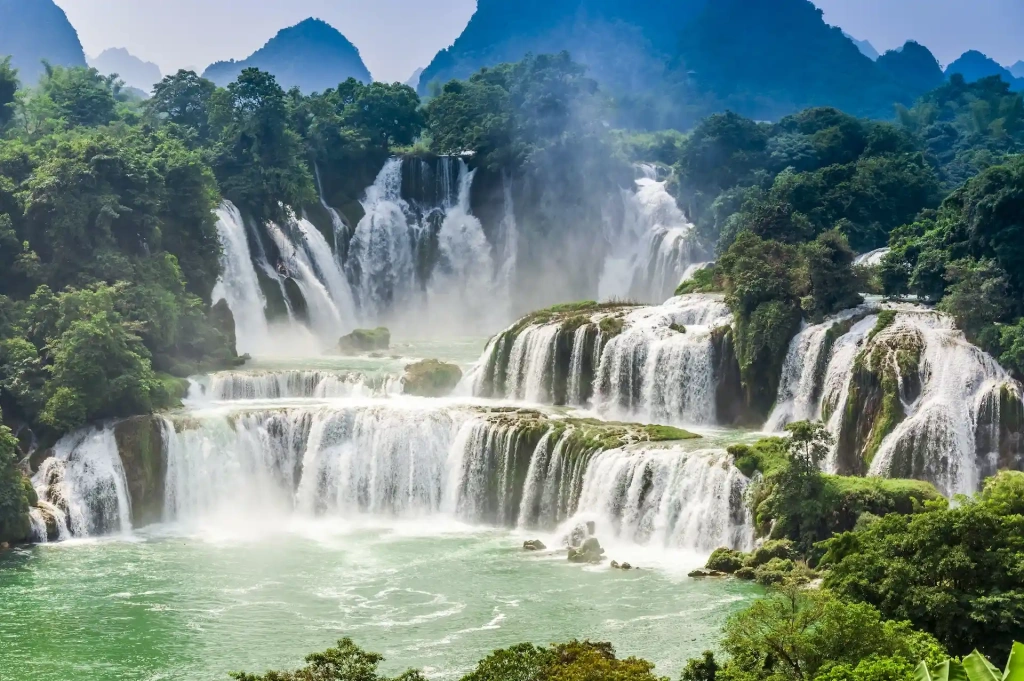
One of the largest transboundary and most beautiful waterfalls in Asia, located on the Quây Sơn River separating Vietnam and China. The waterfall system consists of three main cascades descending from ledges of varying height. The total height is about 70 meters (230 ft). Surrounding it is lush tropical vegetation, home to many rare animals and birds, such as the white-headed langur, a small deer species known as the musk deer, and the Chinese azure magpie.
The Chinese side offers panoramic views, while the Vietnamese side provides close walking trails along the cascades. Water volume depends on the season: during peak rains in summer (June–August), the cascades form a roaring water curtain, while in the dry season (December–February) some sections may nearly dry up. The best time to visit is September–October, just after the rainy season. From China, the most convenient access is from Chongzuo City; from Vietnam, from Cao Bằng.
The biggest waterfall in the world hidden underwater
The true record-holder in size among all waterfalls lies in the Denmark Strait, though it cannot be seen from land or water. It is located between Iceland and Greenland, where two ocean basins meet — the Norwegian Sea and the Irminger Sea. Here, cold, dense water sinks beneath warmer water, forming a gigantic underwater cascade about 3,150 meters (10,335 ft) high — more than three times taller than Tugela Falls.
According to the U.S. National Oceanic and Atmospheric Administration (NOAA), the flow reaches 3.5 million m³/s (123 million cu ft/s). That is approximately 3,500,000,000 liters (≈ 925 million gallons) per second, making it 40,000 times more powerful than Niagara Falls. Despite its immense force, it remains completely hidden beneath the ocean surface and can only be detected using specialized oceanographic instruments.
FAQ
It depends on the criteria. The tallest waterfall in the world is Tugela Falls in South Africa, with a height of 948 meters (3,110 ft). The most powerful waterfall is Inga Falls in Congo, with 25,768,000 liters (≈ 6,806,000 gallons) per second flowing through it. The widest waterfall is also in Africa — Victoria Falls. It stretches 1.7 km (1.06 mi) along the border of Zambia and Zimbabwe and is considered the world’s largest natural water curtain.
Victoria Falls is significantly larger than Niagara Falls. Its width is 1,708 meters (5,604 ft) and its height is 108 meters (354 ft). Niagara Falls is more powerful in terms of flow, but its height is only 51 meters (167 ft).
- Tugela — 948 meters (3,110 ft), South Africa;
- Mattenbach — 930 meters (3,051 ft), Switzerland;
- Three Sisters — 914 meters (2,999 ft), Peru;
- Oloʻupena — 900 meters (2,953 ft), USA;
- Yumbilla — 896 meters (2,940 ft), Peru.
No. Iguazu is the largest waterfall system, consisting of about 275 individual cascades with a total horizontal span of roughly 2.7 km (1.68 mi). Although it is neither the tallest nor the widest single waterfall, its sheer scale makes it a unique natural phenomenon.
All content on Altezza Travel is created with expert insights and thorough research, in line with our Editorial Policy.

Want to know more about Tanzania adventures?
Get in touch with our team! We've explored all the top destinations across Tanzania. Our Kilimanjaro-based adventure consultants are ready to share tips and help you plan your unforgettable journey.
 Climbing
  Safari
  About Altezza
  About Tanzania