





 52 reasons
  Free PDF


 Message us on WhatsApp
  Book a Free Call

 About Tanzania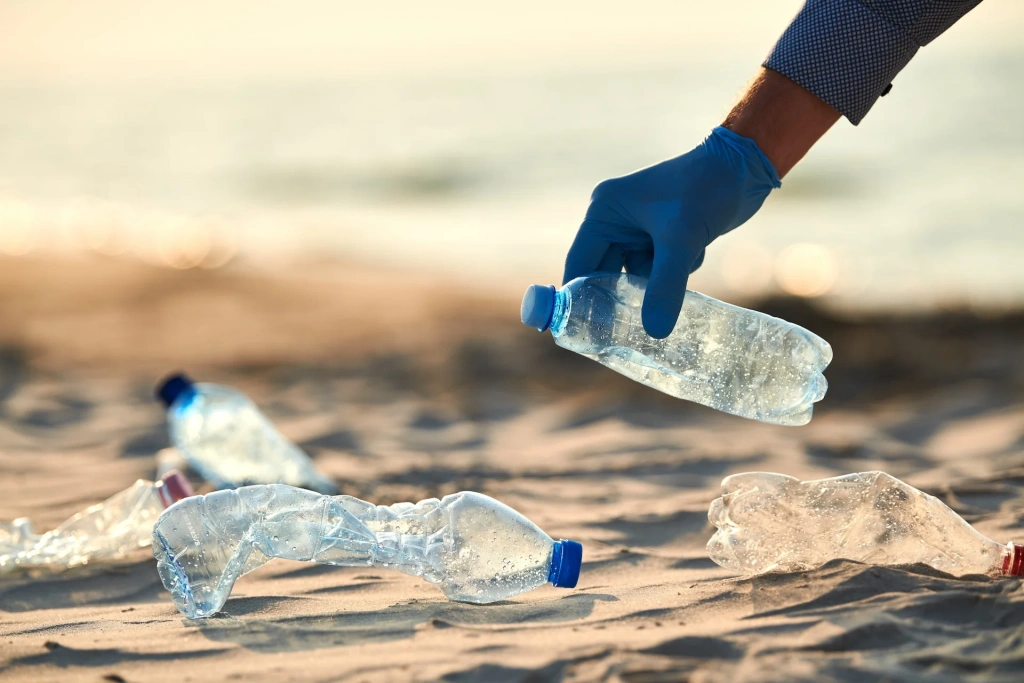
Global plastic production has reached staggering levels, and nearly 80% of plastic waste still remains unmanaged. It accumulates in oceans and soil, breaks down into microscopic particles, and then ends up inside animals, humans, and even plants. In Africa, the problem is compounded by imports of waste from Europe and North America, growing plastic consumption, global warming, and broader human pressure on the environment.
The editorial team at Altezza Travel spoke with Professor Karl Fleischmann about all of this. He explained how microplastics can affect health, why food production is increasingly at risk, and how the disappearance of Kilimanjaro’s glaciers impacts the larger ecosystems.
About plastic
In 2019, global plastic production reached about 460 million tons. Experts believe that by 2060, plastic waste volumes could nearly triple. What figures do you find most telling about the scale of the problem?
Since plastic production began in 1950, roughly 12 billion tons have been manufactured, the equivalent of 2,087 Great Pyramids of Giza. Only about 9% of this plastic has been recycled, and around 12% incinerated.
The remaining 79%, equivalent to 1,650 Great Pyramids of Giza, sits in oceans, landfills, or is openly dumped.
Over time, it breaks down into , which pose serious health hazards.
What causes greater harm: visible plastic dumps or microplastics? Can you point to credible research on this?
Both are harmful, but in different ways.
Visible piles of plastic create immediate problems. They clog waterways, contribute to flooding, become breeding grounds for disease, and release toxic additives as plastics degrade.
Microplastics are more insidious because they spread through water, soil, and food chains and accumulate within living organisms. They can also carry chemical additives into the tissues of plants, animals, and humans, including the brain, blood, lungs, and even the placenta (Environment International, 2022; Science of the Total Environment, 2021). Lab and animal studies have linked this exposure to increased inflammation, oxidative stress, cancer risk, and endocrine disruption. One concern is that some plastic additives can behave like hormones, such as estrogen, because cells may not distinguish them from natural hormones.
A direct comparison has also been done on embryonic kidney cells: cells left untreated for 72 hours versus cells exposed to micro- and nanoplastics for 72 hours. In the exposed group, researchers observed 75% cell death.
Moreover, ecological studies report reduced growth, reproduction, and survival in marine organisms. In plants, photosynthetic activity may drop by up to 18%, which threatens agriculture and food security (Nature Reviews Earth & Environment, 2021). The long-term impacts on human health remain uncertain, but concerns are serious enough that the World Health Organization has called for urgent research.
Which countries face the most critical plastic waste problems? Are there African countries among those?
Most “uncontrolled” plastic waste comes from South and Southeast Asia, including countries such as the Philippines, Indonesia, Vietnam, India, and Pakistan. High population density combined with weak or non-existent waste-management systems drives the problem.
African countries such as Tanzania, Nigeria, Egypt, South Africa, Algeria, and Morocco also contribute, largely because a significant share of plastic is mismanaged due to limited formal collection and recycling systems. Still, Africa generates much less plastic waste overall than Asia.
For years, Africa was often portrayed as a destination for plastic waste exports from wealthier countries. Has the situation improved?
In short, there has been some progress, but Africa is still under significant pressure from imported plastic waste, particularly from wealthier countries.
Many African nations have tightened controls through international treaties (), national bans, and growing awareness of what’s often called “waste colonialism.”
There is a growing awareness in Africa of what’s often called “waste colonialism.”
Some improvements are visible: stronger legal frameworks, restrictions on certain plastics, and increasing public pressure.
However, imports still happen due to legal loopholes, weak enforcement, and limited recycling infrastructure. At the same time, domestic plastic use is rising, which adds to the burden.
Some argue plastic waste can be burned to generate energy. Does this bring real economic benefits in countries like Tanzania?
Incinerating plastic can bring some short-term economic benefits, such as local power generation and reduced landfill volumes. But in countries like Tanzania, the downsides often outweigh the gains.
Burning plastics can release toxic chemicals, including dioxins and other harmful compounds, creating serious health risks. The infrastructure needed for safe, controlled incineration is expensive, and many facilities fail without subsidies. In practice, community-level benefits are often small compared to the costs of air pollution and long-term health impacts.
About climate change
Let’s discuss climate issues beyond plastics. You’ve worked on forest restoration projects, including ecosystem-based climate adaptation in the Seychelles. Around Kilimanjaro, forests are shrinking too. How serious is this locally?
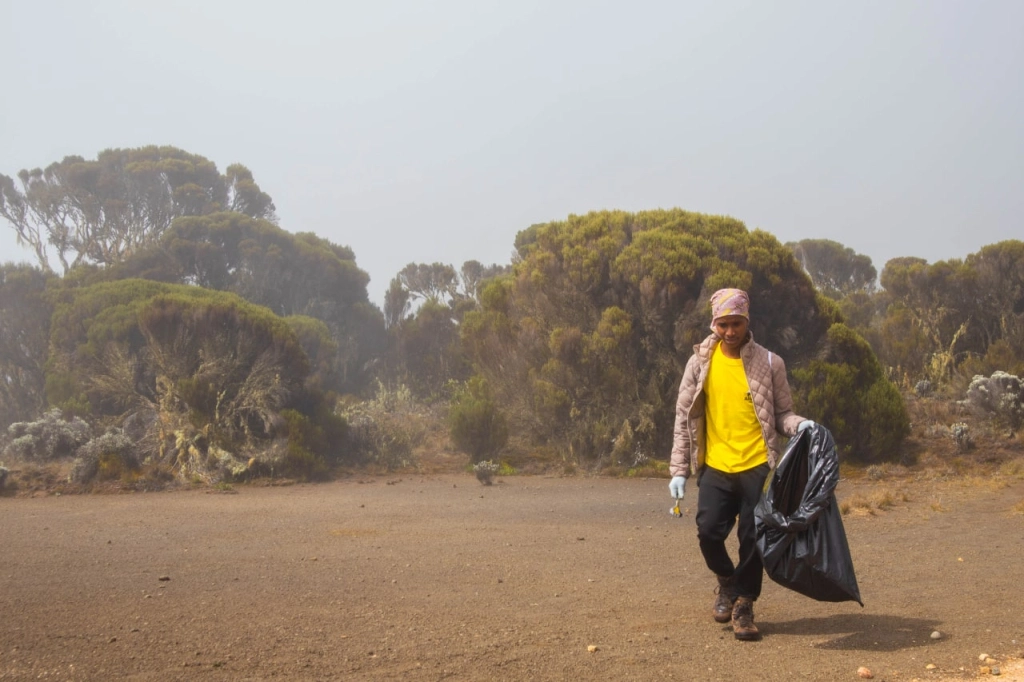
Around Kilimanjaro, forest loss driven by farming and firewood collection is a serious local problem. It reduces river flow and water supplies on which communities, agriculture, and hydropower depend.
Beyond water, these forests are ecologically crucial. They are biodiversity hotspots, carbon sinks, and natural regulators of rainfall and soil stability. Their decline threatens livelihoods today and undermines long-term ecological resilience.
Across the planet, temperatures are rising, rainfall patterns are shifting, and droughts and floods are becoming more frequent. What poses a greater threat to savannas and national parks: climate change, or human actions such as poaching and habitat destruction?
Both climate change and human pressures are serious, but their impacts differ.
Climate change (rising temperatures, shifting rainfall patterns, more droughts and floods) stresses ecosystems by drying waterholes and changing vegetation patterns.
Human pressures, including poaching, expansion of agriculture, grazing, and deforestation, cause immediate habitat loss and species decline. In Tanzania, human pressure is currently the more acute threat, but climate change is amplifying these stresses and could become the dominant driver of ecosystem change over the long term.
Since the early 20th century, Kilimanjaro’s glaciers have shrunk by about 85–90%. Is this an ecological crisis? What are the causes and consequences?
The average temperature on the summit of Kilimanjaro (Uhuru Peak, 5,895 m / 19,341 ft) is around −7 °C to −5 °C (19 °F to 23 °F) over the year. So the glacier ice is not melting in the usual sense. What reduces the amount of ice is a process called sublimation, when ice or snow turns directly into water vapor without melting first.
On Kilimanjaro, sublimation has been accelerated by drier air linked to climate change, which speeds up the loss of glaciers and permafrost.
Yes, this is an ecologically significant crisis. It reduces high-altitude water storage. Historically, glacier-related water contributed to rivers, streams, and aquifers that local communities rely on for drinking, irrigation, and livestock. With glaciers receding, seasonal flows become more variable, increasing water stress, especially during dry periods.
There are also ecosystem impacts. Glacier and permafrost retreat can disrupt alpine wetlands, shift vegetation zones, and threaten endemic species. It can destabilize soils, increasing erosion and sedimentation downstream.
Beyond local effects, Kilimanjaro’s glaciers are also a visible symbol of climate change in tropical mountains, pointing to both regional water insecurity and broader global warming trends.


An environmental science specialist who has taught and held leadership roles at universities in Switzerland, Tanzania, and the Seychelles, and coordinated projects in vegetation restoration, nature conservation, and climate-change adaptation. Today, his research focuses on plastics and their environmental impacts, including consumption and waste management.
All content on Altezza Travel is created with expert insights and thorough research, in line with our Editorial Policy.

Want to know more about Tanzania adventures?
Get in touch with our team! We've explored all the top destinations across Tanzania. Our Kilimanjaro-based adventure consultants are ready to share tips and help you plan your unforgettable journey.
 Climbing
  Safari
  About Tanzania
  Islands