




 52 reasons
  Free PDF


 Message us on WhatsApp
  Book a Free Call

 About Tanzania
 As of 2025, Africa has either 54 or 55 countries, depending on whether Western Sahara is counted as a sovereign state. The difference comes down to international recognition and how disputed territories are treated in global politics.
Africa is the second-largest continent on Earth, after Eurasia. It stretches from the Mediterranean Sea in the north to the Cape of Good Hope in South Africa, the continent’s southernmost point, and is home to immense cultural, political, and geographical diversity.
Why does the country count vary? Why do many national borders look as if they were drawn with a ruler? And why does Africa appear much smaller on world maps than it actually is? In this article, Altezza Travel explores these questions and explains the political and geographical realities of the African continent.
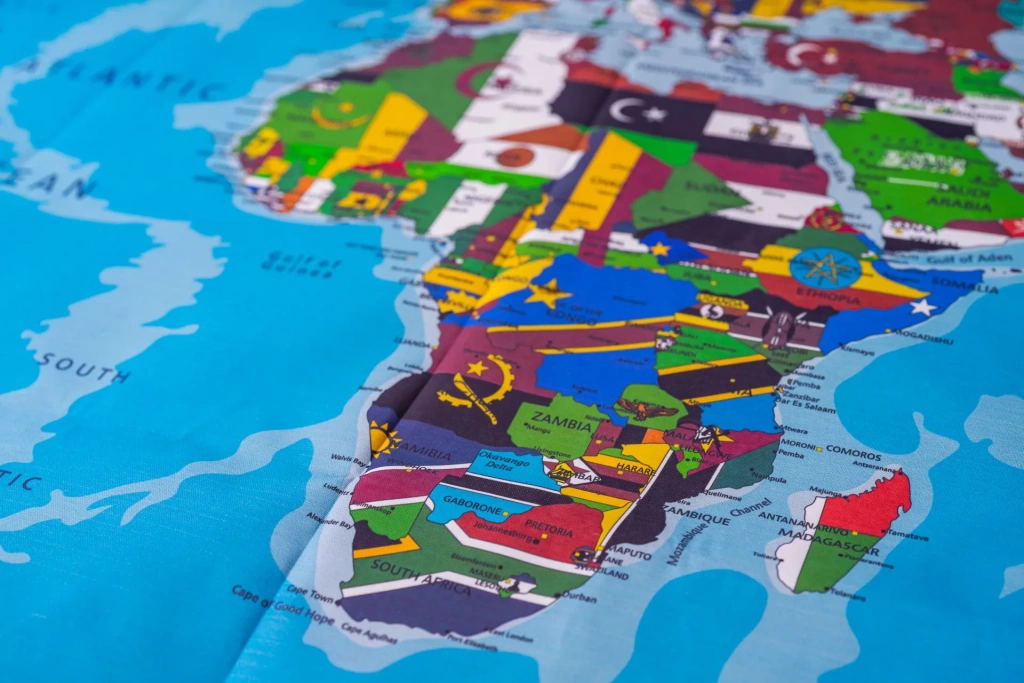
Number of African countries and disputed territories
The exact number of countries in Africa depends on who is doing the counting. The United Nations recognizes 54 sovereign states. These countries are represented in the UN General Assembly and have the right to participate in international negotiations, including discussions on peace and security.
Africa itself takes a slightly different view. According to , the continent has 55 countries, as it includes the Sahrawi Arab Democratic Republic (SADR), also known as Western Sahara.
Western Sahara was a Spanish colony from the late 19th century until 1975–1976. After Spain withdrew, the territory was occupied by Morocco and Mauritania. However, the Polisario Front, a local independence movement, proclaimed the creation of the Sahrawi Arab Democratic Republic and launched an armed struggle. Mauritania withdrew from the territory in 1979, while Morocco took control of about 80% of the area and constructed the so-called Moroccan Wall — a sand berm approximately 2,700 kilometers (1,680 miles) long.
The conflict was effectively frozen in 1991. A referendum on the status of Western Sahara has never been held, and the dispute remains unresolved. At various times, the SADR has been recognized by 45 to 84 countries, although some later withdrew recognition under political pressure from Morocco.
Another disputed territory in Africa is Somaliland, which is internationally considered part of Somalia. No UN member state has formally recognized Somaliland as an independent country. It is a relatively small territory on the coast of the Gulf of Aden, bordering Djibouti and Ethiopia, with a population estimated at 4.5 to 6 million people.
Despite the lack of international recognition, Somaliland has many attributes of a functioning state: its own currency, government, and armed forces.
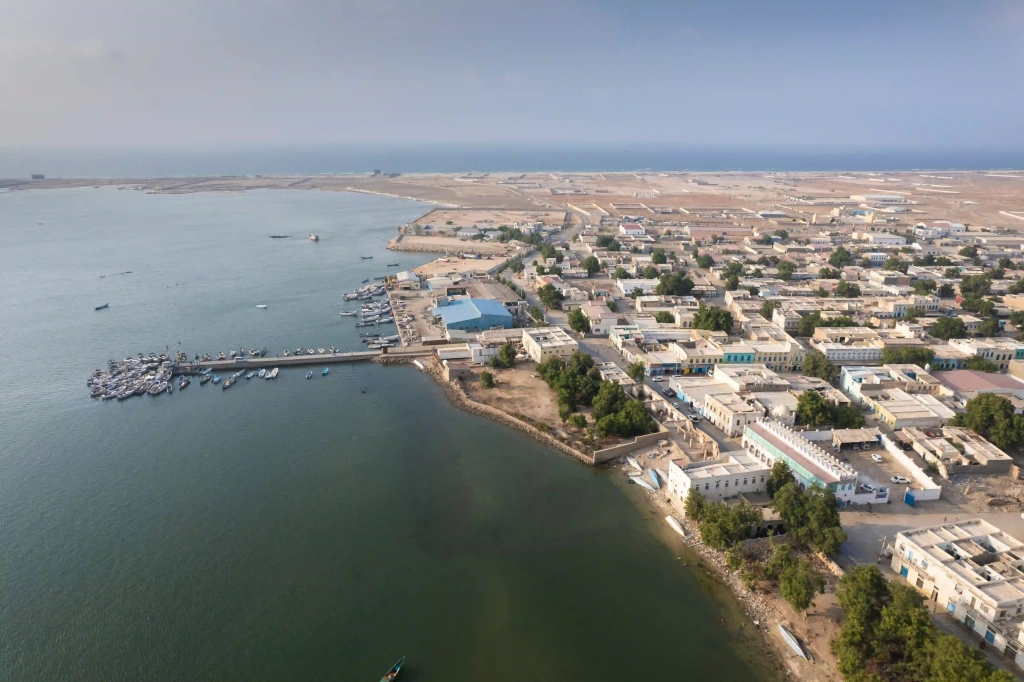
Some countries maintain informal relations with Somaliland, engage in trade, and even operate representative offices there. These ties have occasionally caused diplomatic tensions. In May 2025, for example, a dispute arose between Somalia and Taiwan, with both sides restricting entry to each other’s citizens. The dispute was linked to Taiwan’s diplomatic engagement with Somaliland, a territory that Somalia claims as part of its sovereign state.
In fact, Africa has several other unrecognized territories. These include , , , and . However, there is little international debate about recognizing them as independent states, as they emerged from internal uprisings.
The size and map of Africa
Africa covers an area of 30.3 million km² (11.7 million sq mi) and is home to more than 1.55 billion people. By comparison, Europe is almost three times smaller in area, at about 10.1 million km² (3.9 million sq mi), and has roughly half the population, at around 744 million people.
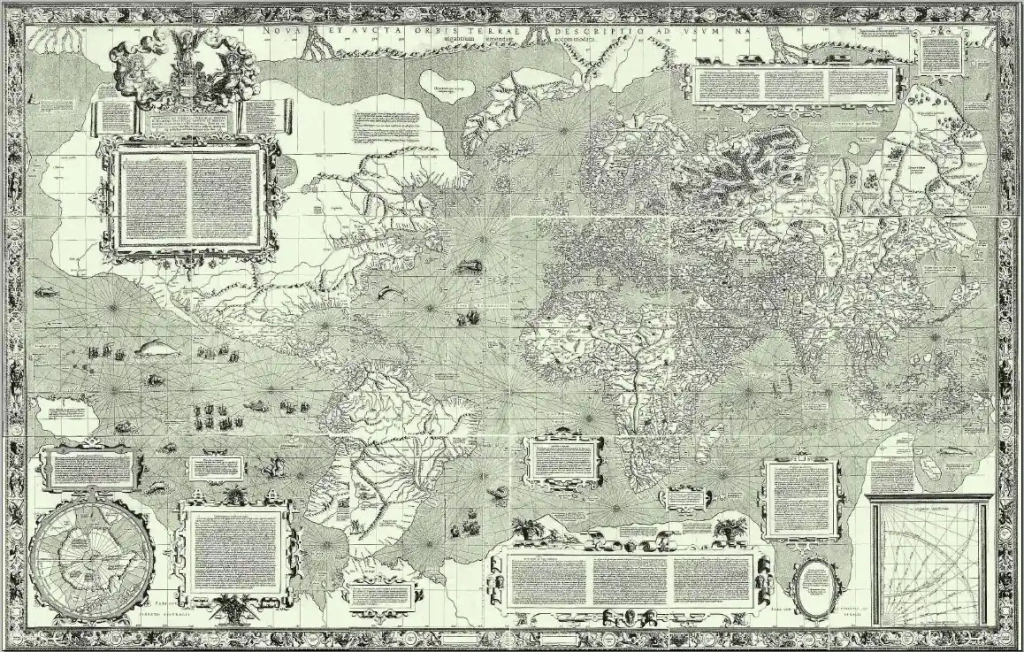
Yet on most world maps, Africa appears far smaller than it really is. This distortion is especially evident in the Mercator projection, created by Flemish cartographer Gerardus Mercator in the 16th century. Despite its age, the map remains widely used in education because it clearly depicts the outlines and borders of countries and continents.
On a Mercator map, Africa is shown as roughly the same size as Greenland, even though Africa is approximately 14 times larger. Canada appears comparable in size, despite being three times smaller, whereas Russia, which seems similar in scale, is approximately 1.5 times smaller than Africa.
In 2025, the “Correct the Map” campaign was launched to highlight this long-standing distortion and promote more accurate map projections. The initiative was also backed by the African Union, emphasizing the importance of representing Africa’s true scale.
Why do African countries have straight borders?
The geometric borders seen across much of Africa are a legacy of the continent’s colonial past. Many of them were drawn as if with a ruler, without regard for natural landscapes, languages, or the people living there. In some cases, a single ethnic group was split by an international boundary.
One well-known example is the Maasai, whose traditional lands were divided by the modern border between Kenya and Tanzania. Somali communities were similarly divided among Somalia, Ethiopia, and Kenya following the imposition of colonial borders. There were also opposite cases: in countries such as Sudan and the Democratic Republic of the Congo, groups with no shared traditions or history were incorporated into the same state.
After African countries gained independence, the continent faced a serious risk of territorial conflict. To limit disputes, the African Union adopted the principle of uti possidetis juris, meaning “as you possess, so you shall possess.” Under this principle, newly independent states retained the borders they had at independence, even if those borders had been artificially drawn.
This principle was formally enshrined in the African Union’s founding documents. However, it did not eliminate border disputes entirely — as the ongoing situation in Western Sahara (SADR) demonstrates.
What are the 54 countries in Africa? Full list of countries in Africa
Frequently asked questions
The largest country in Africa by land area is Algeria, covering more than 2.3 million km². It is followed by the Democratic Republic of the Congo, Sudan, Libya, and Chad. Together, these five countries occupy nearly one-third of the continent.
In terms of population, Nigeria ranks first, with over 230 million people, despite having a relatively modest land area of less than 1 million km².
Measured by GDP, the richest African countries are South Africa, Egypt, and Algeria. According to the International Monetary Fund, South Africa’s GDP exceeds $400 billion (roughly comparable to that of the Czech Republic), Egypt’s GDP is about $380 billion, and Algeria’s is around $260 billion.
Among the poorest countries in Africa are South Sudan, Burundi, the Central African Republic, Malawi, Madagascar, Sudan, and Mozambique. The first four are landlocked, face chronic political instability, and are frequently affected by drought.
African countries often considered the most dangerous include Burkina Faso, Nigeria, Cameroon, Sudan, Mali, the Central African Republic, South Africa, and the Democratic Republic of the Congo. Some of these states continue to experience armed conflict, while others struggle with persistently high crime rates.
No. Russia appears larger on many maps due to distortion caused by the Mercator projection. In reality, the African continent covers 30.3 million km², while Russia’s territory spans 17.1 million km². This means Africa is almost twice as large as Russia by land area.
Among the safest African destinations for travelers are Mauritius, Ghana, Zambia, Tanzania, and Egypt. These countries generally have stable political conditions and well-developed tourist infrastructure.
The most-visited countries in Africa are Morocco and Egypt, attracting travelers for their historical landmarks, seaside resorts, and cruise tourism. Tanzania is also highly popular for its Serengeti and Ngorongoro, Zanzibar beaches, and Mount Kilimanjaro.
Climbing Kilimanjaro, Africa’s highest peak at 5,895 meters (19,341 ft), does not require professional mountaineering experience, making it accessible to a wide range of travelers.
All content on Altezza Travel is created with expert insights and thorough research, in line with our Editorial Policy.

Want to know more about Tanzania adventures?
Get in touch with our team! We've explored all the top destinations across Tanzania. Our Kilimanjaro-based adventure consultants are ready to share tips and help you plan your unforgettable journey.
 Climbing
  Safari
  About Tanzania
  Islands