





 52 reasons
  Free PDF


 Message us on WhatsApp
  Book a Free Call

 Safari
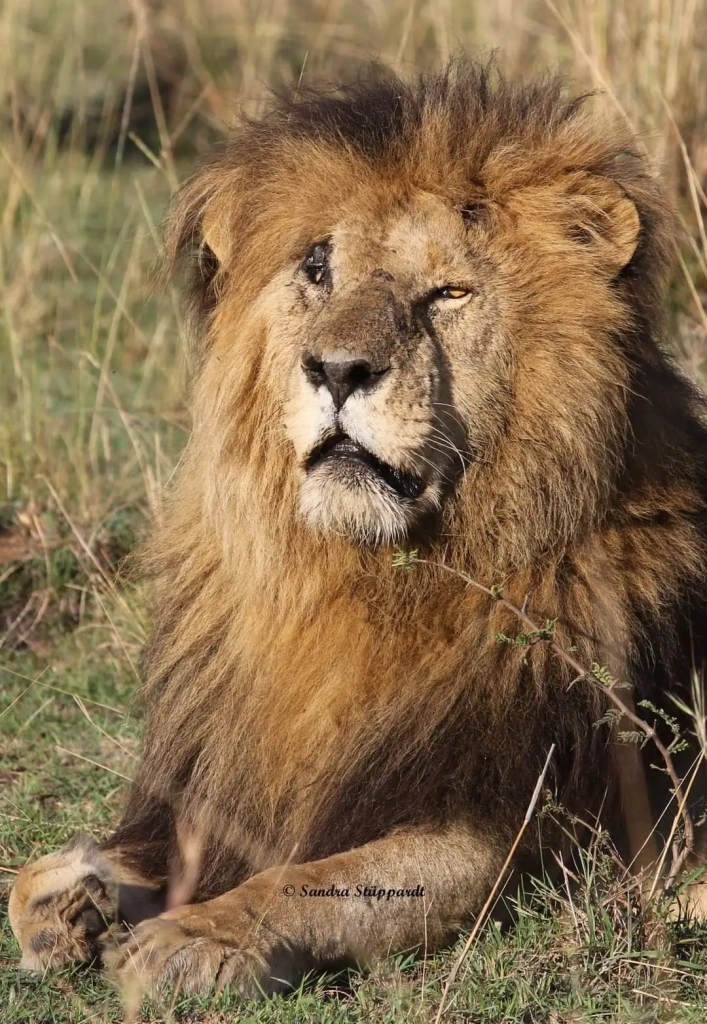
 In the very heart of East Africa, near the famous Serengeti park in Tanzania, there lived a true lion king nicknamed Scarface. He bravely endured countless fierce battles and died peacefully of old age, which is exceptionally rare in the wild.
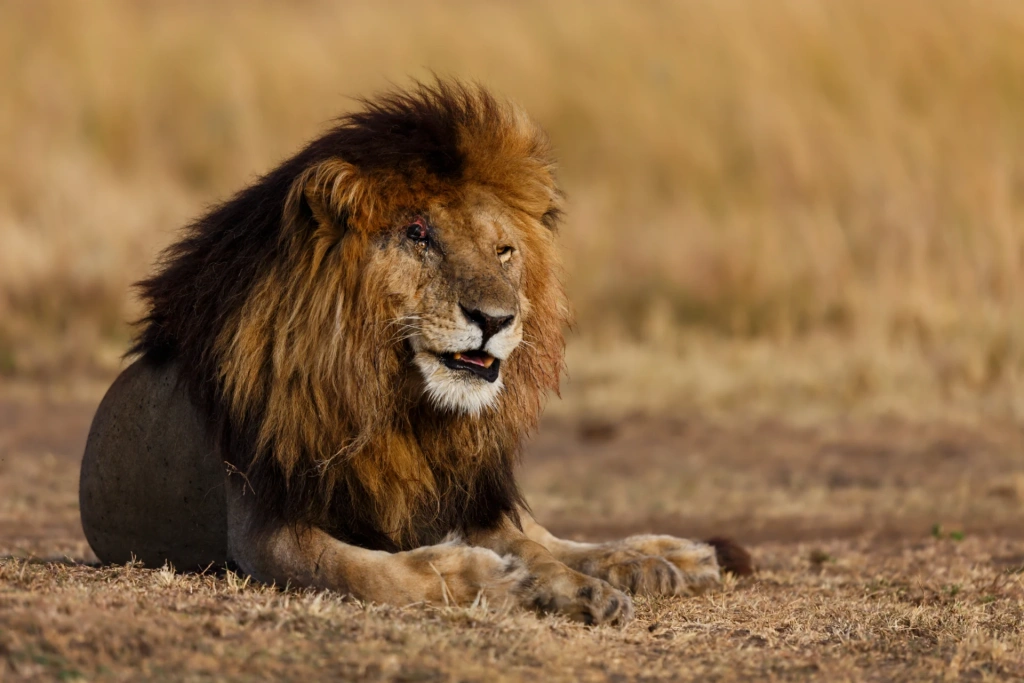
Scarface the lion is believed to have been born in 2007–2008 in the Maasai Mara National Reserve in Kenya. This reserve borders the legendary Serengeti National Park in Tanzania, and together they form the greater Maasai Mara–Serengeti ecosystem, one of the largest and oldest in the world.
From an early age, the future leader of one of the region’s most powerful prides was closely observed by local rangers, film crews, and wildlife photographers. For an impressive ten years, he ruled over a territory spanning hundreds of square kilometers, and his life was regularly featured in wildlife programs on the BBC and National Geographic.
Most remarkable of all, Scarface lived to the age of 14 and died of natural causes – peacefully, not far from where he was born – rather than in a violent fight for territory, the fate of most wild males.
In this article, we explore the story of the famous lion Scarface and how he became a true legend of the African savannah.
How did Scarface the lion live and rule?
For many people, the nickname Scarface brings to mind Tony Montana, the iconic gangster film character. But there was once another Scarface – very real, and perhaps more than worthy of the name: a lion who became one of the most formidable rulers of the African savannah.
Together with his three brothers, Morani, Sikio, and Hunter, he formed a coalition of dominant males that observers nicknamed the Four Musketeers.
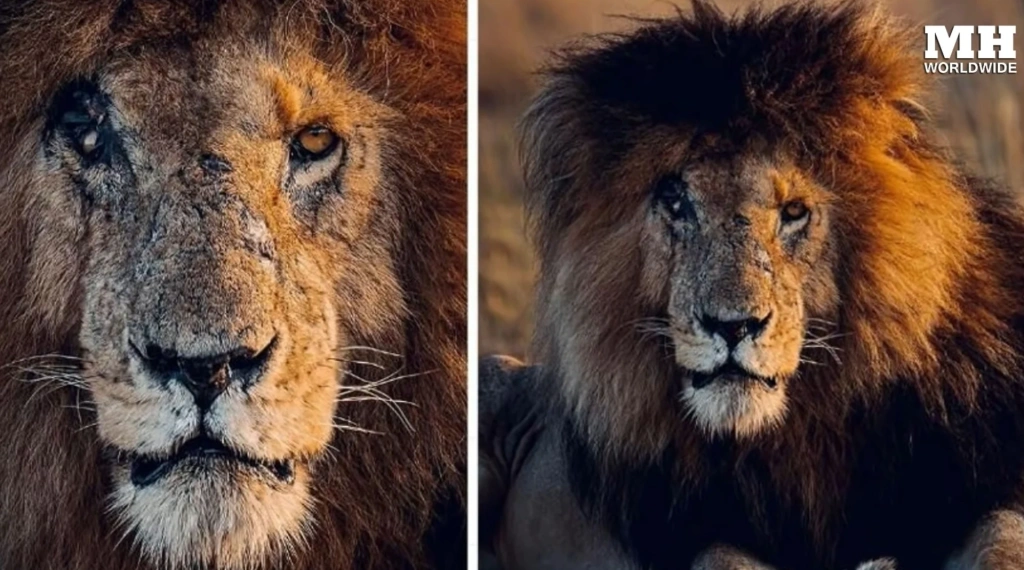
For many years, the four brothers ruled over a vast stretch of the Maasai savannah. According to various estimates, at different times their territory reached as much as 400 km² (154 sq mi).
That said, exact figures should be treated with caution: the size of lion territories is highly variable and depends largely on prey density and pressure from rivals. At the height of their power, the Four Musketeers controlled land along the Mara River, where abundant game made the pride especially stable.
Scarface the lion became widely known through years of field observations by rangers and wildlife photographers, but above all through numerous documentary productions, including several BBC projects.
These programs often emphasized his loyalty and self-sacrificing nature, portraying him as a strong and wise leader. While there is some truth to this image, it is worth remembering that, when interpreting lion behavior, as with any wild animal, it is not always appropriate to attribute distinctly human qualities to them.
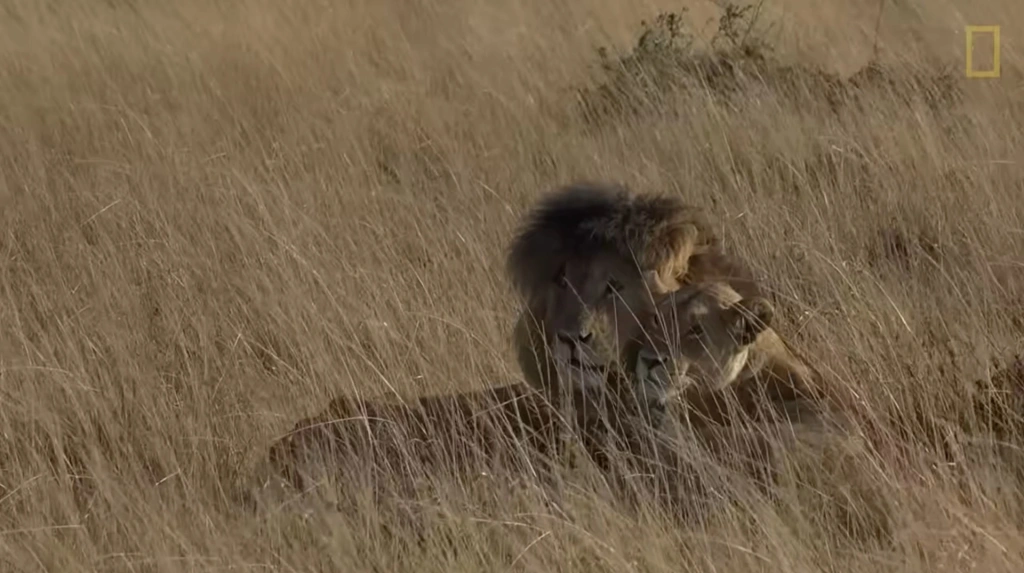
One of the main roles of male lions is to hold and defend a pride in order to secure access to females and pass on their genes – reproduction is their primary biological function. Research confirms that lions that defend their territory more actively and effectively sire significantly more offspring.
Even so, Scarface truly stood out among the dominant males of the wild. Together with his brothers, he repeatedly confronted rivals, fought in numerous brutal clashes, suffered serious injuries, yet survived, recovered, and retained his alpha status almost until the very end of his life.
How did Scarface the lion die?
Scarface the lion died on June 11, 2021, at around 14 years old. For a wild male lion, especially one that remained in alpha status for so long, this is truly exceptional, since many males die in territorial fights, from injuries, or from starvation after being overtaken by younger rivals. But Scarface was a unique case.
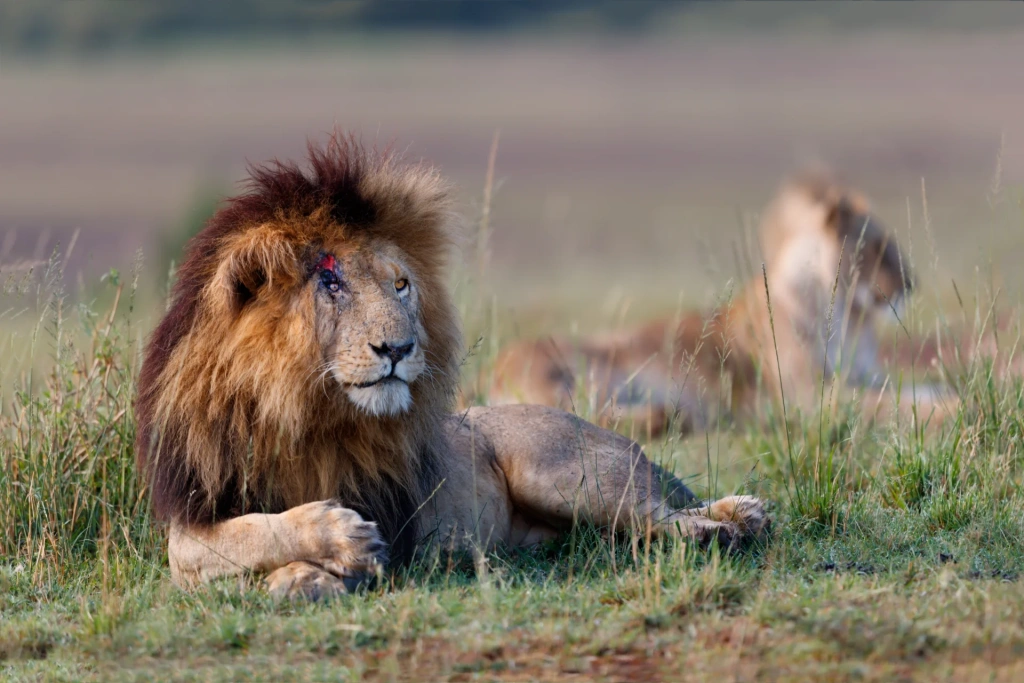
On the last day of his life, he passed away peacefully. The only vehicle nearby belonged to staff from the Mara Predator Conservation Programme. Later, The Independent, citing the organization’s official Facebook page, published the following quote:
“At 1 pm local time, Scarface took his last breath. He died in peace without any disturbance from vehicles and hyenas. We were the only vehicle on the scene and by his side, hoping to give him any kind of comfort.”
Before his death, already severely weakened, the lion traveled about 25 km (15.5 miles) to return to the place where he had been born.
In their article, The Guardian quoted Scottish wildlife photographer George Logan, who had photographed Scarface for many years:
“It’s quite rare for a wild lion to die peacefully and of natural causes, but thankfully and fittingly, this is what has happened for Scar. He lived wild and free right to the end, in the land of his birth.”
In the wild, lions can live 10–14 years, and females usually live noticeably longer than males. Cub mortality is especially high. According to Discovery, only 1 in 8 survives to adulthood.
Most males hold control of a pride for only 2–3 years. After that, they are either killed by stronger rivals or weakened by old wounds and become easy prey for hyenas.
How did Scarface the lion become a global star?
The story of the Kenyan lion king not only captured public attention but also made a meaningful contribution to wildlife conservation. Kenya’s most famous lion first rose to prominence toward the end of the legendary long-running BBC series Big Cat Diary, which aired from 1996 to 2008. Several episodes were devoted to the lives of the lions, cheetahs, and leopards of the Maasai Mara. Later, Scarface became one of the stars of the popular BBC documentary series Dynasties, which originally aired from 2018 to 2022.
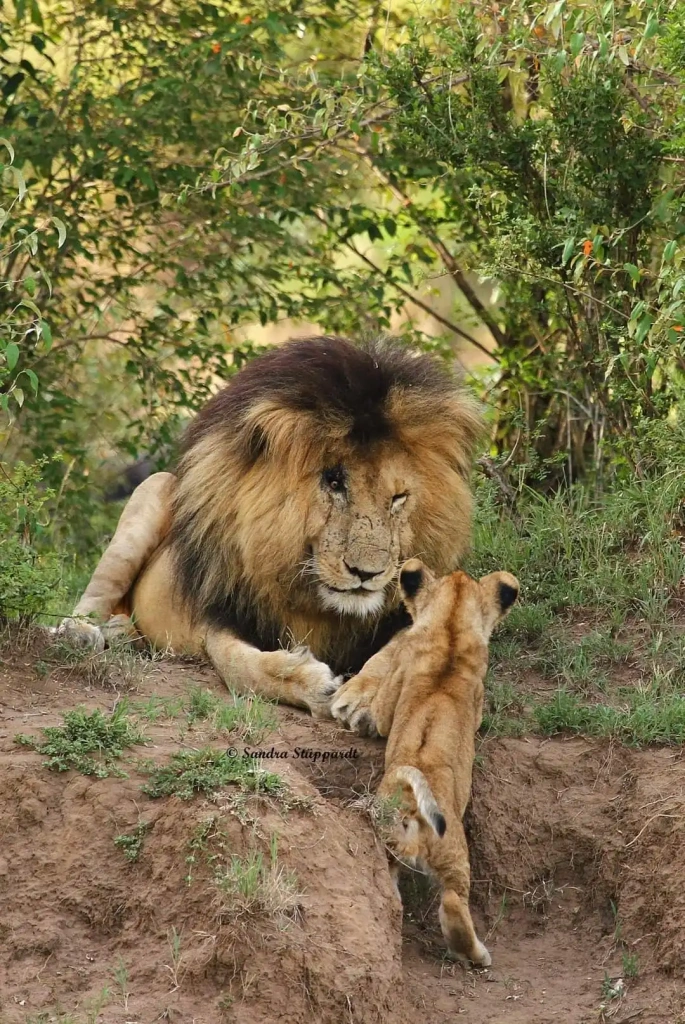
In 2018, the Canadian documentary series Wildlife Quest released a dedicated film about Scarface and his brothers, Lions: In Search of Scarface. In addition, several other short documentaries were produced by independent photographers, film crews, and wildlife conservation groups, including Scarface: Rise of the Legendary Lion. He even had his own Facebook page, followed by thousands of people worldwide.
Scarface the lion’s popularity not only helped advance conservation initiatives but also significantly boosted tourism in the region. Following the release of these documentaries, more travelers began visiting the national reserve in the hope of seeing this legendary lion of the local savannah with their own eyes. Part of the revenue from tourism was then directed toward anti-poaching efforts, the preservation of the lions’ natural habitat, and the development of measures to reduce human–wildlife conflict.
Not just Scarface: other famous lions
Scarface is one of the most famous lions in the world, but he is far from the only animal to achieve global fame. Below are a few more remarkable big cats, each with a unique story of its own.
C-Boy: the “survivor” of the Serengeti
A lion known as C-Boy lived in Serengeti National Park and, until a certain point, was no different from other dominant males. His story began to attract attention in August 2009, when he came into conflict with a coalition of three younger lions that researchers had nicknamed “the Killers.” As a rule, such coalitions almost always overpower solitary males, and the typical outcome of these confrontations is death or exile for the defeated lion.
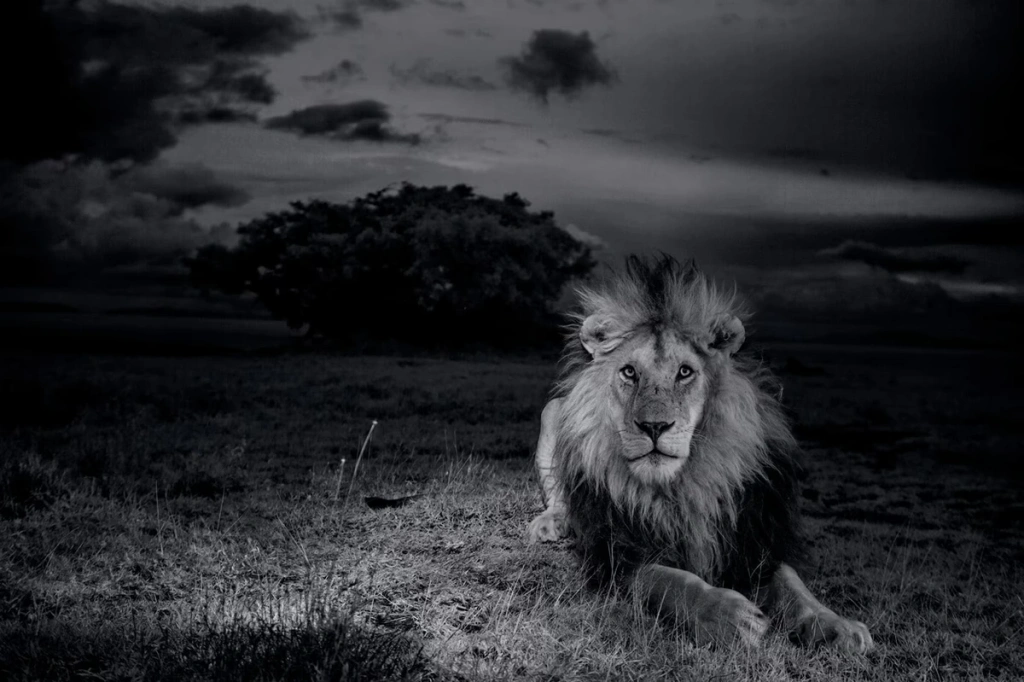
But in this case, events did not follow the usual pattern. C-Boy suffered severe injuries, including extensive lacerations. Under normal circumstances, a lion with wounds like these would die within a matter of days from infection or blood loss. The very fact that he survived the first few days already makes him an exception to the usual statistics of the savannah.
After the attack, C-Boy survived, though not without human help. Rangers treated his wounds and prevented the infection from spreading; without that intervention, he would have had almost no chance of survival. To some extent, this detail complicates the image of the “unbroken” lion that later came to define his story.
He never regained the status of a dominant male, which was a natural outcome of the fight and entirely consistent with the harsh laws of the wild. From that point on, he had to survive alone, and he did so remarkably well. C-Boy recovered and lived for nearly another nine years. He died in June 2018 at around 14 years of age – an impressive lifespan for a wild male, especially one living as an outcast. With that in mind, he can still justifiably be called unbroken.
Frasier: the “playboy” among lions
The story of the lion known as Frasier is cinematic and, in some ways, almost comical. He lived in captivity from 1952 to 1972 and gained an unexpected reputation when, already in his advanced years, he ended up at the Lion Country Safari park in California.
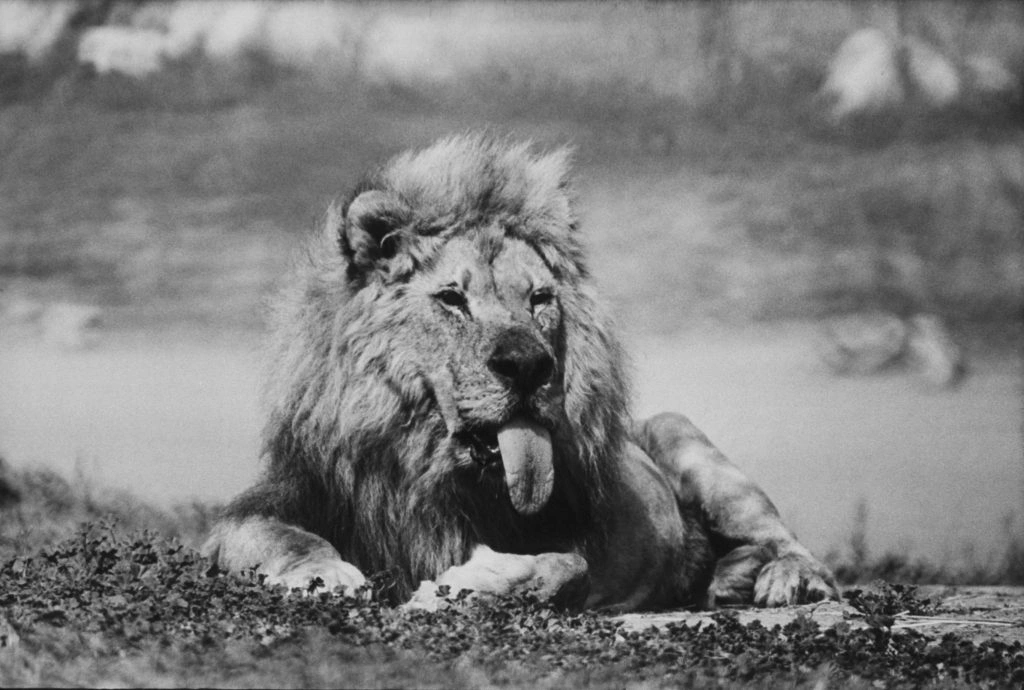
When Frasier arrived at the reserve in 1970, he was already considered extremely old by lion standards, at about 18–19 years of age. He had been purchased from a bankrupt Mexican circus, and he looked severely emaciated, was almost toothless, and had a noticeably thinning mane. LIFE magazine described Frasier this way:
“He is underweight and splay-footed,” the editors wrote. “His fur resembles an old moth-balled coat, and he sleeps 19 hours a day. The muscles in his tongue are so shot that it unreels from his mouth like a slobbery red carpet.”
But then events took an unexpected turn. As soon as Frasier recovered and put on a little weight, he was introduced to a pride of six lionesses. Before that, they had aggressively rejected five younger males and had developed quite a quarrelsome reputation, but with old Frasier, things turned out very differently. Not only did the lionesses warmly accept the elderly male, but they also began actively caring for him, even chewing his food for him because Frasier had virtually no teeth left. Over the next seven weeks, all six females became pregnant, and within 16 months, Frasier fathered 33 cubs. For an animal of his age and condition, this was almost unprecedented.
According to the Los Angeles Times, Jerry Kobrin, vice president of the safari park, quickly recognized the story’s enormous media potential. He deliberately and enthusiastically cultivated the image of the “playboy lion,” releasing souvenirs, T-shirts, and stickers featuring Frasier’s likeness. However, the lion himself did not live long after his sudden rise to fame. He died of pneumonia on July 13, 1972.
Leo: the mascot of Metro-Goldwyn-Mayer
The lion known as Leo is not one specific male, but rather a collective image that became the mascot of Metro-Goldwyn-Mayer. The famous “roaring lion” seen before films actually predates the studio itself, first appearing in 1916 for Goldwyn Pictures, before MGM was founded in 1924. From that moment on, however, it became an inseparable part of the company’s identity. Since then, several lions, around 10 or 11, depending on the source, have filled the role. They are often collectively referred to as “Leo,” although this is more of a convenient generalization than the actual name of every individual animal.
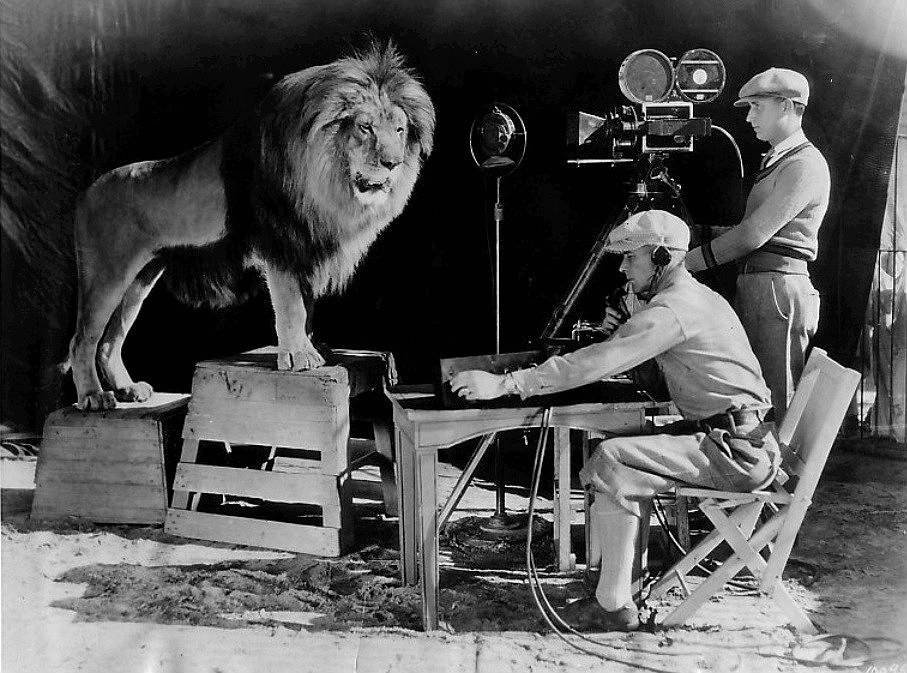
The Leo audiences see today first appeared in the logo in 1957. He was a young male whose mane had not yet fully developed and had been specially prepared for filming. His image became the definitive version and later served as the basis for the studio’s 2021 CGI remake of the logo.
At the same time, the studio’s mascot was never entirely “natural.” In later versions, for example, the original roar was replaced or enhanced with other sounds, including recordings of tiger roars, all in an effort to create a more powerful effect. In the end, Leo – one of the most recognizable symbols in cinema – is not one particular lion, but a composite image created and refined by the film industry.
Frequently asked questions
The Maasai Mara National Reserve is one of East Africa’s most famous wildlife reserves, located in Kenya and bordering Serengeti National Park in Tanzania. The reserve was established in 1961, and its territory was expanded in 1974. Today, it covers about 1,500 km² (580 sq mi). Beyond its formal boundaries, the larger Maasai Mara ecosystem continues, allowing animals to move freely between the Kenyan reserve and neighboring areas, including the Serengeti.
One of the highest concentrations of protected wildlife areas with exceptional biodiversity can be found in Tanzania. For example, in Serengeti National Park, safari experiences are by no means limited to lions. Visitors can also see the other members of the famous “Big Five”: elephants, buffalo, leopards, and rhinos, including the rare black rhinoceros.
This is also where one of the world’s most extraordinary natural phenomena takes place: the Great Migration. Millions of hoofed animals, including wildebeest and zebras, move along a vast circular route, and their herds, stretching for dozens of miles, are so immense that they can even be seen from space.
In addition to the Serengeti, wild animals can be observed in their natural habitat in Ngorongoro Conservation Area, Arusha National Park, and Tarangire National Park, the latter being especially famous for its large elephant herds.
Large groups of primates, including chimpanzees and the rare black-and-white colobus monkey, can be found in Gombe Stream National Park and Mahale Mountains National Park.
Other animals commonly found in these protected areas include cheetahs, leopards, hyenas, hippos, giraffes, and hundreds of bird species.
All content on Altezza Travel is created with expert insights and thorough research, in line with our Editorial Policy.

Want to know more about Tanzania adventures?
Get in touch with our team! We've explored all the top destinations across Tanzania. Our Kilimanjaro-based adventure consultants are ready to share tips and help you plan your unforgettable journey.