





 52 reasons
  Free PDF


 Message us on WhatsApp
  Book a Free Call

 Islands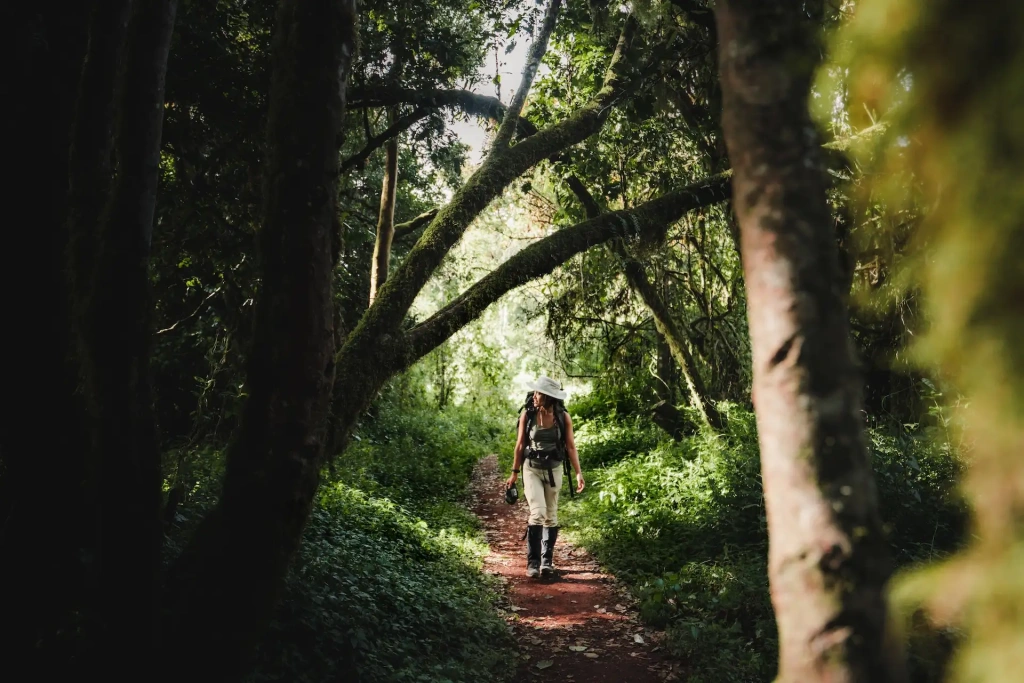
Jozani Forest is part of Zanzibar’s only national park, Jozani Chwaka Bay, located on the main island of Unguja. This lush green area is the last large forest tract on the archipelago to survive decades of logging. It is home to tropical thickets and mangrove swamps that support a rich variety of animals and birds, including endemic species found nowhere else in the world. Jozani Forest is often included in itineraries for travelers visiting Zanzibar and mainland Tanzania. In this article, we’ll share everything you need to know about visiting this national park.
If you are also planning a safari, be sure to download our Safari Packing List. It includes essential information and practical tips to help you plan a truly memorable vacation.


Where is Jozani Forest and how do you get there?
Jozani Forest is located about 35 km (22 miles) southeast of Stone Town, between the villages of Chwaka and Kibele. If you are traveling from the southeast coast, for example, from Jambiani Beach, the distance is around 30 km (19 miles), and the drive takes about 40–45 minutes. From Stone Town, the journey is slightly longer, at around one hour. You can reach the park by renting a car, taking a taxi, or using a dala-dala, the local minibus.
Opening hours and contacts
- The park is open daily from 7:30 am to 5:00 pm, with the last entry at 4:30 pm.
- Phone: +255 (777) 428033
- E-mail: [email protected]
What you can see in Jozani Forest, Zanzibar
Jozani–Chwaka Bay is a UNESCO Biosphere Reserve and is listed on the UNESCO Tentative List for possible future inscription as a World Heritage Site. Within a relatively small area of 50 km² (19 sq mi), several ecosystems coexist: dense tropical forest, mangrove thickets, and wetlands. This complex ecological mosaic allows dozens of species of birds, mammals, and butterflies to thrive side by side. Among all this biodiversity, several rare species stand out as the true “stars” of Jozani Forest.
Zanzibar red colobus
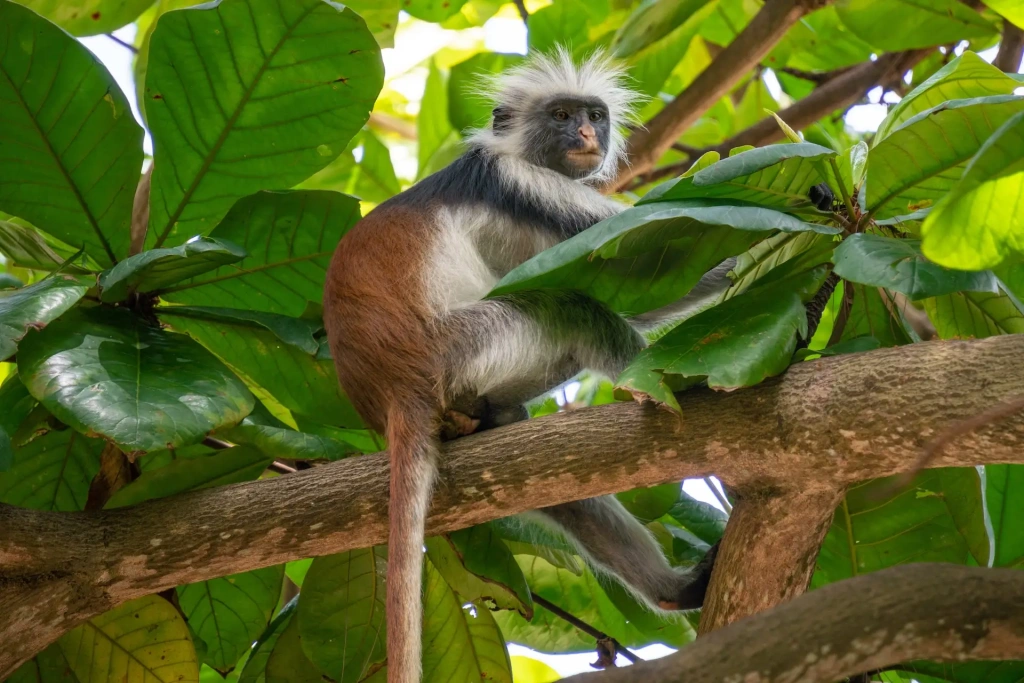
The Zanzibar red colobus (Piliocolobus kirkii) is the main symbol of Jozani Forest. This subspecies lives exclusively on Unguja Island. It is easy to recognize by its reddish fur on the back and tail, expressive dark face, and long tail. According to various estimates, the population numbers around 5,000–6,000 individuals, a large proportion of whom live in Jozani.
The Zanzibar red colobus is classified as an endangered species, largely due to widespread deforestation and historical persecution by humans. For a long time, local farmers believed these primates brought bad luck and deliberately killed them, which caused a sharp decline in their population. Partly for this reason, efforts to relocate the Zanzibar red colobus to the neighboring island of Pemba were unsuccessful, largely due to local community opposition.
This colobus subspecies is also known as “Kirk’s red colobus monkeys,” named after British naturalist John Kirk, who was the first to provide a detailed scientific description of the species.
The best time to observe them is early morning or late afternoon, when the monkeys are most active. It is important to keep a distance of at least 3 meters (10 feet). Closer contact is dangerous for both visitors and the animals themselves.
Zanzibar Sykes’ monkey
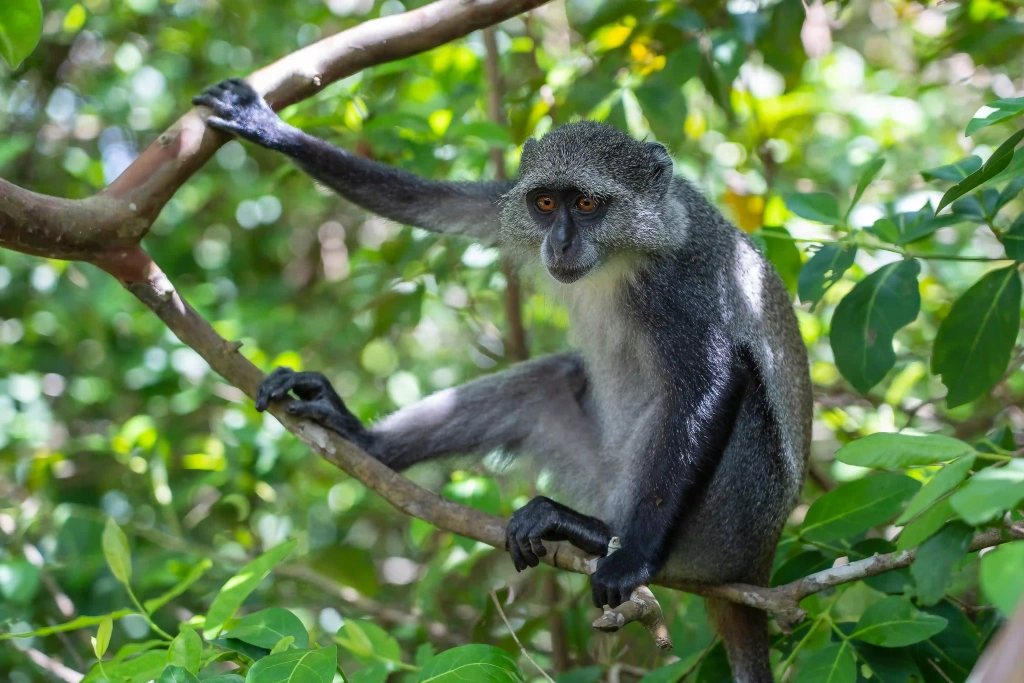
The Zanzibar Sykes’ monkey (Cercopithecus mitis albogularis) is a subspecies of the blue monkey and another notable primate found on Zanzibar. While closely related populations occur on the East African mainland, the Zanzibar population is often treated as a distinct island subspecies. These monkeys have smoky gray fur, a large white patch on the chest, and striking amber-colored eyes.
Unlike the relaxed colobus monkeys, which often show little concern for people, Sykes’ monkeys are much more cautious. They prefer to stay in the shade and avoid trails frequented by visitors. This behavior is typical of forest areas. Near hotels, however, these monkeys behave quite differently: they may freely enter open rooms and often steal food from guests. Kirk’s red colobus monkeys, by contrast, never approach people on their own and maintain distance even in areas where they are accustomed to human presence.
These monkeys are diurnal and rarely descend from the trees. Less is known about their social structure than that of other blue monkey subspecies, but researchers believe their behavior is similar to that of their mainland relatives. They tend to stay within defined territories and follow a clear hierarchy within the group.
Galago
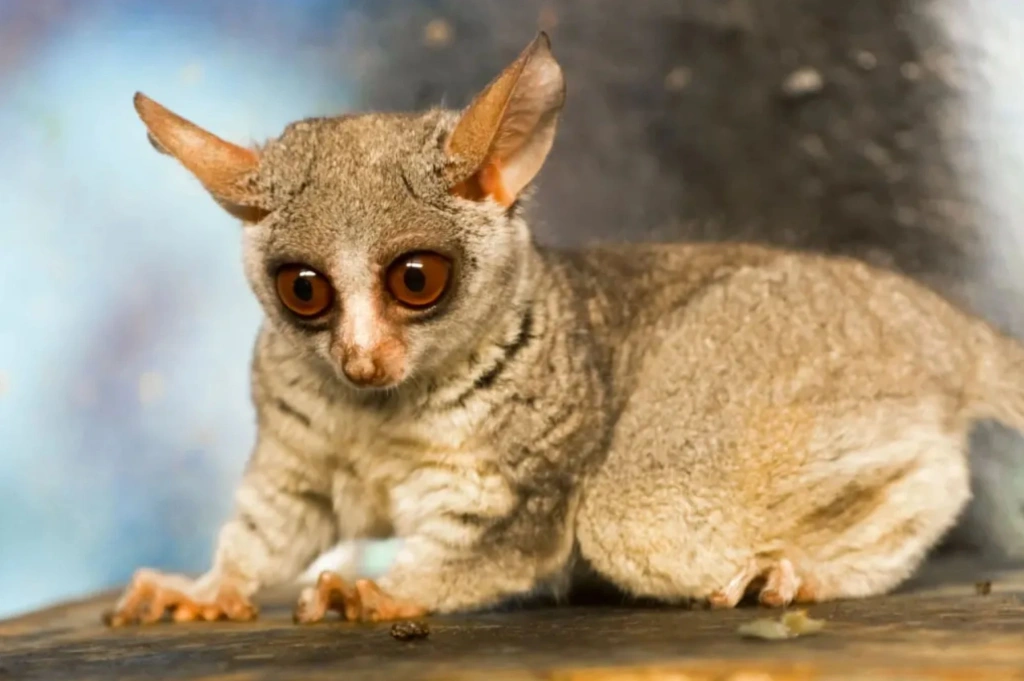
Galagos are small nocturnal primates that are easy to recognize in Jozani Forest by their huge eyes, large mobile ears, and impressive jumping ability. They are often considered among the most beautiful animals on the planet.
Galagos are mainly active at night, while during the day they usually sleep hidden in dense treetops. At dusk, they emerge to hunt insects, seeds, and fruit. Spotting a galago is difficult, but as the park closing approaches, some travelers may see their silhouettes or hear their distinctive calls, which vaguely resemble a baby’s cry. Partly because of their unusual vocalizations and cute appearance, these animals are commonly known as bushbabies.
Zanzibar Butterfly Centre
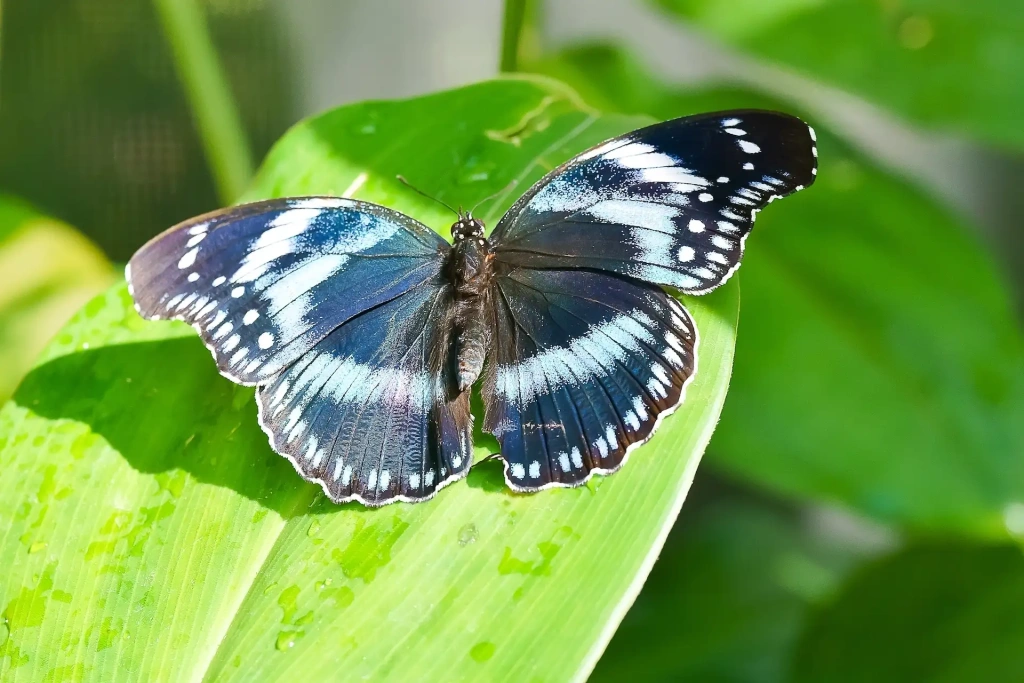
Not far from Jozani Forest is the Zanzibar Butterfly Centre (ZBC), one of the island’s key eco-projects. This netted tropical garden is located near the village of Pete and is home to dozens of butterfly species, many of them rare endemics. Visitors can observe all stages of their life cycle, from eggs and caterpillars to pupae and adult butterflies.
ZBC has been operating since 1998. It was founded as a community-based social project built on a sustainable ecotourism model. Dozens of local farmers, mostly women, work here by raising eggs and pupae and selling them to the center.
A guided visit lasts about 30–40 minutes.
Zanzibar leopard
One of Zanzibar’s most mysterious stories is linked to the Zanzibar leopard (Panthera pardus adersi). Local residents still tell stories of rare encounters with this predator, but there has been no scientific confirmation of its existence since 1995. Jozani Forest and the surrounding areas are considered the only possible remaining habitat.
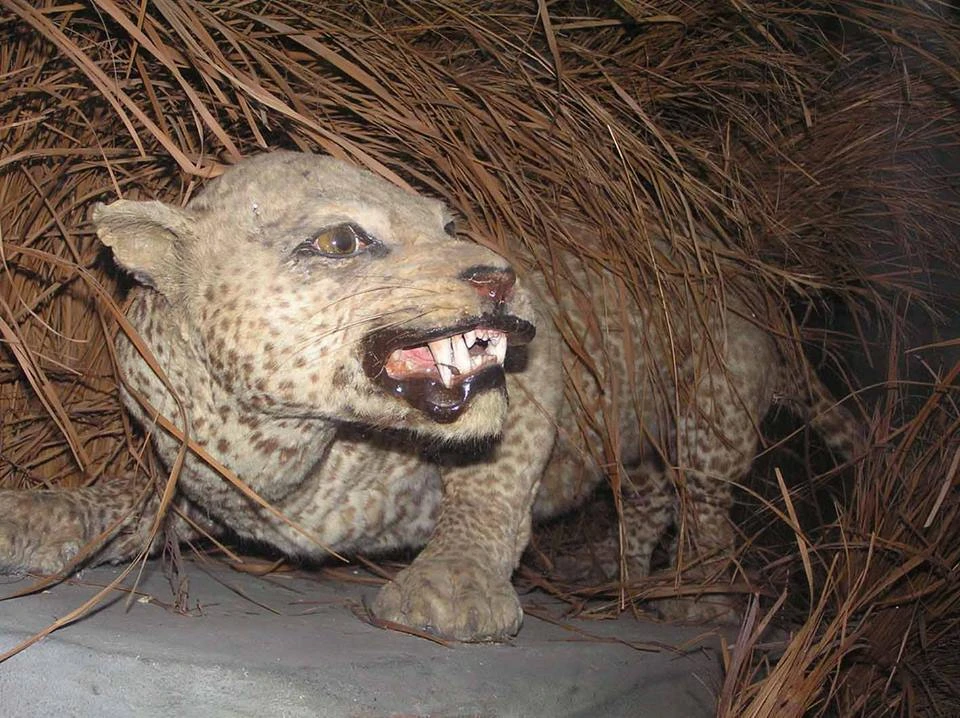
Most information about the possible presence of leopards here was collected by anthropologists Martin Walsh and Hella Goldman in the 1990s. They interviewed local residents, recorded accounts of encounters, and studied people’s attitudes toward the animals. However, no documented evidence was ever found.
In 2018, American biologist and TV host Forrest Galante brought the “Extinct or Alive” film crew to Zanzibar. Camera traps installed in the national park recorded nothing for several weeks. At one point, however, an animal resembling a leopard briefly appeared on the footage. Some scientists were skeptical, but the appearance of a large cat in the forest was never conclusively disproven.
What a Jozani Forest Zanzibar tour is like
The tour begins at the national park entrance gate. The entrance fee is about $10 per person, which includes a guide, but please confirm the exact price with the park administration. There are short one-hour tours and longer walks. The terrain is flat, and the maximum elevation does not exceed 50 meters (164 feet) above sea level, so no special physical preparation or endurance is required.
Meeting the red colobus monkeys
The first stop is the roadside area, where Zanzibar red colobus monkeys are most often spotted. They move calmly through the trees, cross the road, and sometimes come quite close. During this time, the guide explains their behavior and habits, as well as the conservation challenges they face.
Jungle walk
After observing the monkeys, the route continues deeper into the forest. Here, visitors encounter true tropical scenery: ancient trees growing on coral soils, dense vegetation, and thick, humid air. During the walk, the guide explains how this complex ecosystem formed, why the forest is so important to the island, and which plant species dominate.
Mangrove thickets
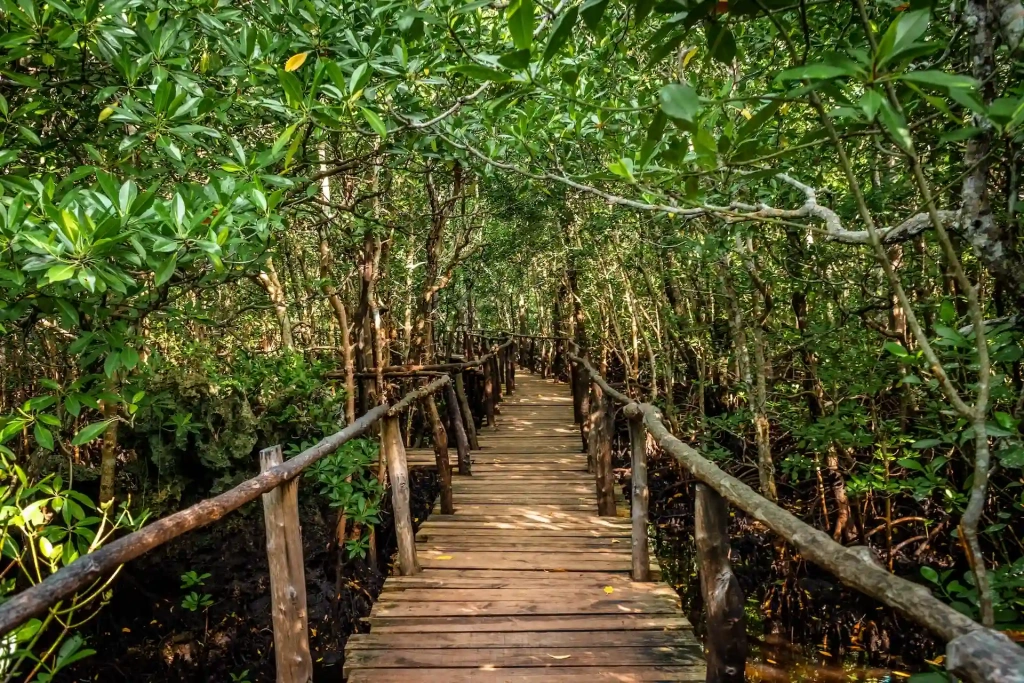
The tour ends with a walk along wooden boardwalks through the mangrove swamps, the most unusual part of the visit. Twisted mangrove roots surround you, water flows beneath your feet, and rare tropical birds can often be spotted near the trail.
Jozani Forest in Zanzibar is a refuge for many endangered animals, birds, and plant species. For travelers, it offers a rare opportunity to see Zanzibar’s wildlife as it existed hundreds of years ago.
All content on Altezza Travel is created with expert insights and thorough research, in line with our Editorial Policy.

Want to know more about Tanzania adventures?
Get in touch with our team! We've explored all the top destinations across Tanzania. Our Kilimanjaro-based adventure consultants are ready to share tips and help you plan your unforgettable journey.
 Climbing
  Safari
  About Tanzania
  Islands