





 52 reasons
  Free PDF


 Message us on WhatsApp
  Book a Free Call

 About Tanzania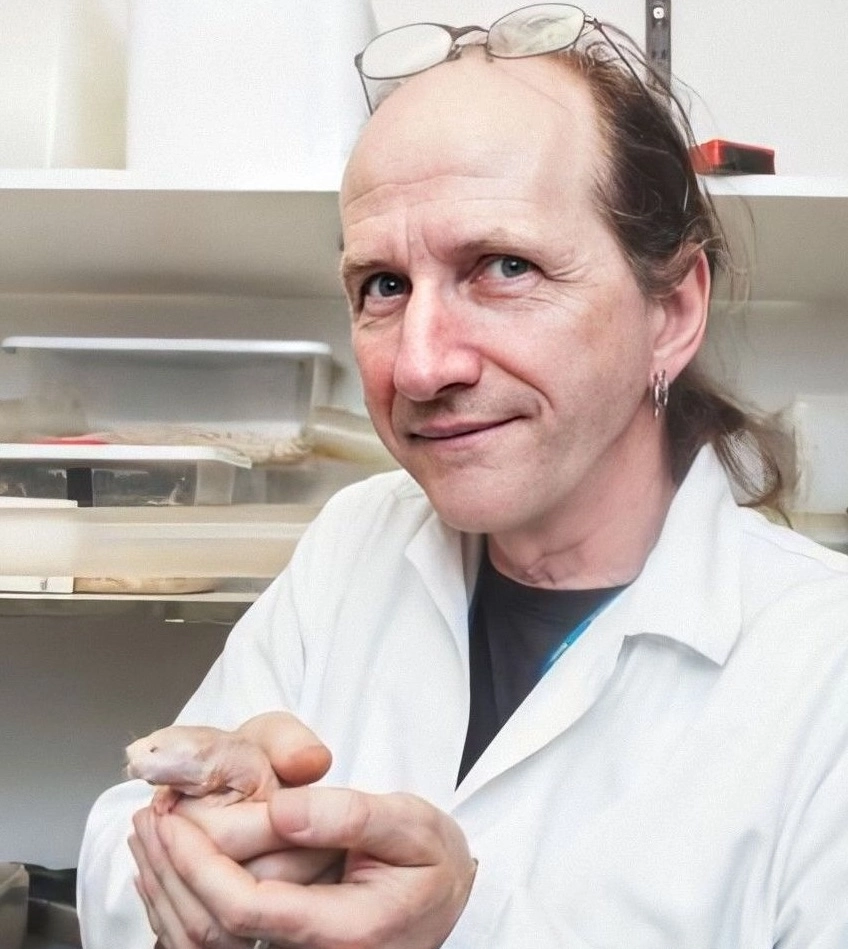
Naked mole-rats are underground rodents native to East Africa. They barely age, almost never get cancer, and can survive without oxygen for extended periods. Cracking the secrets of their biology could lead to new medicines for cancer, heart attacks, Alzheimer’s disease, and even addiction.
Professor Chris Faulkes of Queen Mary University of London, one of the world’s leading experts on these remarkable animals, explained to Altezza Travel how the unique traits of these African rodents may one day transform medicine and human health.


Professor Chris G. Faulkes is a British biologist and specialist in evolutionary ecology, widely regarded as one of the world’s foremost experts on social rodents. Based at Queen Mary University of London, he has also taken part in multiple research expeditions across East Africa. His work has laid the foundation for dozens of scientific papers published in leading journals, including Nature, Science, and Proceedings of the Royal Society B, helping to turn these animals into prominent figures in modern biology.
They rarely get sick and show little signs of aging
How long have you been studying naked mole-rats?
I’ve been working on them since 1986. In 1987, when I was doing my PhD, I went to Kenya – that’s where I carried out my first fieldwork. Since then, I have been to Africa many times.
At the same time, firstly at the Zoological Society of London, then at Queen Mary in London, where I now work, we have kept a breeding population of naked mole-rats in the lab all these years. This has allowed me to continue studying them while working on other projects, many involving other African mole-rat species with my long-time collaborator, Professor Nigel Bennett at the University of Pretoria.
What sparked your interest in these animals?
In the beginning, I was fascinated by how their society is organised. Naked mole-rats live almost like bees or ants: in a colony of up to 300 animals, there is one queen and one to three males that mate with her. She suppresses reproduction in all the others, so most work and help within their colony for their entire lives.
And how long do they live?
I’m not sure if that particular mole-rat is still alive today, but the last time I spoke with my colleague , she had a naked mole-rat that was 37 years old. For a creature the size of a mouse, that is extraordinary. Mice rarely live more than two or three years.
And it’s not just about how long a single animal can live. Naked mole-rats, in general, almost never get sick and show virtually no signs of ageing. Scientists worldwide study these rodents’ behaviour, genetics, reproduction, and ageing processes to understand how they live so long while remaining remarkably healthy.
In other words, their biological age is very different from their chronological age?
Exactly.
A relatively new idea in ageing research is the “epigenetic clock.” As living organisms get older, tiny chemical tags appear on their DNA. Over time, more and more of them accumulate, spreading across the genome and affecting how genes function. This seems to be part of the natural ageing process. By analysing these tags, you can estimate the age of an animal or a person.
We are now studying this mechanism in naked mole-rats. Is the accumulation of chemical tags just a byproduct of ageing, or does it actually help drive the process? If scientists can answer that question, we may gain insights into whether it might be possible to slow ageing down.
You mean human ageing?
Yes. In the future, knowledge gained from naked mole-rats could help us support human health and extend the period of active, healthy life.
You could even say that extending healthspan is a much more desirable goal than simply increasing lifespan.
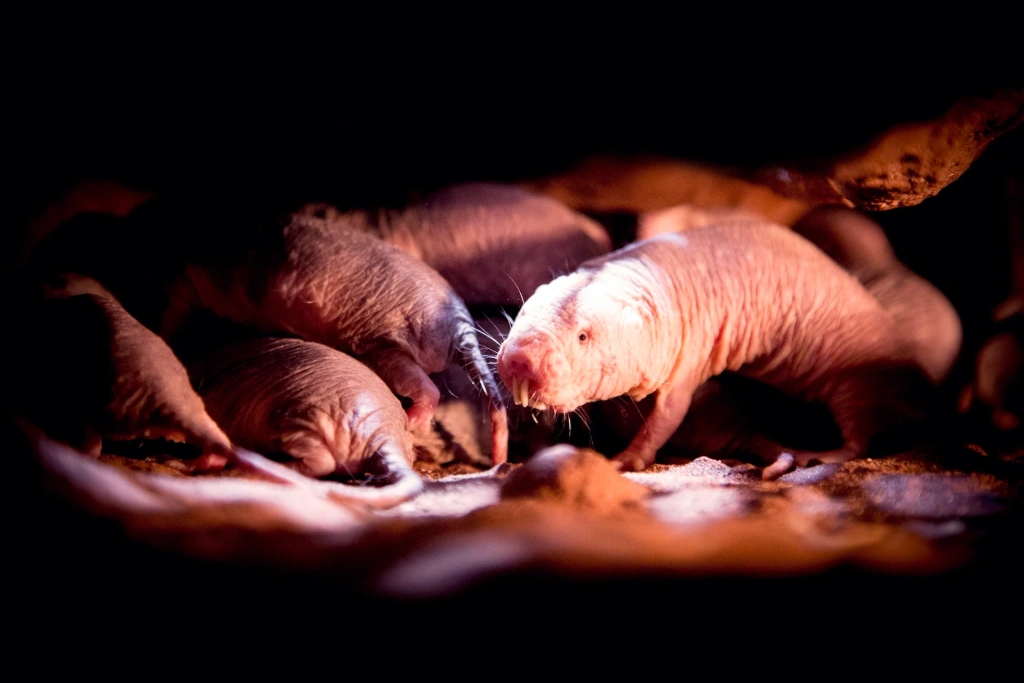
Naked mole-rats show resistance to heart attacks, strokes, cancer, and dementia
Let’s take a closer look at their unique traits. Is it true that naked mole-rats can survive without oxygen longer than any other mammal?
Marine mammals can dive and hold their breath for up to 90 minutes. However, they have specialized physiological adaptations that allow them to store oxygen in their tissues, so they are not truly deprived of oxygen for that entire period.
A naked mole-rat, by contrast, can survive 18 minutes in conditions of complete lack of oxygen. That really is impressive.
Once, we anesthetized an animal to remove a small abscess. It took a very long time for it to fall asleep, and during the surgery, it stopped breathing. The vet said, “We’ve lost him.” I replied, “Don’t worry, he’ll wake up.” About ten minutes later, the mole-rat came back to life, got up, and ran off as if nothing had happened. The vet was stunned – he had never seen anything like it before.
Can you explain how this process works?
When oxygen is scarce, the heart and brain suffer first, as we know from strokes and heart attacks. But in naked mole-rats, brain cells switch to a different “fuel mode”: from glucose to fructose. This allows them to maintain vital functions even under extreme conditions. This mechanism is an adaptation to their unusual habitat. In the wild, naked mole-rats live in deep, narrow underground tunnels and chambers where more than a hundred animals may gather, and oxygen levels are extremely low.
Our research has also shown that naked mole-rats have completely different cardiac metabolic patterns. Their hearts also contain large amounts of glycogen — an animal starch that breaks down quickly to produce energy. In most mammals, glycogen is stored in the liver, but mole-rats keep an abundance of it in the heart. That is remarkable.
A human fetus develops in amniotic fluid during pregnancy, yet it can still receive oxygen. Are there any parallels?
A human fetus does indeed have glycogen reserves in the heart, but these disappear immediately after birth, once the baby begins to breathe. In naked mole-rats, however, these reserves remain. So when oxygen becomes scarce, their bodies can switch to an alternative metabolic mode and use this glycogen to produce energy. At least, that is our current hypothesis.
We hope that understanding these unique mechanisms will eventually help develop new treatments for heart disease.

It’s also known that naked mole-rats almost never get cancer. Why is that the case?
There seem to be several reasons, many of them linked to life underground. One of the best-studied examples is their unusual form of hyaluronic acid (hyaluronan). This substance also exists in other mammals, including humans — it holds water, keeps skin hydrated, protects joints, and helps wounds heal.
In naked mole-rats, scientists identified a mutation in the gene encoding hyaluronan. It appears that this specialized version of the molecule originally evolved as an adaptation to their subterranean lifestyle: it is thought that it makes their skin unusually elastic, helping them move through narrow, rough tunnels.
Later, researchers found that its modified structure also prevents tumour formation. And that’s not their only defence. Naked mole-rats repair damaged DNA more effectively and stop the division of dangerous cells more quickly.
Can this knowledge be applied in medicine?
Yes. When researchers inserted the naked mole-rat version of this gene into mice, the modified animals began producing the same form of hyaluronan. As a result, they lived longer, stayed healthier, and showed increased resistance to cancer.
These discoveries will certainly help us better understand natural mechanisms of cancer resistance and, possibly in the future, apply them in human medicine, as early studies with transgenic mice already suggest. Although the idea of introducing naked mole-rat genes into humans is, of course, controversial.
Naked mole-rats also seem not to develop Alzheimer’s disease. Why?
Despite their age, their brains remain healthy, even though they accumulate the same proteins that usually trigger Alzheimer’s disease. These are beta-amyloid and tau, the substances that in humans form harmful deposits. Over time, these deposits accumulate, disrupt neuronal function, and destroy brain cells.
In naked mole-rats, similar deposits do appear with age, but they do not cause any damage. The animals seem to be naturally resistant.
No signs of Alzheimer-like dementia have been found even in the oldest individuals.
Naked mole-rats are therefore a natural model of resistance to this disease. Understanding how this works is of enormous interest for the development of potential Alzheimer’s treatments in humans.
On top of all that, naked mole-rats hardly feel pain. Could studying them help us create more effective painkillers?
They are remarkably insensitive to certain types of pain, especially pain caused by chemical irritation or acidic environments. For example, the burning sensation on mucous membranes from chilli, or the effect of acidic liquids on skin or an open wound.
Once again, this comes down to gene modifications linked to their underground way of life. And yes, these findings are now being used to develop potential non-opioid painkillers that do not cause addiction.
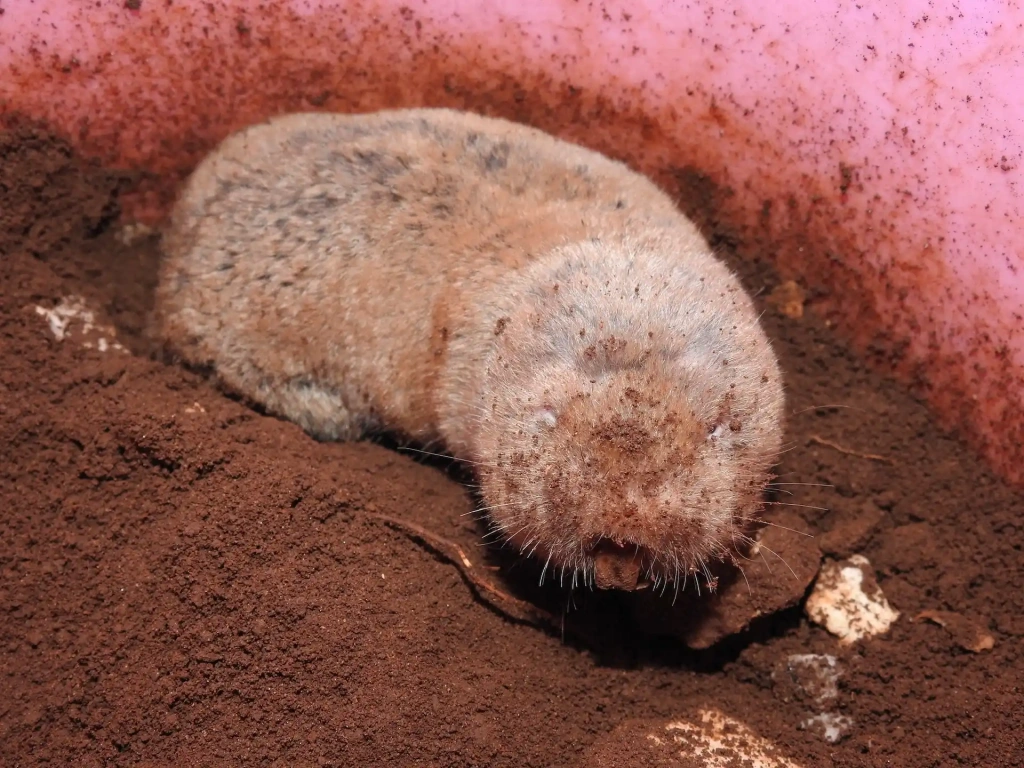
The discovery of new mole-rat species in Tanzania
As I understand, you have also helped identify several previously unknown mole-rat species in Tanzania. Why are those discoveries significant?
Discovering new mammal species has broad significance beyond Tanzania, because new mammals are not found very often.
This story goes back to the early 1990s and involves my colleague Professor Nigel Bennett from the University of Pretoria. He and I were attending a conference in Tanzania when we met our Tanzanian colleague, Professor Georgies Mgode. Together, we decided to start a project to study the mole-rats living in Tanzania because very little was known about them at the time.
The samples Georgies collected on Mount Hanang and around the town of Ujiji turned out to be genetically different from anything we had seen before. We suspected these might be previously unknown species, so we needed to return to collect additional data.
In the end, we formally described and named two new species: Fukomys hanangensis, which lives on and around Mount Hanang, and Fukomys livingstoni from Ujiji.

So you went to Tanzania specifically to search for these species?
The last field expedition I made with Georgies in 2019 was particularly successful. We managed to survey and trap animals on Mount Hanang at an elevation of about 1,957 metres (6,421 feet). During that trip, we also discovered several new populations, including in the Nou Forest Reserve not far from Mt. Hanang.
Sadly, shortly afterwards, Georgies passed away after a short illness, and we never had the chance to make real progress in studying these species.
Does that mean there is now no one actively searching for unknown mole-rats in Tanzania? Do the newly discovered species need protection?
We still know very little about the mole-rats from Ujiji. More fieldwork is needed.
The Hanang mole-rat, on the other hand, is endemic: this is the only place on the planet where it exists. That has allowed us to begin preparing an application for “Key Biodiversity Area” status for the protected zones of Hanang and Nou Forest.
This status is granted by expert scientific groups under the umbrella of international conservation organisations. Once an area is included in the register, it becomes a priority for protection and funding. This will, among other things, help safeguard the forests of Hanang and Nou Forest.
All content on Altezza Travel is created with expert insights and thorough research, in line with our Editorial Policy.

Want to know more about Tanzania adventures?
Get in touch with our team! We've explored all the top destinations across Tanzania. Our Kilimanjaro-based adventure consultants are ready to share tips and help you plan your unforgettable journey.
 Climbing
  Safari
  About Tanzania
  Islands