




 52 reasons
  Free PDF


 Message us on WhatsApp
  Book a Free Call

 About Altezza
 The quality of a safari experience depends largely on the guide. They are the ones who find the animals and bring each sighting to life with stories and insights, turning moments in Tanzania's national parks into lifelong memories.
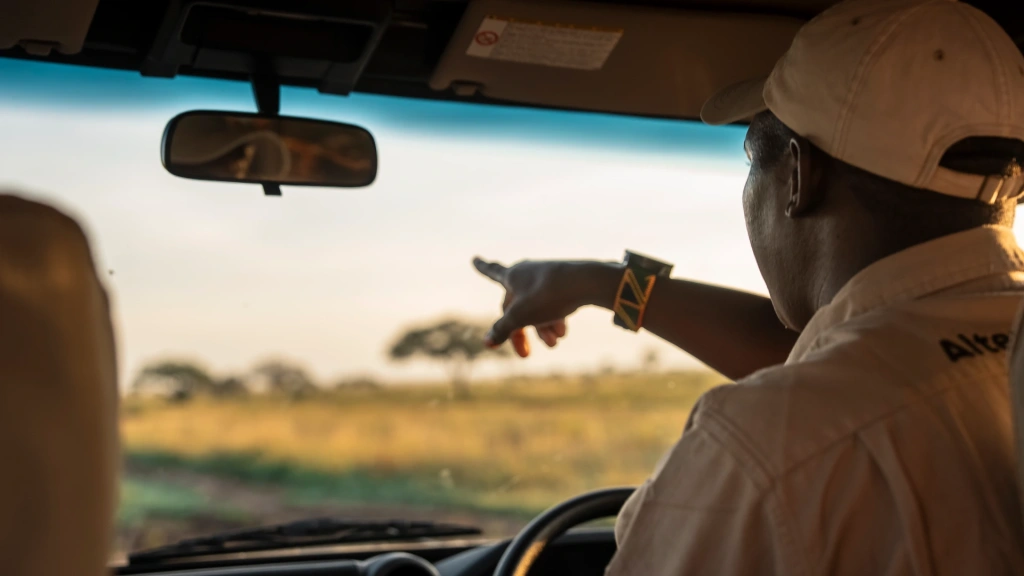
The way you experience the savanna depends heavily on your guide's knowledge and expertise, which is why guide selection and training form the foundation of our safari operations. This commitment has helped us earn the title of Tanzania's Leading Tour Operator at the World Travel Awards in both 2024 and 2025, as well as recognition from Tanzania's Ministry of Natural Resources and Tourism, which named us the best tour operator in in 2026. Altezza Travel has also held the number one position among Tanzanian tour operators on TripAdvisor for more than a decade.
What a guide actually does on safari
A professional safari guide does much more than identify animals. They tailor each safari to the interests and expectations of their guests.
Safari goals can vary greatly. Some travelers are visiting Tanzania for the first time and want to see as many large animals as possible. Others are passionate birdwatchers focused on spotting rare species. Families with children often prefer shorter drives, while photographers care about vehicle positioning, lighting conditions, and early departures. A skilled guide takes all these preferences into account when planning each day of the safari.
Throughout the day, guides constantly observe their surroundings. They are not only watching the road and scanning for large animals but also listening for birds' alarm calls and paying attention to antelope behavior. If a herd suddenly freezes, stares in one direction, or bunches together more tightly than usual, it may indicate that a predator is nearby. In such situations, a guide will stop and carefully assess the area to determine what is happening.
When talking about wildlife, our guides strive to share fascinating details that many travelers have never heard before. For example, if you encounter a pack of African wild dogs, your guide might explain that the animals appear to "vote" before a hunt. The pack gathers together and begins sneezing. If enough members sneeze, the hunt begins. If too few do, the pack remains where it is.
Even a seemingly insignificant dung beetle can become the subject of an interesting story. Few people realize that dung beetles are among the very few animals known to navigate using the Milky Way.
Guides also play a critical role in ensuring that wildlife encounters happen responsibly. They position the vehicle so guests can enjoy excellent views and photographs without disturbing animals or interfering with other visitors. If elephants are crossing the road, the guide will keep a respectful distance and avoid frightening young calves. If a lioness is resting with her cubs, they will stop at a safe distance. If a cheetah is preparing to hunt, they will not distract it for the sake of a better photograph. Experienced guides know when to wait, when to move, and when to switch off the engine altogether.
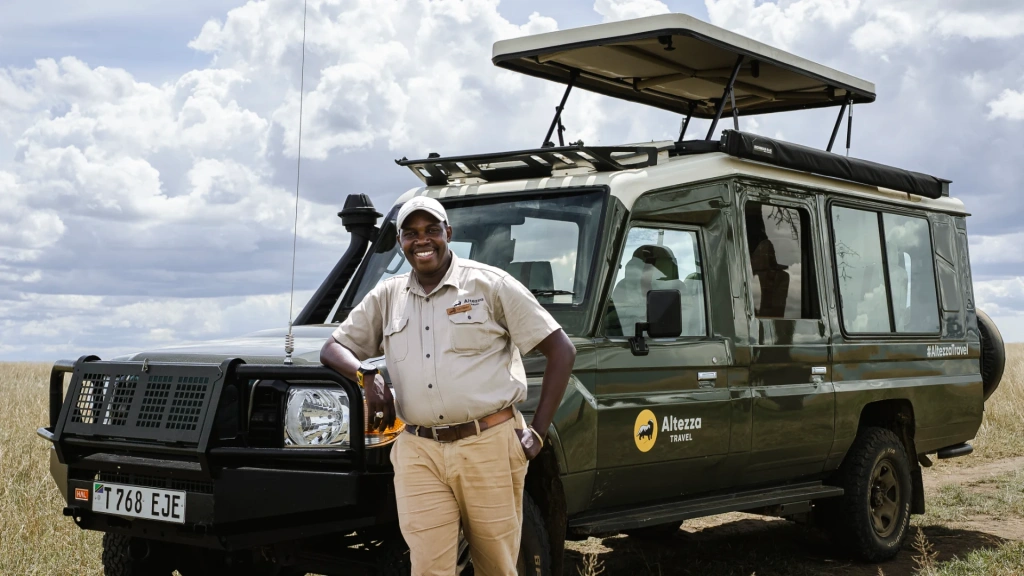
At the Serengeti Visitor Center, guides often tell the remarkable story of Bernhard and Michael Grzimek. In the 1950s, they purchased a small airplane in Germany, painted it with black-and-white stripes resembling a zebra, flew it to the Serengeti, and devoted their lives to studying and protecting the region. Their documentary Serengeti Shall Not Die won an Academy Award in 1960. Guides also explain how Serengeti became a global symbol of conservation, how the park operates today, why rangers are essential, how seasonal rains drive the Great Migration, and how tourism contributes to protecting these landscapes.
How we select guides
Before becoming a guide at Altezza Travel, every candidate must pass several stages of evaluation:
- Interview and knowledge assessment
- Study of the Altezza Travel internal guide manual
- Driving examination in safari conditions
- Comprehensive test covering mammals, birds, plants, wildlife ecology, and Tanzanian history
- First aid training and successful completion of the Wilderness First Aid certification exam
Working as a safari guide at Altezza Travel is considered one of the most attractive and competitive positions in Tanzania's tourism industry. As a result, we are able to recruit some of the country's most experienced professionals.
When selecting new guides, we focus on several key qualities:
Relevant education
Most of our safari guides are graduates of the Mweka College of African Wildlife Management, one of Africa's leading institutions for training wildlife professionals, safari guides, and park rangers.
Empathy and curiosity
These are perhaps the two most important qualities we look for.
Empathy means that our guides always consider the feelings, needs, and comfort of those around them when making decisions. For example, if a young child becomes frightened after seeing an elephant and starts crying, our guide will never make light of the situation. Instead, they will move the vehicle farther away and calmly explain that elephants are generally peaceful animals. For the rest of the trip, they will avoid approaching elephants closely unless the child specifically expresses interest in seeing them again.
If a guide notices that guests are tired, they may suggest returning to the lodge earlier than planned without waiting for travelers to ask. Many people feel uncomfortable requesting changes to an itinerary, so our guides pay attention not only to what guests say but also to how they feel.
Their empathy extends to wildlife as well. If a guide encounters an injured animal, they immediately report it to the appropriate wildlife authorities. Veterinarians can then assess the situation and provide assistance, particularly when vulnerable species are involved.
If a young elephant becomes trapped in mud and separated from its herd, wildlife authorities may rescue it and attempt to reunite it with its family. If this is not possible, the calf may be transferred to a specialized rehabilitation center, where orphaned elephants are cared for until they are old enough to survive independently in the wild. Altezza Travel supports one such center and fully funds the care of two young elephants.
By curiosity, we mean a genuine desire to keep learning about Tanzania's wildlife. Even after many years working in the bush, our guides continue reading, attending workshops, and speaking with wildlife experts. Whenever they discover something new, they share it with colleagues, and particularly interesting findings are added to our internal wildlife manual.
How guide training works at Altezza
After being selected, each new guide undergoes extensive in-house training in accordance with Altezza Travel's high standards.
Safety and comfort standards
The first stage of training focuses on our internal operating standards. These standards are compiled into a comprehensive guidebook that every safari guide is required to know. Experienced guides contributed to its development, sharing their knowledge, practical experience, and solutions to real-world situations encountered in the field.
The guidebook explains in detail how a safari should be conducted from beginning to end. It covers guest communication, trip preparation, behavior in national parks, wildlife viewing, route safety, vehicle operation, procedures for difficult weather conditions, communication with the office, and responses to unexpected situations. Its main purpose is to ensure that the quality of service does not depend on an individual guide's personal habits or preferences. Every traveler should receive the same high standard of care, safety, and professionalism on every Altezza Travel safari.
Learning materials
Reading forms an important part of guide training.
Altezza Travel maintains a required reading list of 12 books on African wildlife and ecosystems. These books teach guides how to properly observe the savanna: how to interpret tracks, understand animal behavior and vocalizations, recognize relationships between species, and explain the reasons behind what is happening around the vehicle.
We want our guides to do more than simply identify animals. They should be able to explain why an animal behaves as it does and what role it plays in the ecosystem.
Driving skills in the savanna
A separate portion of training focuses on driving in safari conditions. This is a highly specialized skill that differs significantly from driving on ordinary roads.
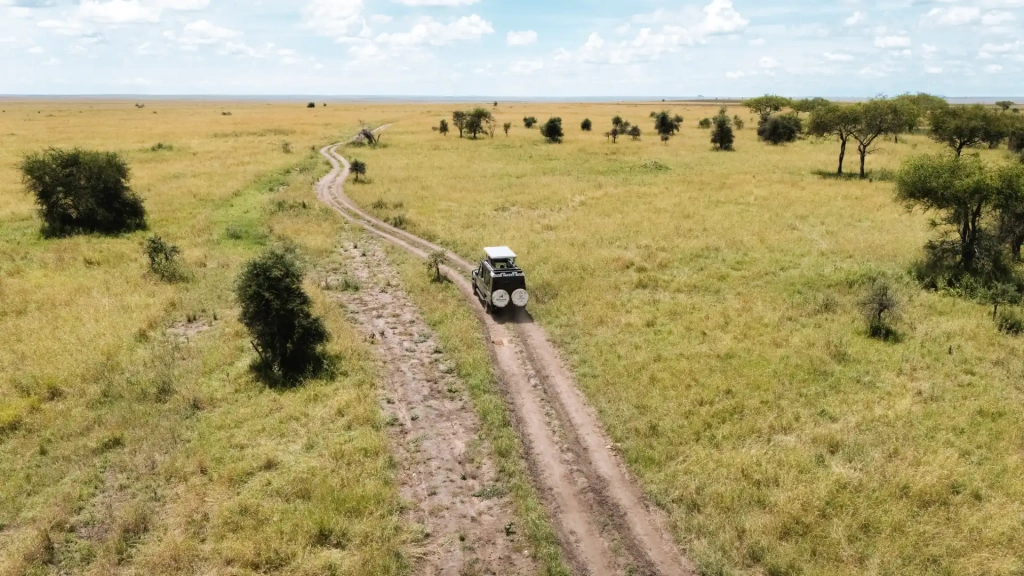
Guides must be able to operate vehicles confidently on dirt roads, through mud and sand, across rocky terrain, when crossing streams, and on narrow park roads. They must do so calmly and safely while ensuring guests remain comfortable throughout the journey.
Driving on safari is closely connected to understanding conservation principles. Guides must know how to approach animals responsibly, when to stop, when to switch off the engine, when to give way to other vehicles, and when it is best to leave an area to avoid disturbing wildlife.
First aid in the savanna
Another major component of training is wilderness first aid.
Safaris take place in remote areas where permanent medical facilities are often unavailable. Guides must therefore be able to assess situations calmly and provide immediate assistance in cases of injuries, allergic reactions, overheating, bites, fainting, stomach problems, and traffic accidents.
They must also be able to communicate symptoms accurately to our in-house medical team, allowing specialists to determine whether guests can safely continue the safari or should return for medical attention.
Altezza Travel has spent many years building a strong culture of putting safety first. The company employs specialists who train staff in wilderness first aid procedures. Among them is Philip Swart, a licensed paramedic with more than 20 years of experience working across Africa. He regularly conducts first aid training sessions for our safari guides.
Every Altezza Travel safari vehicle carries a fully equipped medical kit containing supplies that may be needed during a trip. In addition to pain relievers and standard medications for food poisoning, stomach upset, heartburn, wounds, bleeding, and infections, our kits contain antihistamines and epinephrine auto-injectors for severe allergic reactions and anaphylaxis.
All safari vehicles are also equipped with satellite phones, allowing communication with our operations team or nearby hospitals from virtually anywhere in the savanna.
Internal certification exam
Following training, guides must pass an internal examination developed jointly by our team and wildlife experts from South Africa. We involved South African specialists for two main reasons.
South Africa's safari training tradition
South Africa has long been regarded as having the most developed safari guide training system in Africa. Over the past century, substantial investments have been made in guide education and professional development.
The country is home to the International Field Guide Association's headquarters, whose certifications are recognized in protected areas around the world.
Objectivity
Members of our management team who helped design the examination have been working in Tanzania's national parks since 2011. While we possess extensive knowledge of Tanzania's wildlife, flora, and history, input from independent specialists allowed us to broaden the curriculum and incorporate valuable guiding practices from neighboring countries. Where appropriate, we adapted these recommendations for use on Tanzanian safaris.
The examination consists of two parts. The first assesses knowledge of Tanzania's wildlife and history. The second evaluates practical skills related to safety, ethics, and guest comfort. All questions are based on real-life situations that guides may encounter while leading safaris.
This approach allows us to identify both strengths and areas that require further development. At Altezza Travel, training does not end once a guide is hired. It is an ongoing process.
Our goal is for every Altezza Travel guide to be more than a skilled driver and storyteller. We want them to be a true professional whom travelers can trust with both their safety and their safari experience.
Thanks to our guides, a safari becomes much more than simply observing animals in their natural habitat. It offers an opportunity to understand why Africa's wildlife is considered among the most remarkable on Earth and why so many travelers return again and again.
Perhaps that is why the famous saying emerged: if you only have the chance to visit two continents in your lifetime, let them both be Africa.
All content on Altezza Travel is created with expert insights and thorough research, in line with our Editorial Policy.

Want to know more about Tanzania adventures?
Get in touch with our team! We've explored all the top destinations across Tanzania. Our Kilimanjaro-based adventure consultants are ready to share tips and help you plan your unforgettable journey.
 Climbing
  Safari
  About Tanzania
  Islands