





 52 reasons
  Free PDF


 Message us on WhatsApp
  Book a Free Call

 About Altezza
 Starting from 1 October 2026, foreign visitors arriving in must purchase mandatory Inbound Travel Insurance. The Tanzanian government has introduced this requirement through the National Insurance Corporation.
The insurance costs USD 44 and covers 92 days, including multiple entries into Mainland Tanzania. Children aged 3 to 17 receive a 50% discount and pay USD 22, while children aged 0 to 2 receive coverage free of charge.
Visitors can purchase the insurance online through the official NIC website or upon arrival in Tanzania.
This is a new requirement, separate from international travel insurance. Zanzibar has its own mandatory insurance scheme, but visitors travelling to both Mainland Tanzania and Zanzibar do not need to purchase two mandatory policies for the same journey. The applicable policy depends on where a visitor first enters Tanzania.
We have prepared this article to explain what the new requirement means, how to purchase the insurance, and why travelers should continue to arrange their usual travel insurance.
I already have travel insurance. Do I still need the new insurance from Tanzania?
Yes. The new insurance is a government entry requirement, regardless of any other insurance a visitor already holds.
We strongly recommend keeping your existing international travel insurance. The mandatory NIC policy is designed primarily for incidents occurring during your stay in Tanzania and should not be treated as a replacement for comprehensive international travel insurance.
Your international policy may cover situations outside the scope of the NIC policy, such as treatment after returning home, baggage problems during international flights, trip interruption, or specialized medical care outside Tanzania.
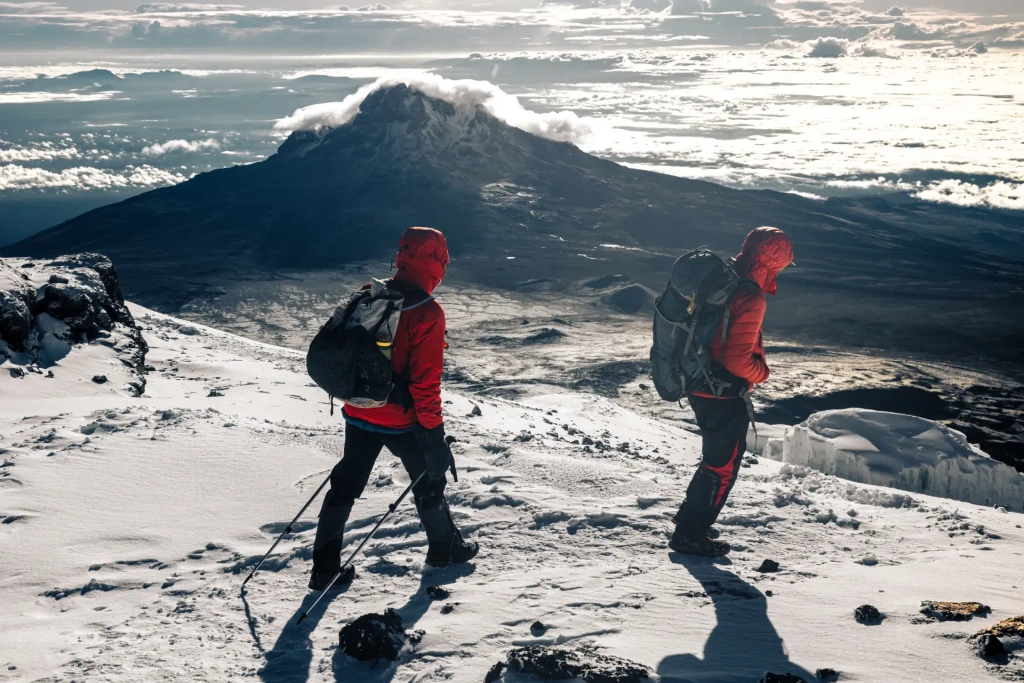
For anyone climbing Mount Kilimanjaro, there is another important consideration: helicopter evacuation. Although the new regulations mention emergency medical evacuation, the NIC has not confirmed whether the mandatory insurance will cover helicopter rescues from Kilimanjaro. The costs of such evacuations start at $4,000. Until the NIC clarifies the coverage and explains how it works, climbers should continue to arrange dedicated helicopter evacuation coverage.
We explain the available options in more detail below.
Who is exempt from the new insurance?
The regulations exempt residents of countries belonging to the East African Community and the Southern African Development Community.
East African Community: Burundi, Democratic Republic of the Congo, Kenya, Rwanda, Somalia, South Sudan, Tanzania and Uganda.
Southern African Development Community: Angola, Botswana, Comoros, Democratic Republic of the Congo, Eswatini, Lesotho, Madagascar, Malawi, Mauritius, Mozambique, Namibia, Seychelles, South Africa, Tanzania, Zambia and Zimbabwe.
The regulations use the term "residents", but the authorities have not yet clarified whether the exemption also applies to foreign nationals who hold residence permits in these countries. For example, it remains unclear whether a German citizen who holds a Kenyan residence permit can enter Tanzania without purchasing the insurance. We expect the authorities to clarify this as implementation begins.
What happens if I don't want to purchase the insurance?
The Tanzanian government treats mandatory Inbound Travel Insurance as an entry requirement, much like a visa. Under Regulation 4(4) of the Insurance (Inbound Travel Insurance) Regulations, 2026, authorities must deny entry to foreign visitors who do not hold a valid insurance policy.
Therefore, if the requirement applies to your trip, you must purchase the insurance before entering Mainland Tanzania.
How can I purchase this NIC insurance?
First, check where your trip to Tanzania begins. If Mainland Tanzania is your first point of entry, purchase the mandatory insurance through the National Insurance Corporation.
If Zanzibar is your first point of entry, purchase the Zanzibar policy through the Zanzibar Insurance Corporation. Visitors travelling between Mainland Tanzania and Zanzibar during the same insured journey should not need to purchase a second mandatory policy.
Then, there are two options:
Option 1: Purchase online before travelling
If you come to Tanzania through Kilimanjaro International Airport (JRO) or Dar Es Salaam International Airport (DAR) or cross the border overland:
National Insurance Corporation: https://inbound.nicinsurance.co.tz/
If you arrive to Zanzibar only, or enter Tanzania through Zanzibar: https://inbound.visitzanzibar.go.tz
Option 2: Purchase upon arrival
Visitors can also purchase the insurance at the airport or another official entry point. Card payments will be available.
We recommend purchasing the insurance online before traveling. Even travelers with an eVisa still need to complete immigration formalities on arrival, and purchasing insurance at the airport adds another step to the process.
As the system is new, queues, payment processing and on-arrival procedures may take longer than expected. Buying the policy in advance is the simplest way to avoid unnecessary delays after your flight.
How does the new insurance work if I need to make a claim?
As the scheme is new, several practical details have not yet been clarified by NIC. These include whether hospitals will bill NIC directly or require travelers to pay first and claim reimbursement, which medical facilities will participate in the scheme, and how quickly claims will be processed. NIC has also not yet published detailed guidance on how compensation for permanent disability will be assessed.
We will update this article as NIC provides further clarification and travelers begin using the new insurance.
Which insurance do I actually need for a trip to Tanzania?
Depending on your itinerary, you may need several different insurance covers. They serve different purposes, and purchasing one does not necessarily eliminate the need for the others.
Here is how they work.
1. The new NIC Insurance – Mandatory Mainland Tanzania Inbound Travel Insurance
Required for entry into Mainland Tanzania, unless an exemption applies. This is the insurance we’ve just discussed. It costs USD 44 per adult and remains valid for up to 92 days, including multiple entries during that period. You must purchase it even if you already have international travel insurance.
Purchase it through the official NIC insurance platform.
2. International travel insurance
This is the insurance travelers normally arrange for their entire trip. It can cover medical treatment, emergency care, trip interruption, lost or delayed luggage, and other unexpected expenses before, during and after the journey.
For example, a traveler may become seriously ill in Tanzania and require specialized treatment in another country. In East Africa, Aga Khan University Hospital in Nairobi is one of the facilities that can provide advanced medical care, and Altezza Travel has previously arranged transfers there for clients.
It may also cover further treatment after returning home, depending on the policy terms.
When choosing international travel insurance, check that it covers the entire trip and all planned activities.
3. Helicopter evacuation coverage for Kilimanjaro climbers
Essential for anyone planning to climb Mount Kilimanjaro. A helicopter evacuation may become necessary if a climber develops a serious medical condition, such as severe altitude sickness, and cannot safely descend on foot.
The new mandatory government insurance does not provide confirmed coverage for helicopter evacuations from Kilimanjaro. Climbers should therefore arrange separate protection.
There are two main approaches.
1) International travel insurance that includes helicopter evacuation from Kilimanjaro. Such insurance must specifically cover trekking at the mountain's maximum altitude of 5,895 meters.
Many traditional insurance policies operate on a reimbursement basis for mountain evacuations. This means that a traveler may need to pay for the helicopter first and then submit a claim to the insurer. Some insurers can arrange direct payment, but obtaining their authorization may take time. During an emergency on Kilimanjaro, delays can be dangerous.
2) Global Rescue membership with appropriate high-altitude evacuation coverage.
Global Rescue is a specialist rescue and evacuation service rather than a traditional insurance provider. For eligible emergencies, it can arrange and cover the cost of evacuation directly, so members generally do not need to pay for the approved rescue upfront and then seek reimbursement.
For Kilimanjaro, make sure your Global Rescue membership includes the High-Altitude Evacuation Package. This package provides eligible emergency transport services for members who travel above 15,000 feet (4,600 m) during any part of their trip and require evacuation due to injury or illness.
Global Rescue membership does not replace regular travel insurance. It is designed primarily for rescue and evacuation services and does not generally cover hospital treatment or other medical expenses. You may buy your Global Rescue membership here.
4. Mandatory Zanzibar Inbound Travel Insurance
If a trip includes Zanzibar only, the visitor should purchase the mandatory insurance through the Zanzibar Insurance Corporation using the official ZIC portal. The cost is USD 44 per adult.
If a trip includes both Zanzibar and Mainland Tanzania, but the visitor enters Tanzania through Zanzibar first, the ZIC policy should be purchased. That policy remains valid for the same insured journey when the visitor later travels to Mainland Tanzania, so a second mandatory policy should not be required.
If the visitor enters Tanzania through Mainland Tanzania first and later travels to Zanzibar, the applicable policy should be purchased through the National Insurance Corporation. ZIC has confirmed that visitors should not need to purchase two mandatory policies for the same journey merely because the itinerary includes both Mainland Tanzania and Zanzibar.
Visitors should keep the insurance certificate and QR code throughout the trip, as authorities may verify them when travelling between Mainland Tanzania and Zanzibar.
And remember: you should also have international travel insurance, and, if you are climbing Kilimanjaro, make sure you have appropriate high-altitude evacuation coverage.
As the new system is rolled out, some practical details may change. We will continue monitoring official updates and keep this article updated.
All content on Altezza Travel is created with expert insights and thorough research, in line with our Editorial Policy.

Want to know more about Tanzania adventures?
Get in touch with our team! We've explored all the top destinations across Tanzania. Our Kilimanjaro-based adventure consultants are ready to share tips and help you plan your unforgettable journey.
 Climbing
  Safari
  About Tanzania
  Islands