





 52 reasons
  Free PDF


 Message us on WhatsApp
  Book a Free Call

 About Tanzania
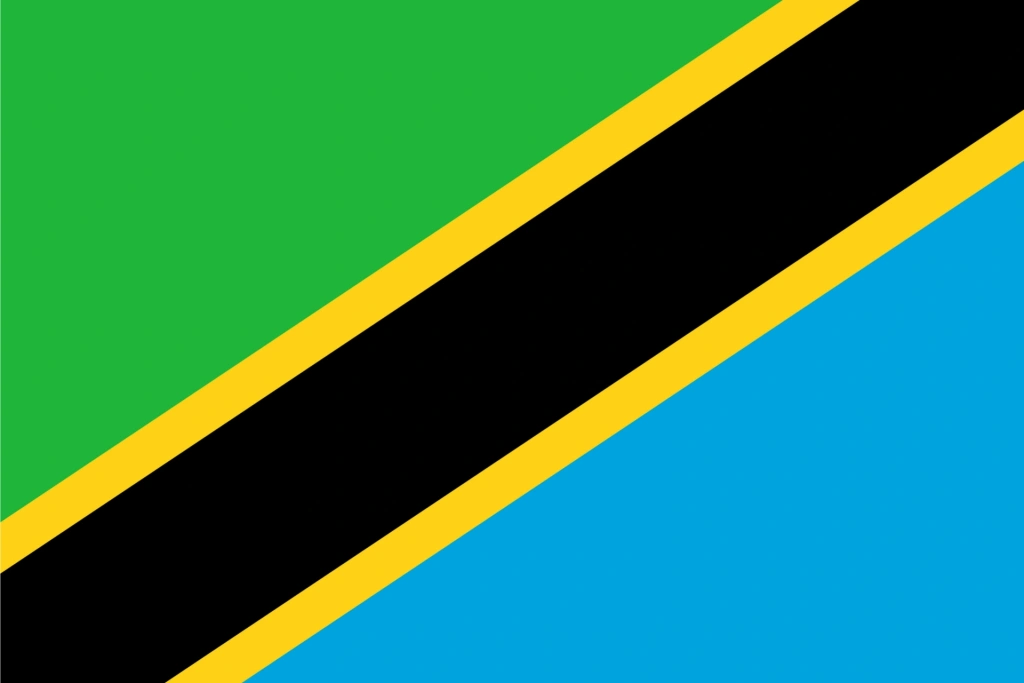
 The flag of Tanzania is a rectangular banner featuring green and blue triangles divided diagonally by a black stripe outlined with yellow borders.
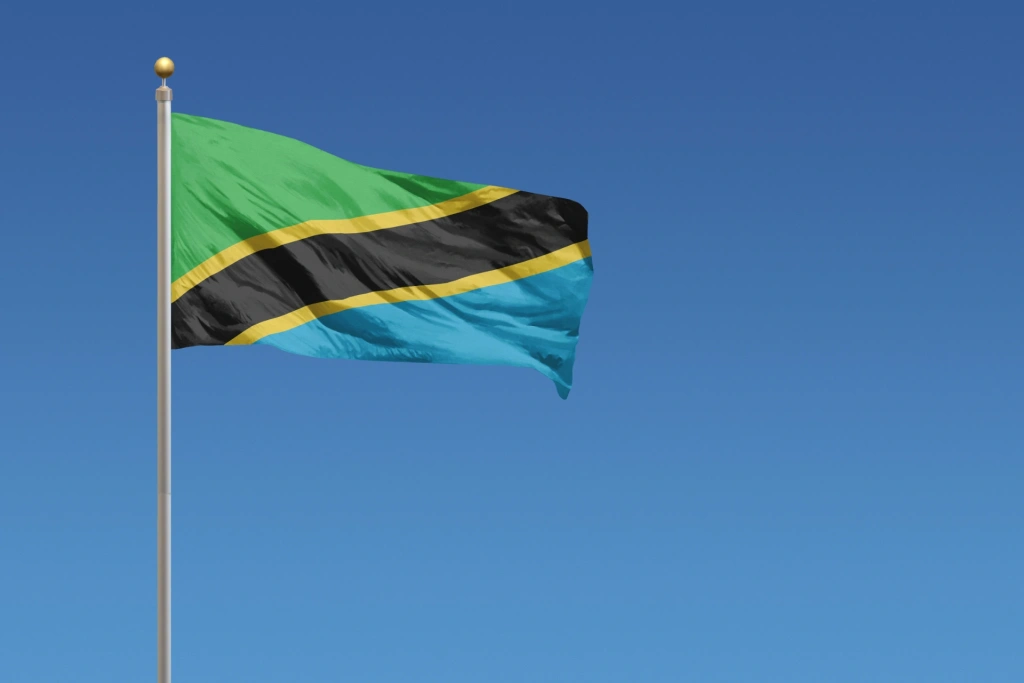
The modern flag of Tanzania (bendera ya Tanzania) was adopted in 1964. On April 26, it was officially described in the National Emblems Act, and on June 30, it became the symbol of the two newly united republics – Tanganyika and Zanzibar. On October 29, the country officially became the United Republic of Tanzania, the name it still carries today, while keeping the same flag.
Interestingly, there are only about a dozen national flags in the world that use a diagonal division. Below, we explain the history of the Tanzanian flag, along with the country’s other national symbols: the coat of arms, motto, and anthem.
What Does the Tanzania Flag Look Like?
The Tanzanian flag is a horizontal rectangle with a 2:3 ratio. A black diagonal stripe runs from the lower-left corner to the upper-right corner, bordered by narrow yellow stripes. The black stripe symbolizes the people of Tanzania, while the yellow stripes represent the country’s mineral wealth.
In the official description, the narrow stripes are referred to not as yellow but as golden, emphasizing the connection to Tanzania’s natural resources even more clearly.
The diagonal stripe divides the flag into two triangular sections. One is green, symbolizing Tanzania’s rich vegetation and agricultural land. The other is light blue, representing the country’s lakes, rivers, and the Indian Ocean. The blue color was borrowed from the flag of the People’s Republic of Zanzibar and Pemba, islands surrounded by the ocean.
Colors of the Tanzanian flag and their meanings
History of the flags of Zanzibar and Tanzania
The evolution of the flags reflects the entire history of Tanzania, from the period when mainland Tanzania was known as Tanganyika and Zanzibar was part of the Omani Sultanate.
Until 1698, Zanzibar was ruled by Portugal. From the early 16th century onward, several flags were used, but they all featured variations of the Portuguese coat of arms on a white background.
1698–1856
Zanzibar became an overseas possession of the Omani Empire.
Flag: a bright red rectangular banner of the Sultanate of Muscat and Oman.

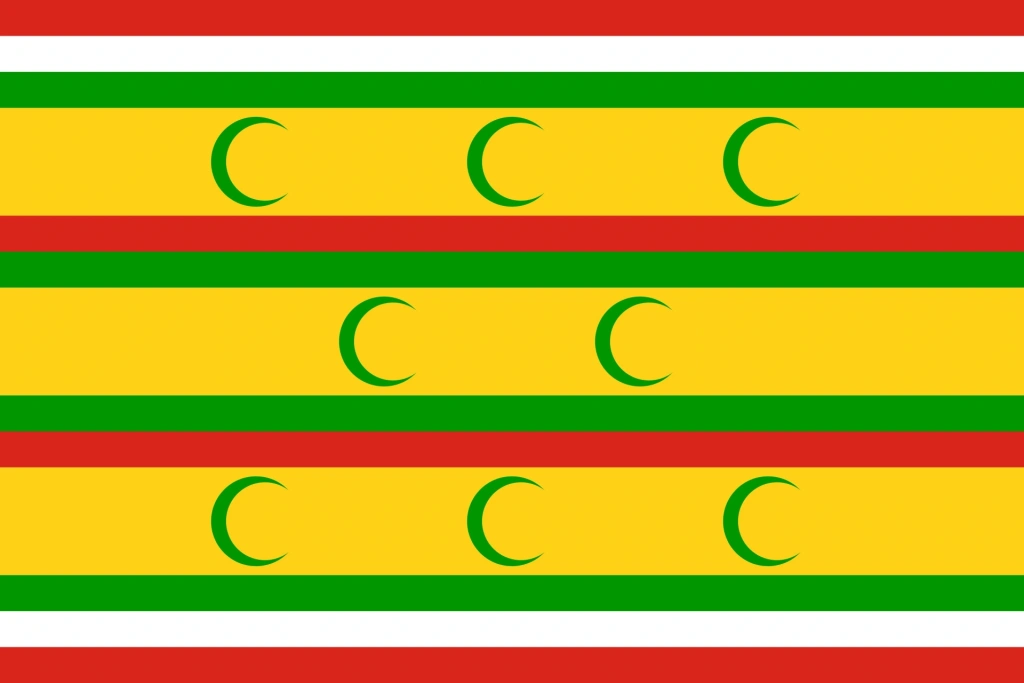
1856–1896
Zanzibar became an independent sultanate but paid annual tribute to Muscat in Oman.
Flag: 13 horizontal stripes in red, white, green, and yellow, with eight green crescents placed on the yellow stripes.
1896–1963
The Sultanate of Zanzibar existed as a separate state under British protectorate status.
Flag: a plain red banner.

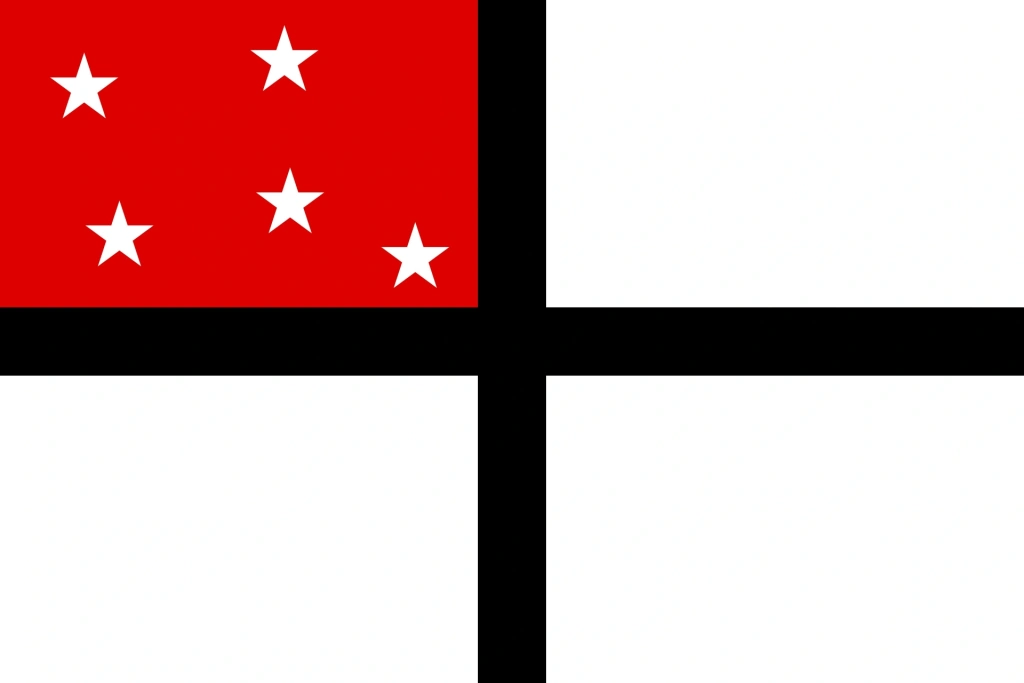
1885–1891
Germany and Britain arrived in East Africa and divided the region between themselves. Mainland Tanzania, together with present-day Burundi and Rwanda, became part of German East Africa. The capital was Bagamoyo.
Flag: a white field with a black cross in the center and five white stars on a red background in the upper-left corner. This was the flag of the German East Africa Company.
1891–1918
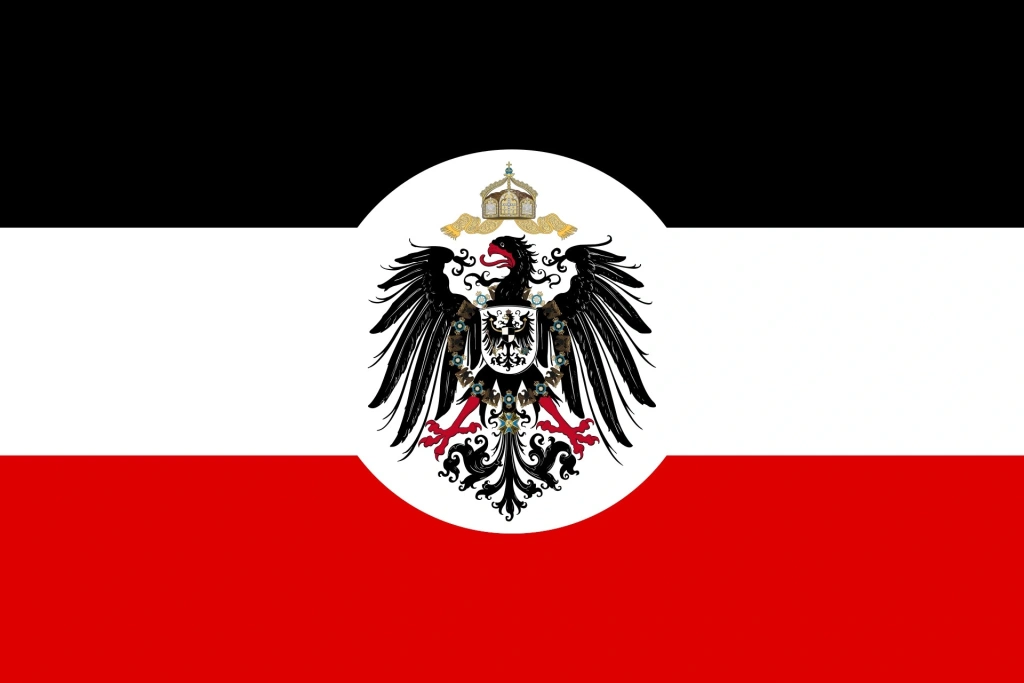
German East Africa existed until Germany’s defeat in World War I. The capital moved from Bagamoyo to Dar es Salaam. A small part of present-day Mozambique was also added to the territory.
Flag: a black-white-red tricolor with the imperial eagle inside a white circle in the center. A redesigned flag featuring a lion’s head instead of the eagle was proposed, but World War I prevented its adoption.
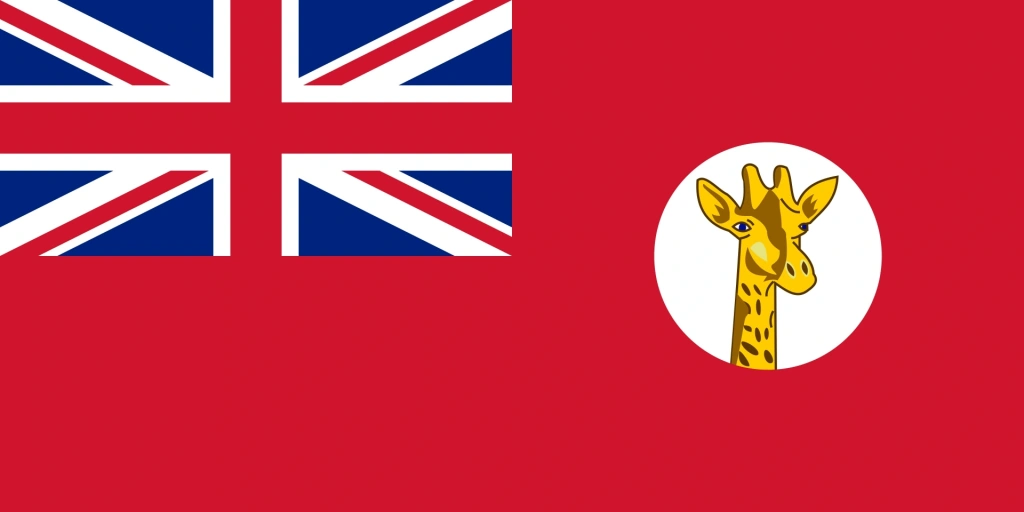
1919–1961
After World War I, Germany lost all of its colonies. Mainland Tanzania came under British control and was named Tanganyika after Lake Tanganyika in the west of the territory.
Flag: the British Red Ensign with the image of a giraffe’s head inside a white circle.
1961–1964
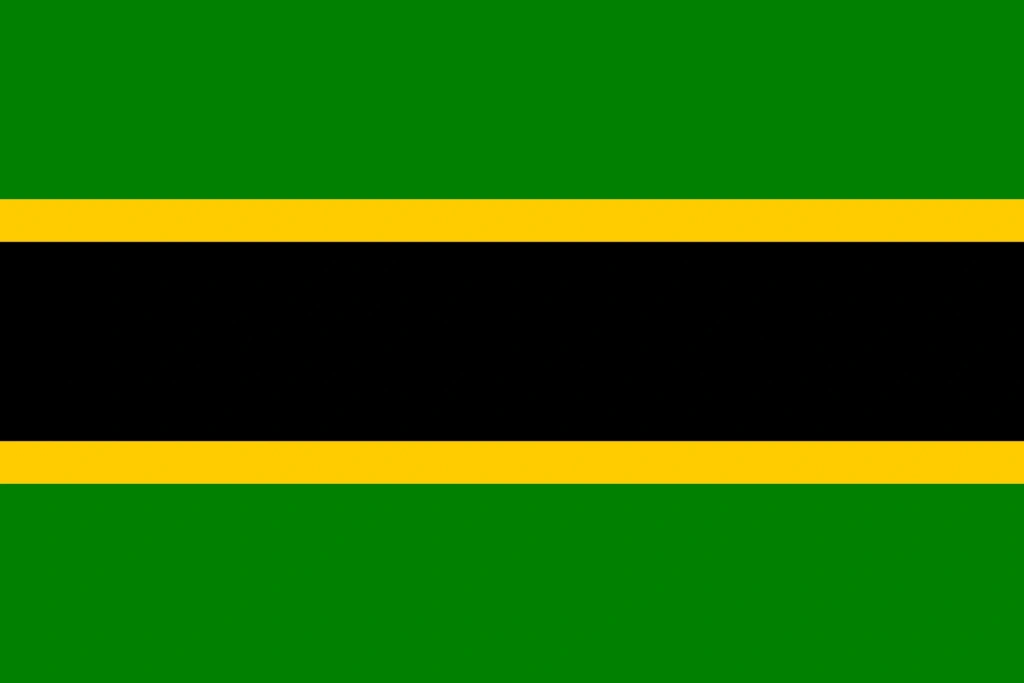
Tanganyika gained independence from the United Kingdom. Independence was achieved by the leading political party, the Tanganyika African National Union (TANU). The party’s flag was green with a black horizontal stripe in the center, and these colors became the basis of independent Tanganyika’s flag.
Flag: a green banner with a black horizontal stripe in the center, bordered by narrow golden stripes.
1963–1964
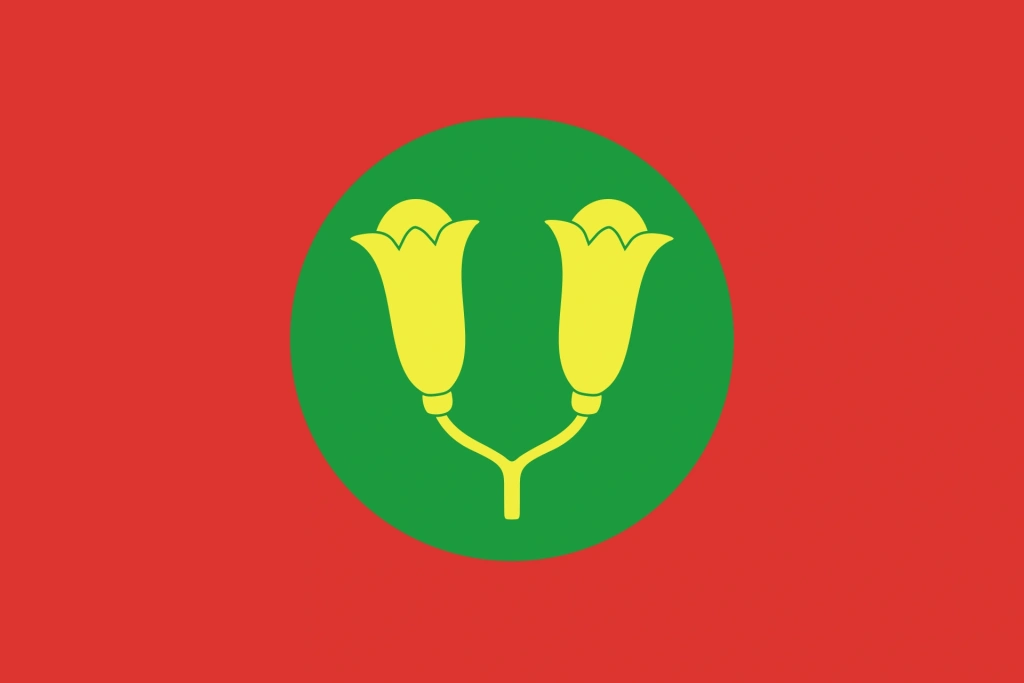
At the same time, the Sultanate of Zanzibar, like neighboring Kenya and Tanganyika, sought independence from Britain. It achieved independence at the end of 1963. For one month, its red flag featured cloves — the country’s main export product.
Flag: a red field with a green disk in the center containing two yellow clove flowers.
1964
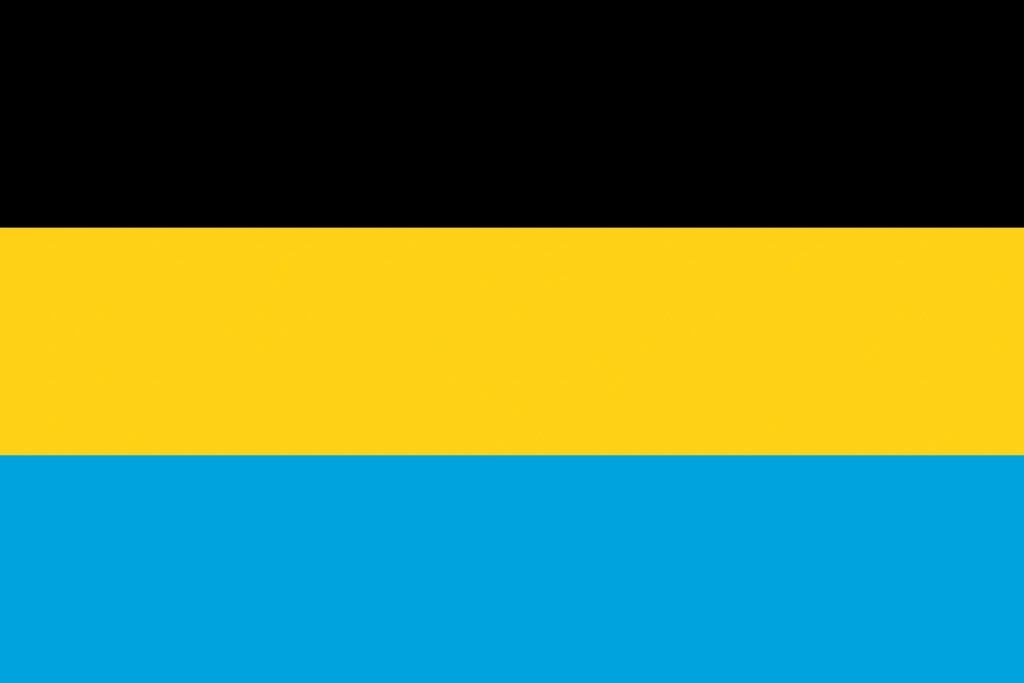
In January 1964, the Zanzibar Revolution took place. The sultan fled, and Zanzibar became the People’s Republic of Zanzibar and Pemba. During a short period, the new republic changed its flag twice.
Flags: for several days in January 1964, the republic used a black-yellow-blue tricolor. It was then replaced by a blue-black-green tricolor that remained in use for three months.
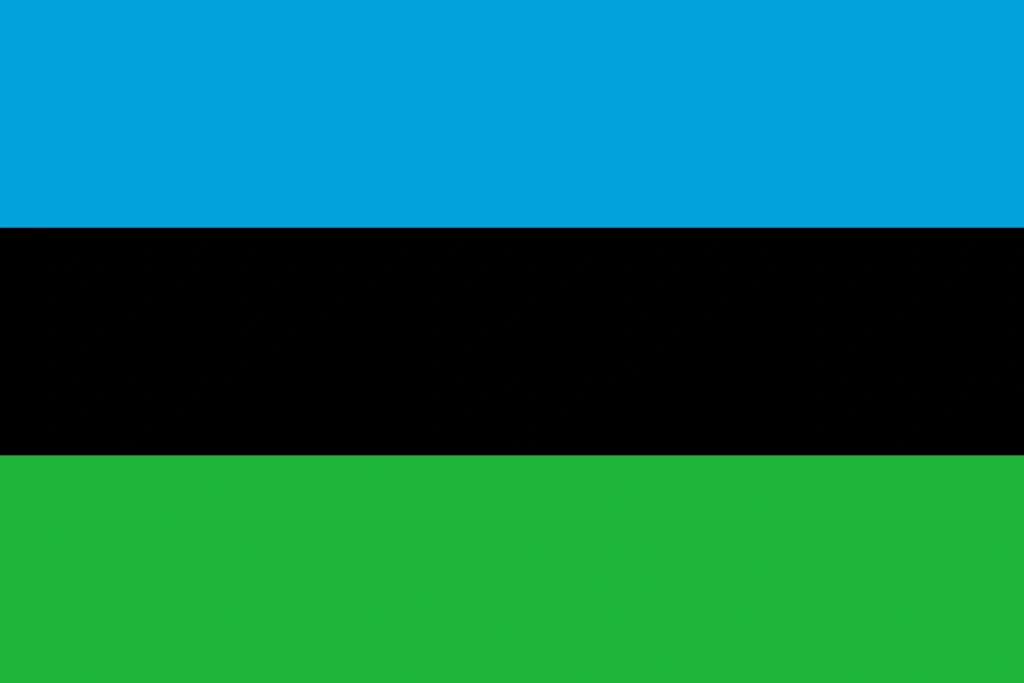
1964–present
In April 1964, the two republics united to form the United Republic of Tanzania. The name “Tanzania” was created by combining the first syllables of Tanganyika and Zanzibar.
Flag: the new national flag was based on the flag of Tanganyika, now placed diagonally, with the addition of the blue color taken from the final flag of the People’s Republic of Zanzibar and Pemba.
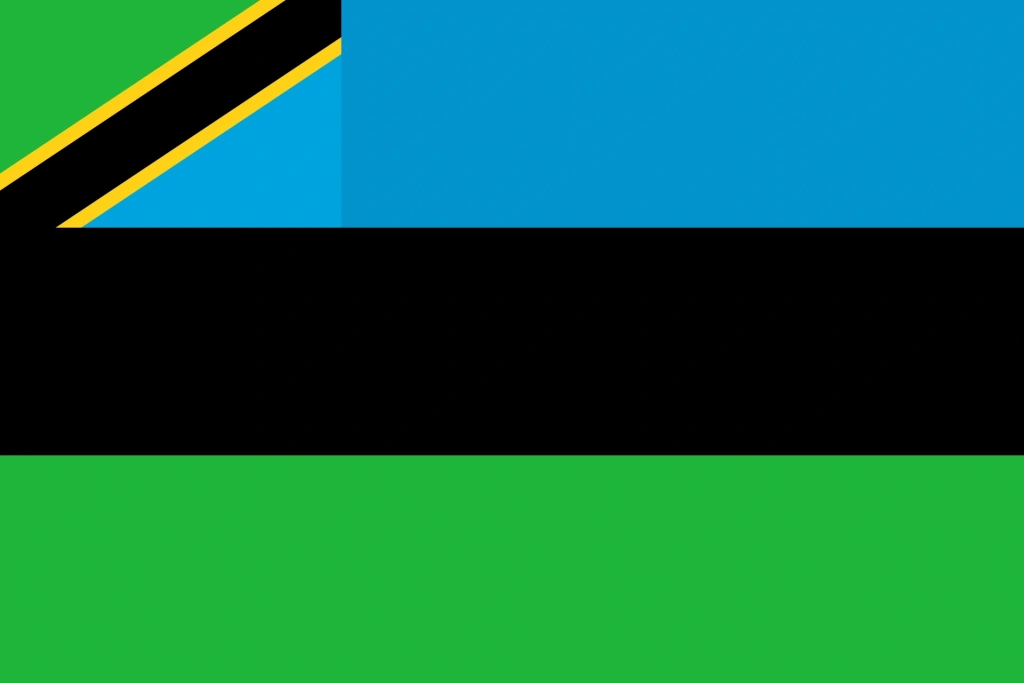
In 2005, Zanzibar’s authorities exercised their constitutional right to adopt an official regional flag. It became the 1964 blue-black-green tricolor with the Tanzanian flag in the upper-left corner.
Other national symbols of Tanzania
Below are the meanings behind the country’s coat of arms, motto, and anthem.
Coat of arms of Tanzania
In 1971, Tanzania officially adopted a slightly modified version of the Tanganyikan coat of arms. It features a shield atop Mount Kilimanjaro, flanked by elephant tusks and supported by a man and a woman dressed in the colors of the Tanzanian flag. Clove and cotton plants grow at their feet.
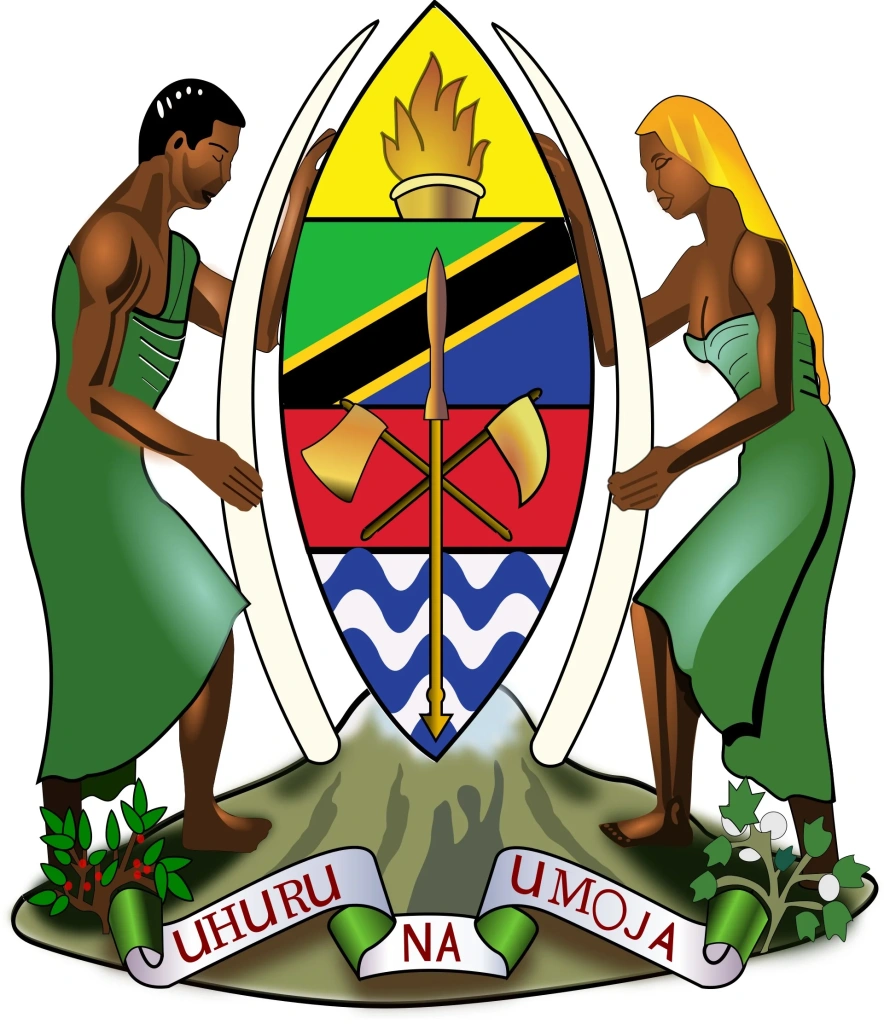
The shield is divided into four sections:
- The lower wavy section symbolizes the Indian Ocean and Tanzania’s lakes
- The red section represents Africa’s red soil and agriculture as the country’s primary occupation
- Above it is the flag of Tanzania
- The top section shows the Uhuru Torch, or Torch of Freedom, on a golden background symbolizing the country’s mineral wealth
In front of the shield are a spear, symbolizing the defense of freedom, and a crossed axe and hoe representing labor as the foundation of Tanzania’s development.
The ribbon beneath the coat of arms bears the inscription Uhuru na Umoja, which translates from Swahili as “Freedom and Unity.”
Kilimanjaro is the highest mountain in Tanzania and all of Africa, rising to 5,895 meters (19,341 ft). Its summit is called Uhuru Peak, which means “Freedom” in Swahili. The elephant tusks on the coat of arms symbolize Tanzania’s rich wildlife and protected national parks.
The Torch of Freedom (Mwenge wa Uhuru) is itself a national symbol of Tanzania. It is a kerosene torch carried to the summit of Kilimanjaro on December 9, 1962, marking the anniversary of independence.
In 2024, the Torch of Freedom returned to the summit in honor of the 60th anniversary of the union between Tanganyika and Zanzibar. The expedition for Tanzanian military personnel was organized by the Kilimanjaro climbing operator Altezza Travel. We were honored that such an important and ceremonial expedition was entrusted to us.
Motto of Tanzania
The national motto of Tanzania is Uhuru na Umoja, meaning “Freedom and Unity.”
National anthem of Tanzania
Since 1964, Tanzania’s national anthem has been Mungu ibariki Afrika (“God Bless Africa”). The melody and the Swahili lyrics were adapted collectively from a song written by South African teacher Enoch Sontonga. The original song was composed in 1897.
This song became the national anthem of Tanganyika in 1961, after independence. Later, it was also adopted by Zambia (with different lyrics) and Zimbabwe (1980–1994). Part of the song also became incorporated into the national anthem of South Africa.
English translation of the Tanzanian national anthem
God bless Africa,
Bless its leaders,
Wisdom, unity, and peace –
These are our shields,
Africa and its people.
Bless Africa,
Bless Africa,
Bless the children of Africa.
God bless Tanzania,
Preserve freedom and unity,
Its women, men, and children,
God bless Tanzania and its people.
Bless Tanzania,
Bless Tanzania,
Bless the children of Tanzania.
Questions about the national symbols of Tanzania
All content on Altezza Travel is created with expert insights and thorough research, in line with our Editorial Policy.

Want to know more about Tanzania adventures?
Get in touch with our team! We've explored all the top destinations across Tanzania. Our Kilimanjaro-based adventure consultants are ready to share tips and help you plan your unforgettable journey.