





 52 reasons
 Free PDF


 Message us on WhatsApp
 Book a Free Call


Volcanoes National Park
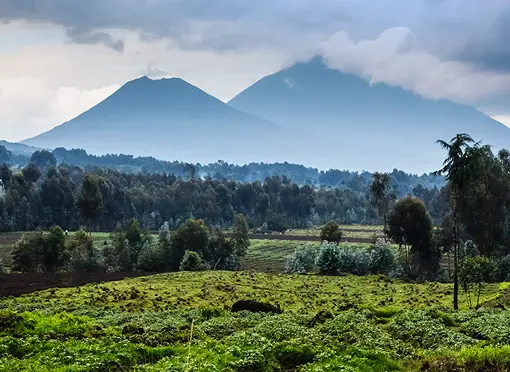
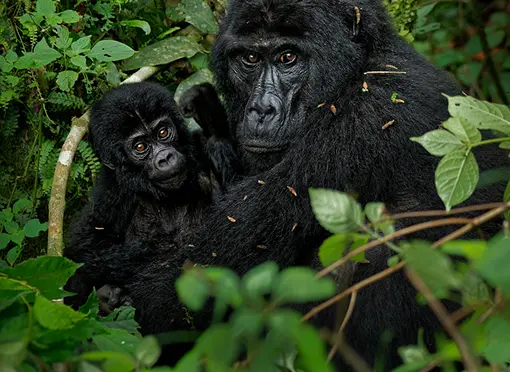
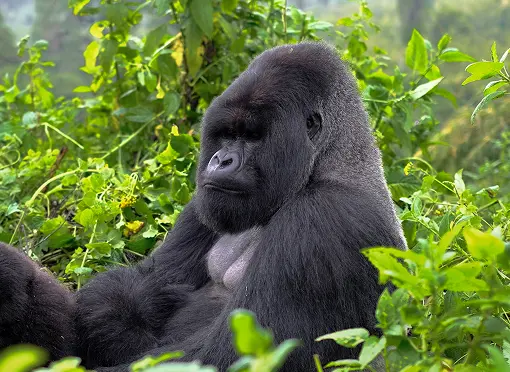
Gorilla trekking in Rwanda takes place in Volcanoes National Park, where travelers from around the world come for the chance to spend an hour observing mountain gorillas in the forested slopes of the Virunga volcanoes. The park is also home to golden monkeys and about 200 bird species, making it one of Rwanda’s most rewarding destinations for wildlife encounters.
Where is Volcanoes National Park?
Before looking at the park's exact location, it helps to clarify the geography, as some of the names can be confusing. Central Africa is home to the Virunga Massif, a chain of eight volcanoes covered in tropical forest that stretches across the borders of three countries. Each country protects its section as a national park, but under a different name. In Rwanda, it is Volcanoes National Park; in the Democratic Republic of the Congo, Virunga National Park; and in Uganda, Mgahinga National Park.
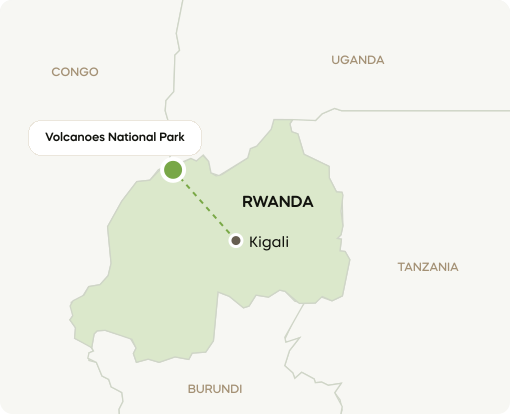
Five dormant volcanoes lie on the Rwandan side: Karisimbi, Bisoke, Muhabura, Gahinga and Sabinyo. The park gets its name from these volcanoes. It is located in northwestern Rwanda, just 105 km (65 mi) from Kigali. The drive takes about two hours.

When is the best time to visit Volcanoes National Park?
The park is open year-round, but trekking conditions vary by season. Rwanda does not have the conventional winter and summer seasons. The main difference throughout the year is the amount of rainfall. This affects trail conditions, visibility, visitor numbers and prices. Temperatures are also generally lower in the mountainous areas and can drop to around 6-10°C (43-50°F).

There are two dry seasons: a short one from December to February and a long one from June to September. Although rain is possible in the mountains year-round, there is significantly less of it during these months. The trails are drier, making hikes through the tropical forest easier. The volcano summits are also often free of clouds and mist.
This is the best time for gorilla and golden monkey trekking, but it is also the busiest period. Permits often sell out months in advance, so book them and your lodge as early as possible.

The long rainy season runs from March to May, while the short rainy season falls in October and November. Rainfall is significantly heavier during these months, making forest trails slippery and trekking more challenging. On the other hand, the forests and savannas turn lush green, the landscapes become more vibrant, there are significantly fewer tourists in the parks, and hotels and lodges are cheaper.
The rainy season does not necessarily make you less likely to see gorillas or golden monkeys. Rain usually falls in the afternoon, when travelers are often already returning from their trek. Nevertheless, waterproof clothing, sturdy footwear and a rain jacket are essential.

Animals of Volcanoes National Park
In addition to primates, the park is home to African buffalo, forest antelopes and even spotted hyenas. Some sources also mention elephants and leopards, but you are extremely unlikely to see them while trekking. You are more likely to see their tracks than the animals themselves. The park is also a good destination for birdwatching, with around 200 species recorded here. However, the main reason travelers come to Rwanda for a safari is to see mountain gorillas and golden monkeys.
Mountain gorillas
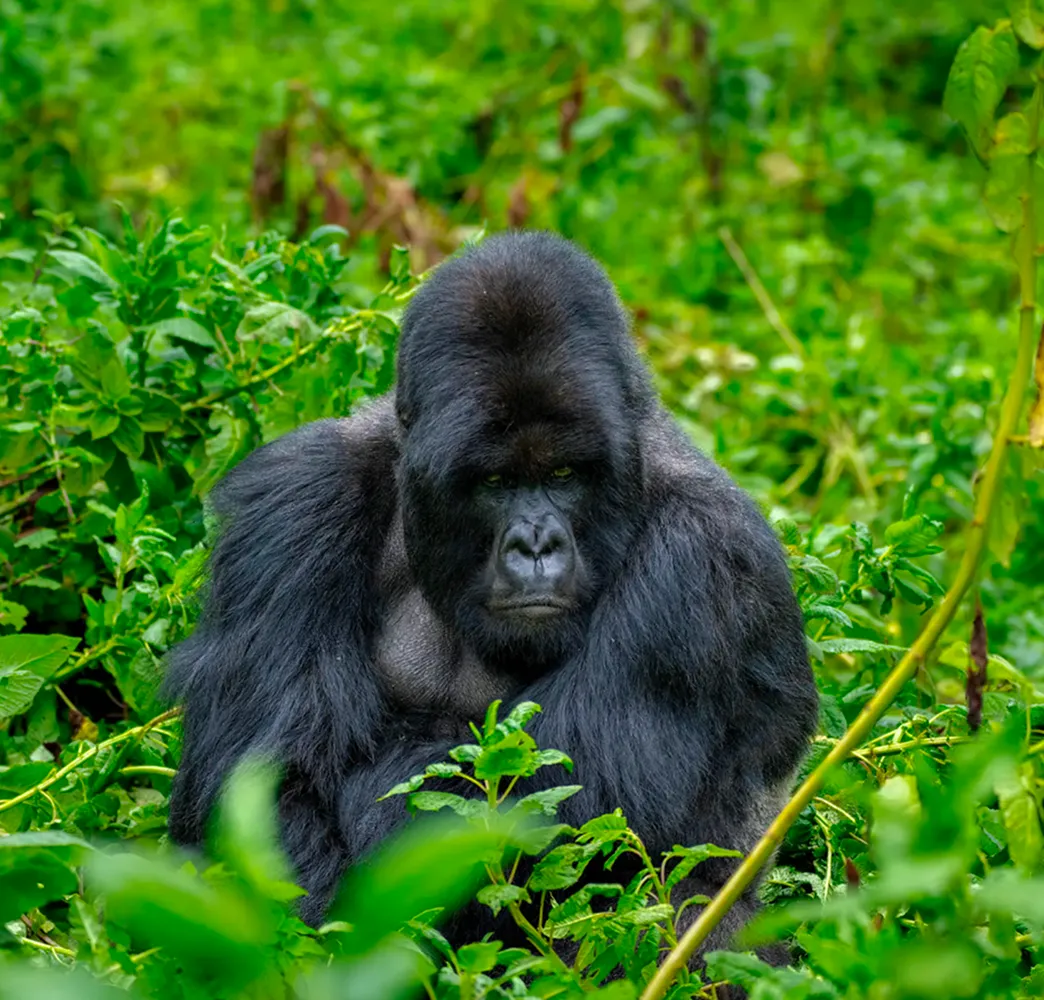
At the beginning of the 20th century, mountain gorillas were nearly wiped out by poaching, while the Virunga forests that formed their habitat were being cleared. To protect them, the first national park in Africa was established in these mountains in 1925. It was called Albert National Park. Initially, it was located in what was then the Belgian Congo, but in 1927 the protected area was extended into what is now Rwanda. After independence, different parts of the park ended up on opposite sides of national borders. The Rwandan section became Volcanoes National Park. It covers an area of 160 km² (62 sq mi).
However, protected status alone was not enough. By 1981, only 242 gorillas remained in the Virunga Massif, the lowest number ever recorded. The species was on the brink of extinction. A turning point came with daily monitoring, veterinary care, tourism controls and the work of conservation organizations. Since then, the population has gradually increased.
According to the latest censuses, there are 1,063 mountain gorillas in the world: 604 in the Virunga Massif and 459 in the Bwindi-Sarambwe ecosystem in Uganda. These animals are found nowhere else on Earth. Of the 604 gorillas in the Virunga Massif, around 62% live in Volcanoes National Park. Around 20 mountain gorilla groups are habituated to humans, but visitors can trek to 12 of them. The others are accessible only for scientific research.
Note: To visit the gorillas, you need a permit. For international visitors, it costs $1,500. The number of permits is strictly limited: only one group of up to eight visitors can visit each gorilla family per day. This means permits should be arranged at least several months in advance.

Golden monkey trekking
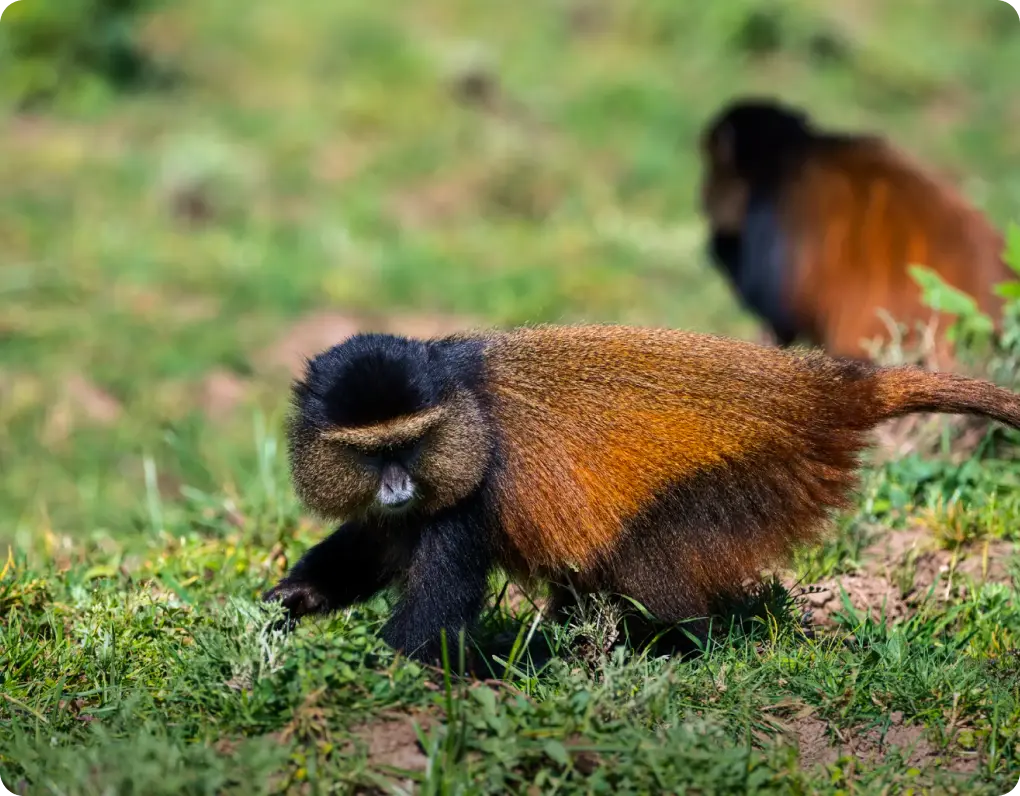
These small, active primates have golden-orange fur on their backs. They survive in only two areas of the world: the Virunga Massif and Rwanda's Gishwati-Mukura forest. The International Union for Conservation of Nature classifies them as endangered. Unlike gorillas, golden monkeys do not have a precise population estimate because they are difficult to count in dense forests. However, Volcanoes National Park supports the largest known population, with around 4,600 individuals.
Travelers can also trek to see them, and a permit is required. For information on permit costs, age restrictions and what the day is like, see our guide to golden monkey trekking.
What else can you do in Volcanoes National Park?
Climb the volcanoes
There are five volcanoes on the Rwandan side of the Virunga Massif, each with its own elevation and difficulty, ranging from an easy day hike to a two-day trek with an overnight stay.
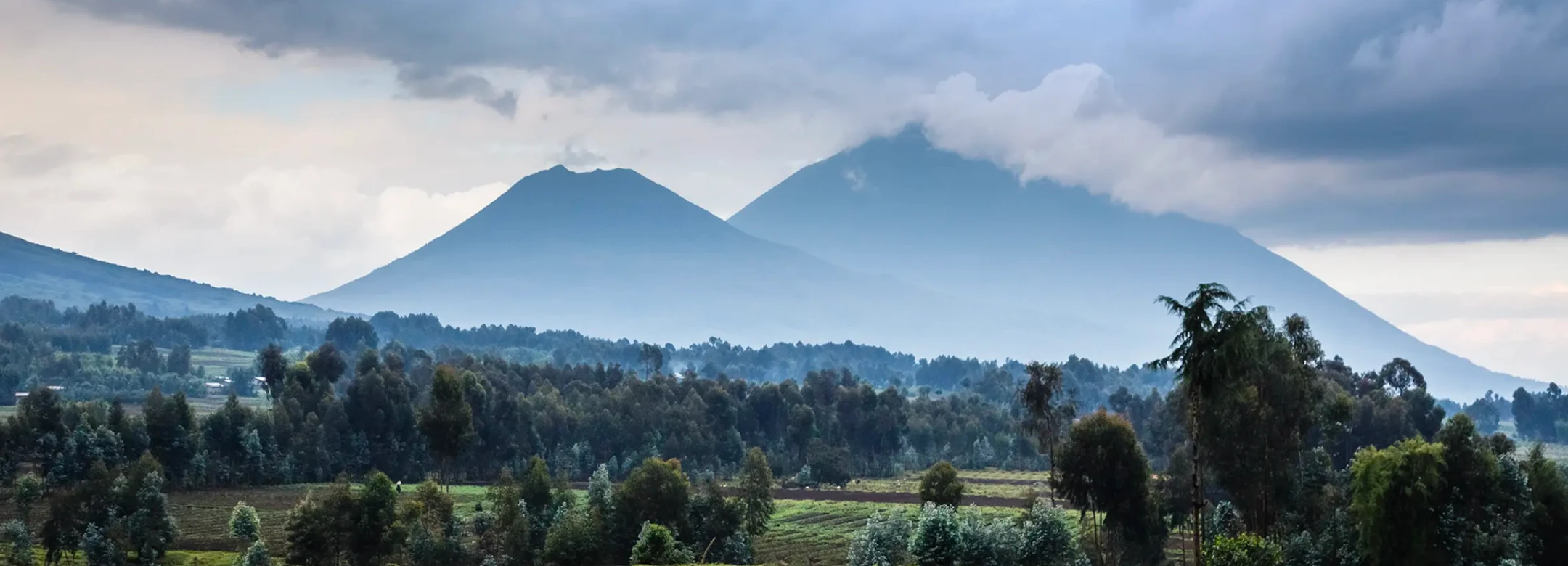
The highest point in the Virunga Massif, its summit is sometimes covered with snow during the long dry season. This is the only route that includes an overnight stay at a tented camp at 3,700 m (12,139 ft). A good level of fitness is required. Permits cost $200-400 for international visitors, depending on status and nationality. Porters and cooks are paid separately. The minimum age is 15.
This volcano lies on the border with Uganda. It is one of the more challenging climbs, with an elevation gain of around 1,500 m (4,921 ft) from the base to the summit, and the entire route must be completed in a single day. The steep ascent requires good endurance. From the summit, hikers can see the crater lake and enjoy panoramic views of the Virunga Massif. The permit costs $60-100, and the minimum age is 15.
A dormant, perfectly conical volcano with a crater lake at the summit. This is the most popular day-hike route, as the ascent and descent take around 6-7 hours. The permit costs $55-75, and the minimum age is 15.
The oldest volcano in the massif and the most unusual in appearance. Instead of a cone, it has a jagged, rugged ridge. The summit lies exactly where Rwanda, the DRC and Uganda meet, meaning hikers can stand in three countries at once. However, hikers cannot reach the summit from the Rwandan side, as the route only goes as far as the first peak at 3,450 m (11,319 ft). The highest point lies farther along the ridge and is accessible only from Uganda. The Ugandan route is considerably more difficult, with steep ridges and exposed sections equipped with wooden ladders. The permit costs $55-75 in Rwanda, and the minimum age is 12.
The lowest and easiest volcano to climb. The day-hike route passes through bamboo forest where golden monkeys can often be spotted along the way. The permit costs $55-75, and the minimum age is 15.
Frequently asked questions
Where is volcanoes national park Rwanda?
Volcanoes National Park is located in northwestern Rwanda, in the Musanze area near the borders with Uganda and the Democratic Republic of the Congo. It protects Rwanda’s section of the Virunga Massif, a chain of volcanoes shared by all three countries, and lies about a two-hour drive from Kigali.
Are there gorillas in Volcanoes National Park?
Yes. The park is part of the Virunga Massif, one of only two places on Earth where mountain gorillas survive in the wild. The other is Uganda's Bwindi forest. Volcanoes National Park has around 20 gorilla families, and visitors can trek to 12 of them.
Is it worth visiting Volcanoes National Park?
Yes. Volcanoes National Park is one of Rwanda's and Africa's major attractions. Travelers from around the world come here for mountain gorilla and golden monkey trekking, hikes to the memorial of renowned primatologist Dian Fossey, and climbs of one of the five volcanoes. Most of the summits can be reached in a single day.
How much time do you need at Volcanoes National Park?
Gorilla trekking always takes one day. If you wish, you can spend a second day trekking to see golden monkeys and hiking to the Dian Fossey memorial. Travelers usually spend the remaining days visiting Nyungwe National Park for chimpanzee trekking and Akagera National Park for a classic savanna safari.
Is it safe to see gorillas in Rwanda?
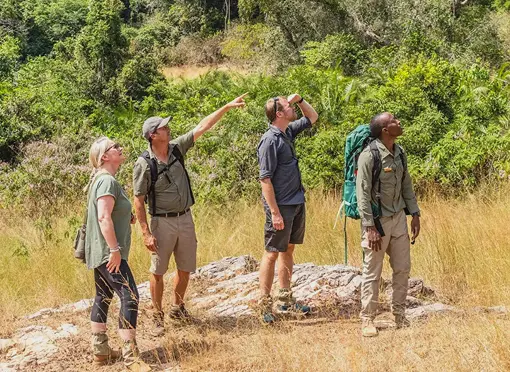
Yes, absolutely. The gorillas are fully habituated to humans and generally pay little attention to visitors. You'll also trek and view gorillas with an experienced ranger, a park employee who knows the gorillas' behavior and the rules for observing them.
Rwanda is one of the safest and most stable countries in Africa, particularly its capital, Kigali.


Altezza Travel Ranked #1 on TripAdvisor


I was impressed by Altezza even before I arrived, as having an agent to help with planning who was in a similar time-zone made a huge difference. And the quality of this company was apparent as soon as I landed in Tanzania. All of their hotel and lodge recommendations were excellent as well (reviewed separately). Lots of online follow up and support.
However, I knew they were the best when I got in their identical to those from other companies, Altezza vehicles are very different inside. They are the sole company which has only 4 seats, while all the others have 6 seats (and much less leg room for this reason). This made a giant difference to our experience, as we were often in the Land Cruiser for 8 hours or more on various safari expeditions. Being able to stretch, lean the seat back, and have our bags transported, made a huge difference. Yes, it makes the transportation a bit more expensive, but absolutely worth every penny. I looked at multiple other vehicles while traveling, and none of them had only 4 seats. Kudos to Altezza.
The second reason I rapidly became aware of how excellent they are is when we met Daniel, our guide/driver. Firstly, not only was his English outstanding, and secondly his knowledge was exceptional (he had a degree in wildlife management), but on top of this he is also an outstanding wildlife photographer who has published a book of photos. He was with us every step of our 6-day safari and enhanced it in every way possible. This included sharing with us the photos he took with us (far superior to ours), which has really elevated our memories of this trip and provided photographs that we can share with others (some examples of his photos are attached).
In conclusion, there are multiple reasons why Altezza is the best company to go on Safari with, but I suggest that if you are going for 4-days or more you also try and ask for Daniel specifically for an even more amazing experience.


I had a fantastic experience booking a 10 day vacation in Tanzania with Altezza, which included 6 days of Safari + 3 days in Zanzibar. Everybody from Altezza I interacted with was very helpful and professional. The travel manager (Aiman) was very responsive helpful to book my custom itinerary. During the actual trip, another travel manager (Victoria) stepped in, and she was also extremely helpful and responsive. My whole stay in Tanzania was stress free, as Altezza handled all the hotel bookings, flights from the Tanzania mainland to Zanzibar, airport transfers and the safari itself.
The safari was an unforgettable experience. Seeing so much wildlife in their natural habitat was truly awesome. Special shout out to our driver/guide, Paschal, who is an expert driver and extremely knowledgeable about the Tanzanian fauna and flora. It was a pleasure having him as our safari guide. Also, Altezza’s car was kept in excellent condition (cleaned inside and out every day, even in the middle of the savannah). For small groups (up to 4 people), Altezza’s cars have an advantage over most of the other safari cars I saw in my trip: they’re all the same size, but Altezza’s car has 4 seats while all of the other cars I saw had 6, so we had more legroom. Nice!
All in all, I highly recommend Altezza for a safari trip in Tanzania!
 Read Reviews