





 52 reasons
 Free PDF


 Message us on WhatsApp
 Book a Free Call


Akagera National Park
Akagera is Rwanda's only savanna park where you can go on classic 4x4 safaris. It is home to all members of the Big Five: lions, leopards, elephants, buffaloes, and rhinos, as well as dozens of other African wildlife species.
A visit to Akagera can easily be combined with trips to Volcanoes and Nyungwe national parks, which are known for gorilla and chimpanzee trekking.
Where is Akagera located?
Akagera National Park is located in eastern Rwanda, along the border with Tanzania. It is just 110 km (68 mi) from Kigali International Airport, where all international flights arrive. The drive takes about two hours.
Akagera wildlife
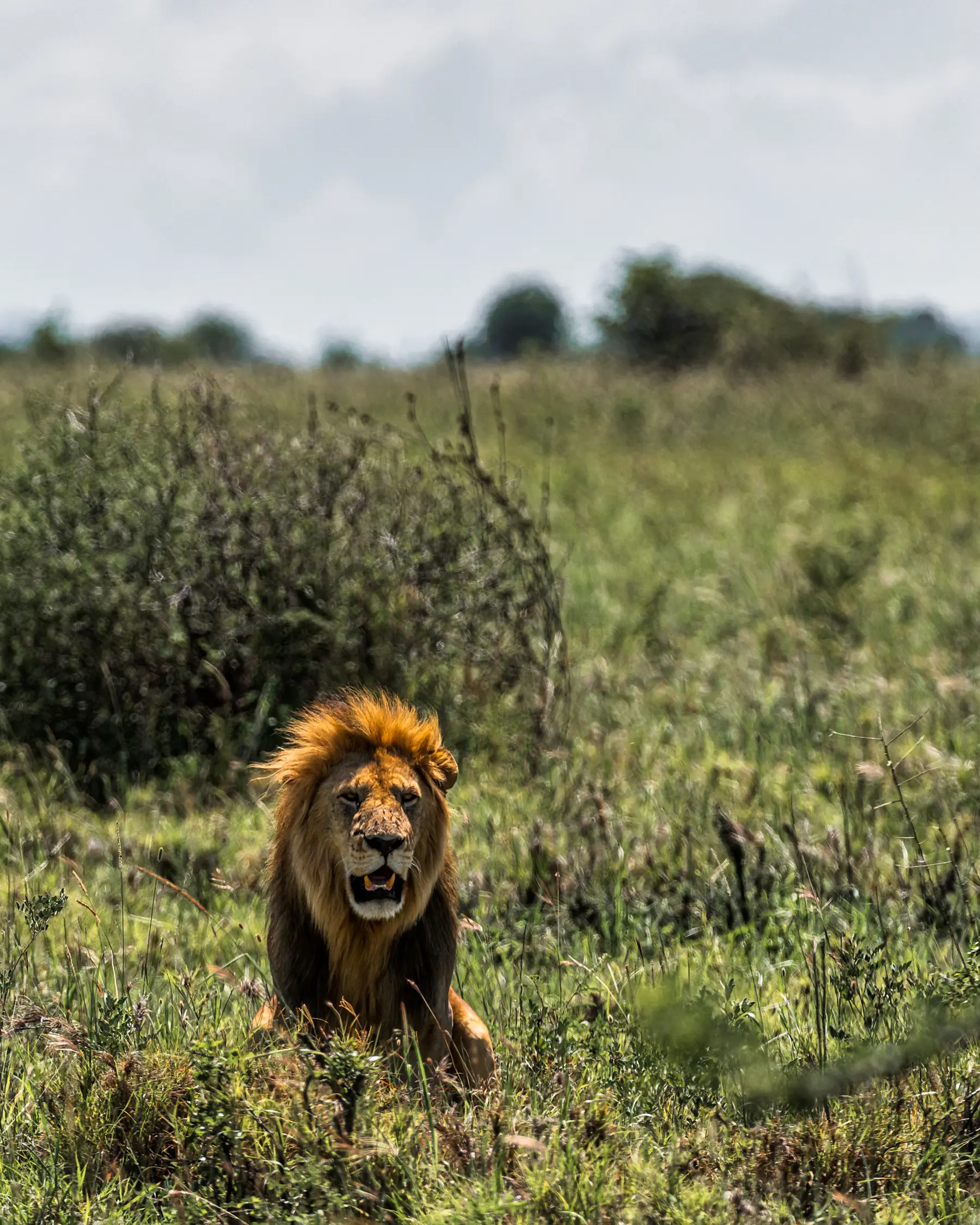
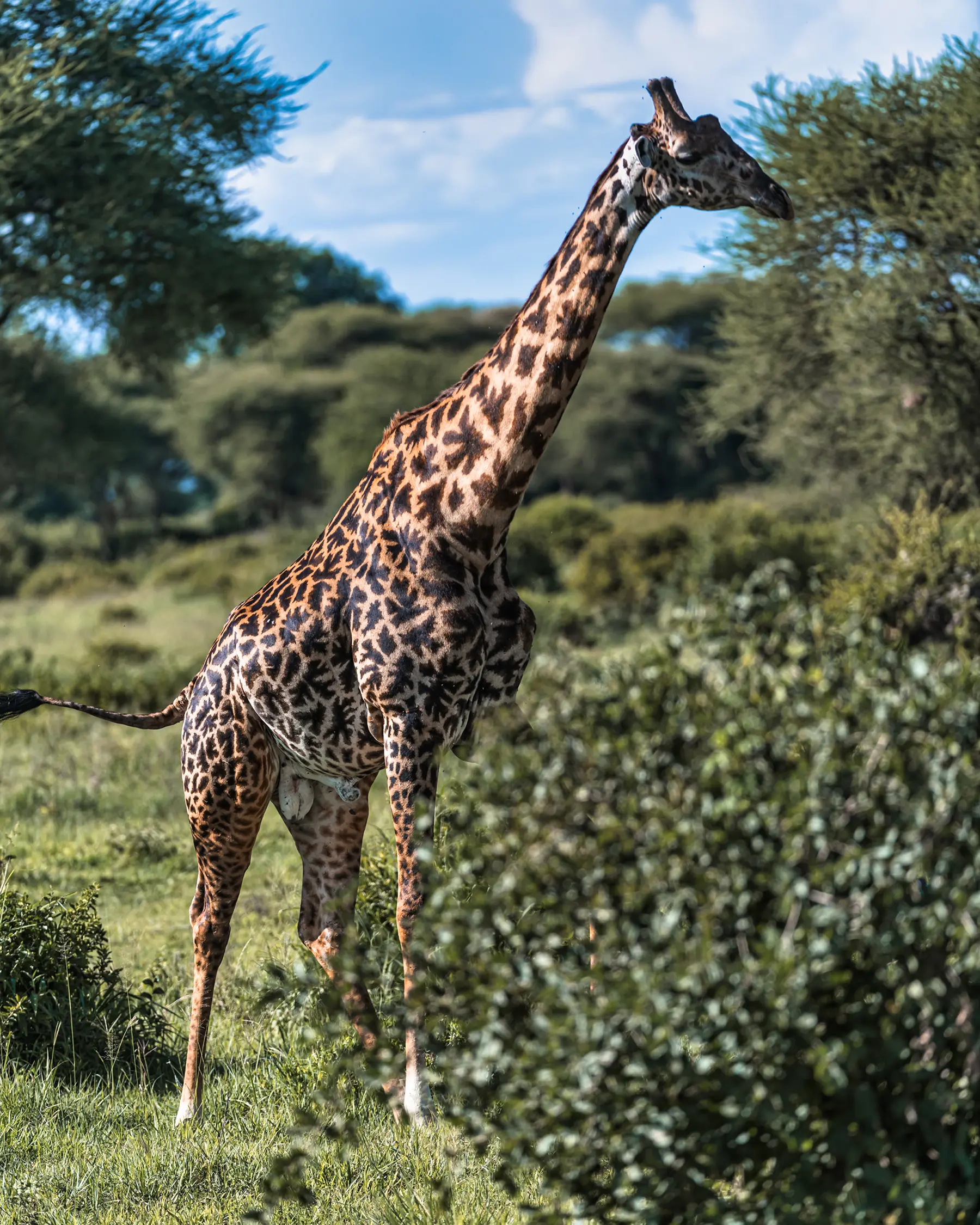
Akagera National Park was established in 1934, but just 15 years ago, it looked very different. In the mid-1990s, amid the civil war and genocide, the park was close to disappearing. Refugees settled in the area, forests were cleared for agriculture and grazing, and poaching became widespread. Lions and rhinos disappeared entirely.
The situation changed dramatically in 2010, when the Rwanda Development Board began jointly managing Akagera with the international conservation organization African Parks. A 120-km (75-mi) fence was built along the western boundary, while dedicated teams stepped up aerial and ground patrols. Since then, the number of large mammals has risen from fewer than 5,000 to more than 13,000. All of the Big Five now live in Akagera again: lions returned in 2015, followed by black and white rhinos between 2017 and 2021.
Akagera is also home to giraffes, zebras, hippos and Nile crocodiles, along with baboons, monkeys, hyenas, jackals and servals. Among its 11 antelope species, impalas, topi and eland are some of the most commonly seen. Birdlife is equally rich, with nearly 500 species recorded in the park.
When is the best time to visit Akagera?
There is no bad month for a safari in Akagera. Rwanda lies almost on the equator, so the weather stays comfortable year-round. The main thing that changes from season to season is the amount of rainfall. Even the wetter months, however, have their advantages.

January falls within the short dry season: there is little rain, the grass is short, and visibility is good. Savanna animals, especially elephants, buffaloes, zebras, and antelopes, are easy to find near water sources. Lions are likely to be somewhere nearby, while hippos and crocodiles can be seen in the lakes. They are particularly easy to observe during a boat trip on Lake Ihema.
Late December and early January are the peak tourist season because of the Christmas and New Year holidays. Visitor numbers decrease in the second half of January and in February, but it is still best to book your safari and lodges well in advance.
February is the peak of the short dry season. As the grass dries out under the sun, the savanna takes on a yellow hue. As in January, animals are easier to find near rivers and lakes, where they come to drink.
This is a good month both for game drives and boat trips, especially for birders. The nesting season begins on a small island in the middle of Lake Ihema, where thousands of cormorants, herons, storks, and ibises can be observed until July.
March is generally considered part of the long rainy season, but we think it is better viewed as a transitional month. The savanna gradually turns green, the rains fill temporary waterholes, and animals spread throughout the park, so you can encounter them almost anywhere.
Visitor numbers drop significantly in the second half of the month, and many lodges begin offering good discounts. The downside is that in rainy months it is harder to plan activities such as boat trips and hot-air balloon flights, as weather conditions can disrupt them. Game drives, however, take place every day.

April is the wettest month of the year, although rain usually starts in the afternoon. By then, travelers have already returned to the lodge for lunch and a rest after their morning game drive.
The tall grass makes smaller animals harder to spot, but you can still see elephants, giraffes, zebras, lions, buffaloes, and other large animals from a distance. Safaris are also very quiet at this time of year, with few other visitors, and prices are lower.
The first half of the month remains rainy, but precipitation decreases toward the end of May. Even so, the park still sees few visitors, making it a good time for a quiet, secluded getaway.
You can still find large animals throughout the park. Plenty of temporary waterholes remain, so animals don't yet need to move closer to the lakes.
June marks the beginning of the long dry season, the classic time for safari, so the number of tourist vehicles in the savanna starts to increase. The grass gradually dries out and becomes shorter, while visibility improves. In the northern part of the park, for example, lions and, with some luck, white rhinos are easy to spot on the open plains. Black rhinos, by contrast, are usually seen in denser vegetation and more often in the south.
Elephants, giraffes, zebras, and antelopes tend to stay close to water sources. Hippos and crocodiles are also commonly found there.
This is the height of the dry season, with warm and sometimes hot days, cool nights, and excellent visibility. Animals are easy to find around the lakes, so in one or two days it may be possible to see almost all of the Big Five. The most elusive is the leopard. It is solitary and nocturnal, and estimates of its population in the park range from 15–20 to 80–100 individuals.
July is one of the busiest months of the year, not only for safaris in Akagera but also for mountain gorilla and chimpanzee trekking in other parts of the country. If you are planning a trip for this period, book permits, lodges, and safari programs as early as possible.
Rwanda remains in the long dry season, and conditions are much the same as in July: the grass is dry and short, the weather is sunny and clear, and animals concentrate around water. If you would like to add something different to your trip, August is a good time for a hot-air balloon flight or a boat trip on Lake Ihema. From the water, you can easily see crocodiles, hippos, elephants, buffaloes, and other savanna animals coming to drink.
September is the last dry month before the rains return. Dry air and short grass make even smaller animals easy to spot from a distance. Finding them is also relatively straightforward, as savanna wildlife continues to concentrate around water sources.
The park is still busy with travelers in the first half of September, but visitor numbers gradually decline during the second half as the rainy season approaches.
Rwanda enters its short rainy season in October. The first downpours settle the dust, fill waterholes, and cover the savanna in fresh greenery. Animals spread throughout the park and can be encountered almost anywhere, while there are significantly fewer tourists on the tracks. This is one of the best periods for travelers looking to save money and enjoy a more secluded safari experience.
Weather conditions in November are much the same as in October: the park is green, visitor numbers are low, and prices are lower.
You can still see large animals such as elephants, giraffes, buffaloes, and zebras from a distance, while smaller animals, including big cats and antelopes, can be harder to spot in the tall grass. Migratory birds also begin arriving in November. They breed in Europe and Asia and spend the winter in Africa.
The first half of December can still be rainy, but by mid-month the short dry season begins. This is one of the best times to enjoy both green scenery and more comfortable safari conditions.
Visitor numbers start to increase, with the peak falling around the Christmas and New Year holidays. Permits and lodges for this period are often booked six months or more in advance.
How to diversify your Akagera safari
A classic safari in Akagera means a daytime game drive through the savanna. But the park and its wildlife can also be experienced from the water, from above, and after sunset.
Boat safari on Lake Ihema

Hot-air balloon flight

Night Game Drive

Frequently asked questions
What animals live in Akagera?
The park is home to all members of the African Big Five – lions, leopards, elephants, buffaloes, and both species of rhino, black and white. Akagera is also home to giraffes, zebras, 11 antelope species, hippos, crocodiles, hyenas, servals, primates, and almost 500 bird species.
Is Akagera National Park worth visiting?
Yes, especially if you are planning to go gorilla or chimpanzee trekking in Volcanoes and Nyungwe National Parks. It takes only two hours to drive from Rwanda's capital, Kigali, to Akagera. On safari, you can see a wide range of iconic African wildlife.
In which district is Akagera National Park located?
Akagera National Park is in eastern Rwanda, in the Eastern Province, directly on the border with Tanzania. The park's southern gate is just 110 km (68 mi) from Kigali.
What is the attraction of Akagera National Park?
It is Rwanda's only savanna park and the site of one of Africa's most successful wildlife restoration projects. In less than 15 years, the number of large animals increased from 5,000 to 13,000, and lion and rhino populations that had disappeared were successfully restored.
When to visit Akagera National Park?
The dry seasons, from June to September and from December to February, are considered the most popular times for safari. During these months, the grass is shorter and animals concentrate around rivers and lakes. During the rainy seasons, however, the savanna becomes lush and green, animals can be found almost everywhere, visitor numbers are lower, and lodges offer discounts.
Subscribe Altezza Travel on YouTube


Stay in touch on Instagram


Altezza Travel Ranked #1 on TripAdvisor


I was impressed by Altezza even before I arrived, as having an agent to help with planning who was in a similar time-zone made a huge difference. And the quality of this company was apparent as soon as I landed in Tanzania. All of their hotel and lodge recommendations were excellent as well (reviewed separately). Lots of online follow up and support.
However, I knew they were the best when I got in their identical to those from other companies, Altezza vehicles are very different inside. They are the sole company which has only 4 seats, while all the others have 6 seats (and much less leg room for this reason). This made a giant difference to our experience, as we were often in the Land Cruiser for 8 hours or more on various safari expeditions. Being able to stretch, lean the seat back, and have our bags transported, made a huge difference. Yes, it makes the transportation a bit more expensive, but absolutely worth every penny. I looked at multiple other vehicles while traveling, and none of them had only 4 seats. Kudos to Altezza.
The second reason I rapidly became aware of how excellent they are is when we met Daniel, our guide/driver. Firstly, not only was his English outstanding, and secondly his knowledge was exceptional (he had a degree in wildlife management), but on top of this he is also an outstanding wildlife photographer who has published a book of photos. He was with us every step of our 6-day safari and enhanced it in every way possible. This included sharing with us the photos he took with us (far superior to ours), which has really elevated our memories of this trip and provided photographs that we can share with others (some examples of his photos are attached).
In conclusion, there are multiple reasons why Altezza is the best company to go on Safari with, but I suggest that if you are going for 4-days or more you also try and ask for Daniel specifically for an even more amazing experience.


I had a fantastic experience booking a 10 day vacation in Tanzania with Altezza, which included 6 days of Safari + 3 days in Zanzibar. Everybody from Altezza I interacted with was very helpful and professional. The travel manager (Aiman) was very responsive helpful to book my custom itinerary. During the actual trip, another travel manager (Victoria) stepped in, and she was also extremely helpful and responsive. My whole stay in Tanzania was stress free, as Altezza handled all the hotel bookings, flights from the Tanzania mainland to Zanzibar, airport transfers and the safari itself.
The safari was an unforgettable experience. Seeing so much wildlife in their natural habitat was truly awesome. Special shout out to our driver/guide, Paschal, who is an expert driver and extremely knowledgeable about the Tanzanian fauna and flora. It was a pleasure having him as our safari guide. Also, Altezza’s car was kept in excellent condition (cleaned inside and out every day, even in the middle of the savannah). For small groups (up to 4 people), Altezza’s cars have an advantage over most of the other safari cars I saw in my trip: they’re all the same size, but Altezza’s car has 4 seats while all of the other cars I saw had 6, so we had more legroom. Nice!
All in all, I highly recommend Altezza for a safari trip in Tanzania!
 Read Reviews